
Think of agriculture needing to do two big things at once: feed everyone and help fight climate change. Climate-Smart Agriculture (CSA) is essentially a smarter way of farming that does just that.
It’s not just about growing more food; it’s about growing food in a way that’s better for the planet and helps farms deal with changing weather. If done right, it’s a “triple win“:
- Grow More Food Better: Sustainably produce more to feed a growing world population and help farmers earn more.
- Be Stronger Against Climate Shocks: Help farms survive things like droughts, pests, and unpredictable weather.
- Reduce Environmental Impact: Lower greenhouse gas emissions (like methane and nitrous oxide), avoid clearing forests for farmland, and help soil and plants soak up carbon from the air.
Getting farmers to adopt these new ways can be tricky. Often because they cost money or feel risky. This is sometimes called crossing the “Valley of Death” – the gap between a good idea or technology and widespread use on farms.
Virginia Tech’s Alliance to Advance Climate-Smart Agriculture is a major effort to help bridge this gap. It’s a large-scale pilot program, supported by the U.S. Department of Agriculture.
Its core idea is to directly pay farmers and ranchers to adopt these climate-smart practices.
- It’s an $80 million pilot program for three years.
- A big chunk of that money, over $57 million, goes directly to producers.
- The goal is to show the benefits of paying farmers $100 per acre or animal unit for using specific approved practices.
- When farmers do this, they help the public by storing carbon, reducing harmful gases, improving soil, and conserving water.
- The program is running in select areas in Arkansas, Minnesota, North Dakota, and Virginia.
- Virginia Tech leads it, hoping it can become a model for the whole country.

Farmers who join, like Graham Redfern, need to meet certain requirements, like having proper farm records and agreeing to share data about the environmental impact of the practices they use.
This is where tools like COMET-Planner and COMET-Farm come in. These are computer tools that help measure how much carbon is being stored or how much greenhouse gas is being reduced by different farming practices. COMET-Planner gives regional estimates, while COMET-Farm is a more detailed tool for specific farms.
An example of participation in this program, Redfern Farms (The Hemp Farms of Virginia LLC), represented by Graham Redfern, participated through the Alliance to Advance Climate-Smart Agriculture pilot program. The practices enrolled by Redfern Farms included:
- Cover Crops (Code 340) on 1 acre and another 5 acres.
- Nutrient Management (Code 590) on 2 acres.
In simple terms:

- Cover Crops involves planting grasses, legumes, or other plants on the field when the main crop isn’t growing. This helps protect the soil, improve its health, and can take carbon out of the air.
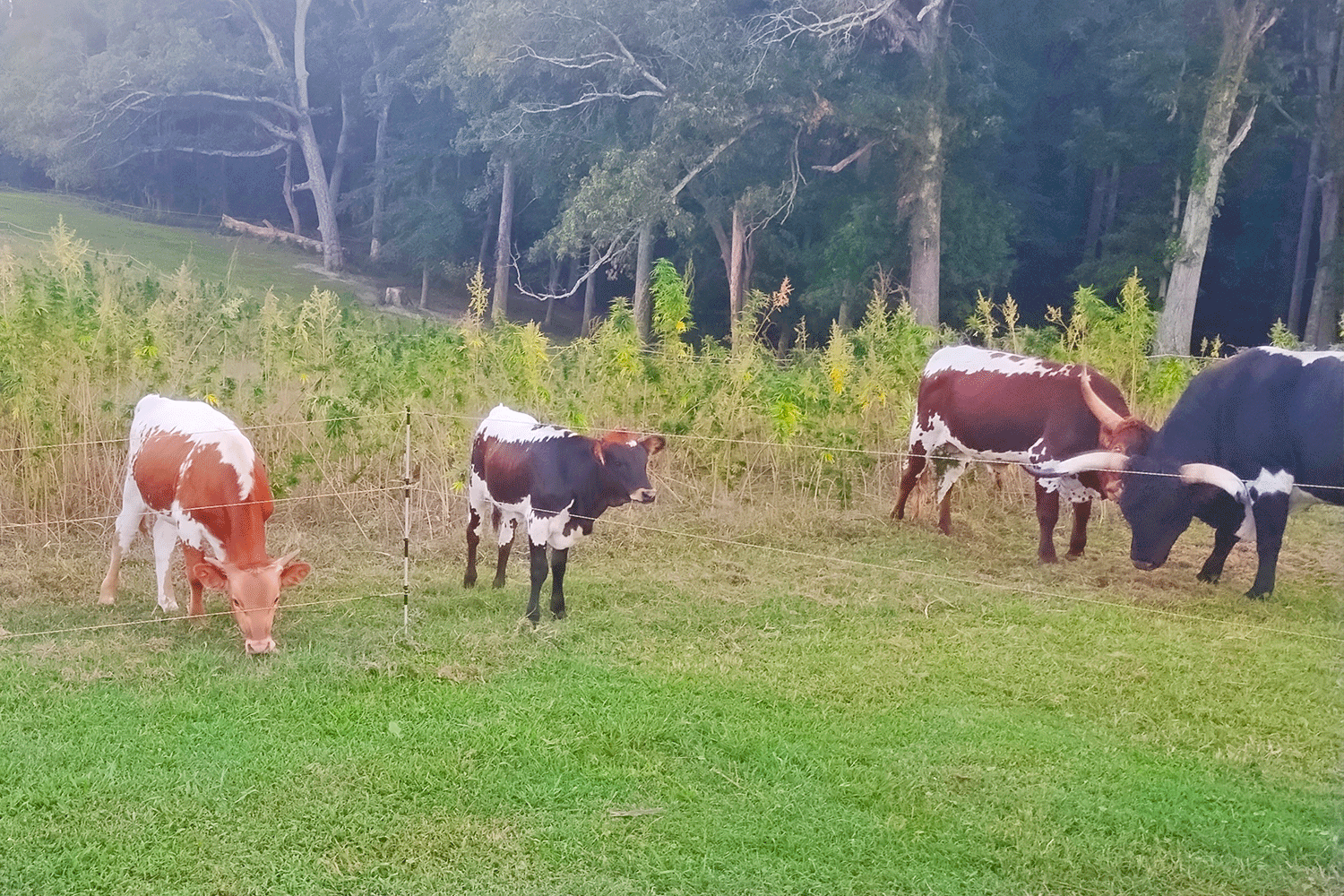
- Nutrient Management means carefully managing when, where, and how much fertilizer and other nutrients are applied to crops . The goal is to give plants what they need while reducing pollution and greenhouse gas emissions.
Redfern Farms agreed to provide the COMET Farm data for these practices and received a one-time payment for doing so. Their participation, like that of other farmers in the Alliance, helps demonstrate the value of these practices and contributes data needed to show their environmental benefits.
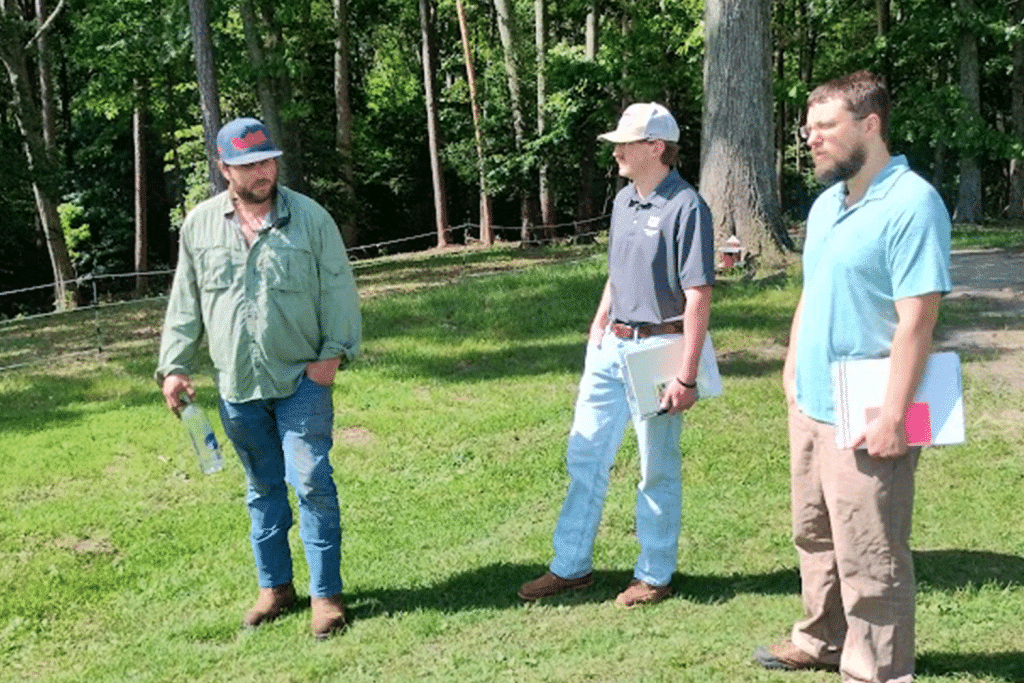
In short, the Alliance is an exciting pilot program paying farmers to make positive environmental changes on their land using practices like cover cropping and smart nutrient use, and measuring the impact with tools like COMET Farm, all while working towards a more sustainable and food-secure future.
The Redfern Team is proud to have played their part in this important initiative. We will continue to pursue innovative regenerative agriculture methods in order to ensure a healthier and more abundant planet for many generations to come.