

How to Make Compost Tea
Let’s take a crash course into the basics of homemade Compost Tea and talk about the benefits it will have on your cannabis plant at home. Don’t worry! This topic may seem intimidating but it’s quiet a simple process that offers unbelievable results.
The Compost Tea Story
For decades, conventional agriculture has been the predominant method for farming and producing food. This approach often involves disruptive practices such as tilling the soil, relying on synthetic pesticides and herbicides, and using salt-based fertilizers to nourish crops. However, these methods have led to significant problems, including depleted and overworked soils.
Tilling the soil, while once considered essential for preparing the land for planting, can disrupt the soil’s structure and lead to erosion. This can result in the loss of valuable topsoil, which contains essential nutrients and microorganisms. Additionally, tilling can release carbon stored in the soil, contributing to climate change.
Synthetic pesticides and herbicides are widely used in conventional agriculture to control pests and weeds. While these chemicals can be effective in the short term, they can also have harmful consequences. Pesticides can kill beneficial insects, disrupt ecosystems, and contaminate water sources. Herbicides can lead to herbicide-resistant weeds, making it more difficult to control them in the future.
Salt-based fertilizers, such as synthetic nitrogen, phosphorus, and potassium, are commonly used to supplement the nutrients in the soil. However, excessive use of these fertilizers can lead to nutrient imbalances, soil salinization, and water pollution. Salinization occurs when salt levels in the soil become too high, making it difficult for plants to absorb water. This can result in reduced crop yields and soil degradation.
The combined effects of these practices have resulted in depleted and overworked soils. These soils are less fertile, more susceptible to erosion, and less resilient to environmental stressors. This has negative consequences for both farmers and consumers. Farmers may experience reduced crop yields, increased costs, and decreased profitability. Consumers may face higher food prices, reduced food quality, and potential health risks associated with pesticide residue in food.
In light of these challenges, it is clear that a more sustainable approach to agriculture is needed. Compost tea emerges as a promising solution to address the limitations of conventional agriculture.
The Purpose
Compost Tea contains billions upon billions of living microorganisms that are the key to saving the planets soils. These microorganisms are everywhere in nature. They live on and within all living organisms on the planet. Humans have a microbiome, a microscopic organism ecosystem, on and within our bodies that is vital for our survival. These little guys help us digest the food in our stomachs and protect us from diseases that contact our skin.
Plants are the same way! They too have a microbiome that is vital for their survival.
By making and using Compost Tea, you can reintroduce those vital microorganisms back into the soil which intern promotes benefits such as:
– Better overall plant health and disease resistance
– Higher nutritional values in your crops
– Higher terpene concentrations in your cannabis plant (Learn More)
– The worm castings benefit by inducing natural plant growth hormones
Compost Tea Recipe
The items required:
– A 5-gallon bucket
– Water – 5 Gallons
– An Aquarium Air Stone (Link)
– Fish Tank Air Pump (Link)
– Compost Tea Bag (Cheese Cloth, Nylon bag, or Sock)
– Molasses – 1 Tablespoon
– Compost (worm casting, homemade compost, mushroom compost) – 1 Cup
– Starter (Local microorganisms found in your region) – 1 Cup
– Sea Salt – 1 Teaspoon
– Medium Size rock
Note: We have added links to some of the items listed above so you are able to see and even purchase them if interested.
The Directions for Hot to Make Compost Tea
1) Fill your 5-gallon bucket up with water. Leaving 2 inches of space at the top.
Tip: Use well water or filtered tap water if possible. Unfiltered tap water contains trace amounts of chlorine which kills microorganisms. If you can’t get your hands on non-chlorinated water, fill your bucket up the night before from the tap and let it sit. The chlorine will evaporate out.
2) Mix in the Sea Salt and Molasses into the water until dissolved. The sea salt will offer your plants micro-nutrients while the Molasses will feed your microorganisms and allow them to grow in population.
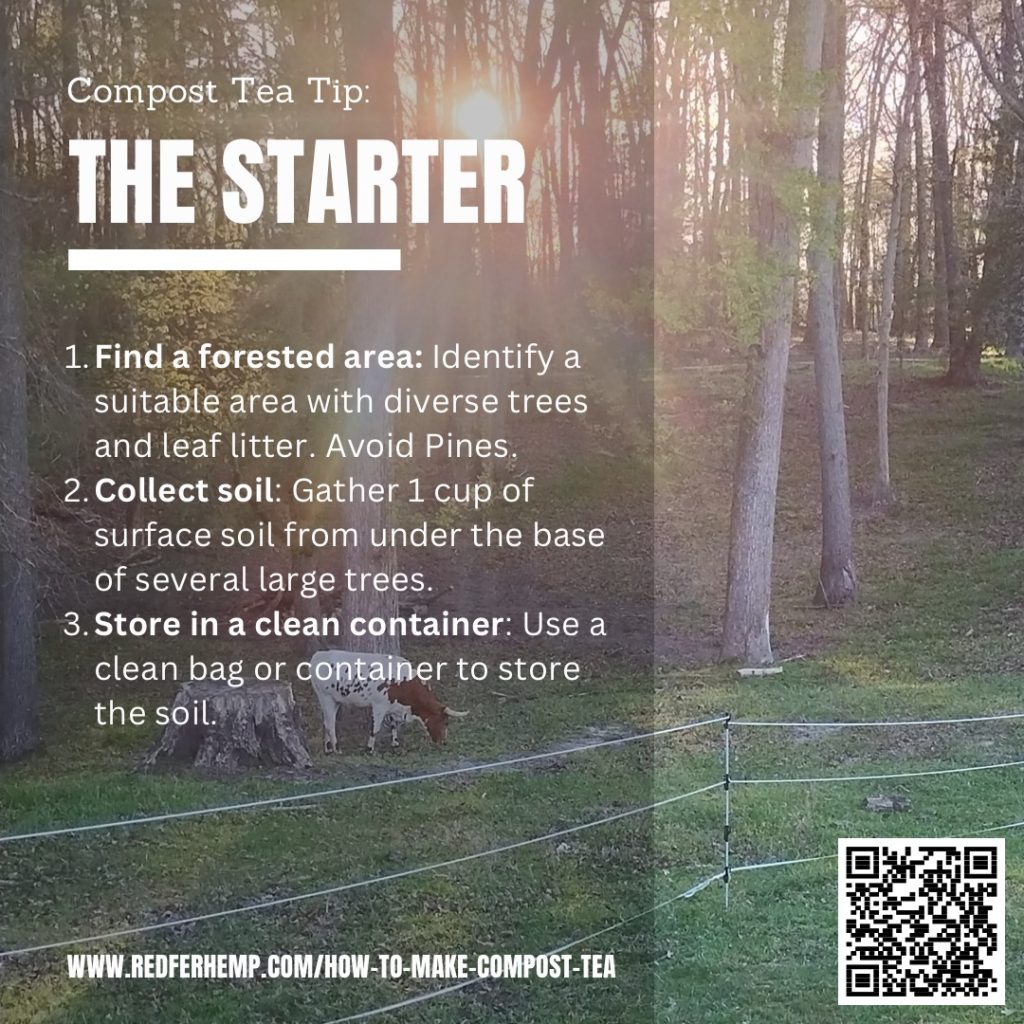
3) Collect the Starter, local microorganisms, from a forested area near where you live. You must visit the base of several large trees and harvest a combined 1 cup of surface soil from right under the dead leaves and debris. Put into a bag and bring home.
Fun Fact: That single cup of starter contains over a 100 billion microorganisms. Many are still unknown to science!
Tip: The forest area needs to be mostly hardwood trees, not pine trees. This starter will serve as the base for your microorganisms. These microorganisms are specially adapted to your climate and area which will make them the best choice for your Compost Tea. If you’re interested in learning more about Starters, research the subject Korean natural farming.
4) Source 1 cup of Compost, either sourced from the store, your compost bin, compost pile, compost tumbler, or lomi compost on the counter.
5) Find and fill your large Compost Tea Bag, a cheese cloth from the grocery store, a large sock, or a Nylon bag off the internet, with your Starter and Compost. Add your Medium Size Rock to the bag before closing. This will weigh down the contents in the bag.
6) Tie the Tea Bag shut and attach the bag to a stick so that it is suspended in the middle of the bucket without touching the bottom.
7) Plug in your Fish Tank Air Pump and connect your Aquarium Air Stone. Place the air stone into the bucket. You have successfully made your own compost tea brewer.
8) Wait 24 hours until the Compost Tea is ready to use.
Tip: We recommend brewing your Compost Tea outdoors in a shaded space or in a garage/screened-in porch. Brewing will only occur in temperatures above <65-degree F. The higher the temperature, the quicker the microorganisms reproduce. If you are brewing in a 90+ degree F time of year. Your Compost Tea will be ready in 12-14 hours.
Tip: When you see a thick foam develop on top of the bucket, that is an indication that the brew is working!
9) Your brew is complete! Now you need to cut it with water 1:10 (1 part compost tea to 10 parts water) and apply. Application can be done by either foliar spraying or root drench with a watering can. Apply the Compost Tea either early in the morning or in the evening when the sun is going down.
Tip: If you are foliar spraying, go buy a hose end sprayer for liquid fertilizing. Fill the reservoir up with straight compost tea and go to town spraying the leaves and soil.
Tip: We recommend you apply Compost Tea weekly or twice a month for best results.
Tip: Use all your Compost Tea each time you make it. Once you stop the brewing process, the microorganism populations begin to drastically decline because they do not have excess oxygen and feed.
10) Don’t forget to take the contents of your brewer bag and throw them in your compost bin or garden! Clean your tools and equipment well after use.
You now have LOTS of Compost Tea!
Pro-Tip: If you have experience making compost tea or like to experiment with additional amendments. We suggest adding some of the below amendments to your tea bag to give your compost tea an extra boost.
List of Add-ons:
– Kelp Meal
– Fish Hydrolysate or fish fertilizer
– Alfalfa Meal
– Nutritional Yeast
– Rock Phosphates or Azomite
– Volcanic Rock Ash or Dust
– Humic Acid
– Biochar
– Commercial Bacterial/fungal inoculants like Great White Mycorrhizae or dynomyco products
– the list goes on….