

Choosing the Plant
You may be sitting at home right now thinking about starting your own Outdoor cannabis grow and you begin reflecting on those formative years when you learned about what it takes for a plant to grow. On that list includes the most important item, your Cannabis Plant.
Choosing the right (outdoor cannabis plant) is very important and can dramatically influence your outdoor growing capabilities. Getting the proper cannabis type and providing the necessary inputs is critical for your outdoor grow success.
Join Redfern on a crash course about your plant and learn how to properly cultivate your Outdoor cannabis plant at home!
The Plant Lessons
(The First Lesson)
The First lesson one must understand is what type of plant you need for your Outdoor cannabis grow operation. This is a step that you want to pay close attention to because it could make or break your Outdoor grow success.
Below we provide you with a list of options you should consider with a breakdown of each.
Types of Outdoor Cannabis
– Photoperiod Cannabis
Photoperiod outdoor cannabis plants are sensitive to light cycles and require a specific amount of light to transition between growth stages. This means that the length of day and night significantly influences the plant’s development and flowering.
Typically, photoperiod plants are grown outdoors and follow the natural light cycle. However, they can also be grown indoors with the use of artificial lighting that simulates the changing seasons.
During the vegetative stage, photoperiod plants receive long days and short nights (like in spring and summer). This encourages the plant to focus on growth and development, producing healthy and robust foliage.
As the days become shorter and nights longer (like in fall), photoperiod plants transition into the flowering stage. This change in light cycle triggers the plant to produce flowers, which contain the psychoactive compounds THC and CBD. The length of the flowering stage can vary depending on the specific strain and growing conditions.
Key characteristics of photoperiod cannabis:
- Requires specific light cycles to transition between growth stages
- Typically grown outdoors, but can also be grown indoors with artificial lighting
- Vegetative stage: Long days and short nights
- Flowering stage: Short days and long nights
- Flowering time varies depending on strain and growing conditions
– Ruderalis Cannabis (Aka AutoFlower)
Ruderalis Cannabis (Autoflowering)
Unlike photoperiod cannabis, ruderalis plants are not dependent on light cycles to trigger flowering. These plants have been genetically programmed to automatically transition from vegetative growth to flowering after a certain amount of time, regardless of the light conditions. This is why they’re often called “autoflowering.”
- Growth Cycle: Ruderalis plants typically begin flowering within 6-7 weeks of germination, regardless of whether they’re grown indoors or outdoors. This makes them a popular choice for growers who want a faster harvest or for those living in regions with limited sunlight.
- Temperature: In addition to time, temperature changes can also influence the transition to flowering in ruderalis plants. A consistent drop in temperature can accelerate the flowering process.
(The Second Outdoor Cannabis Lesson)
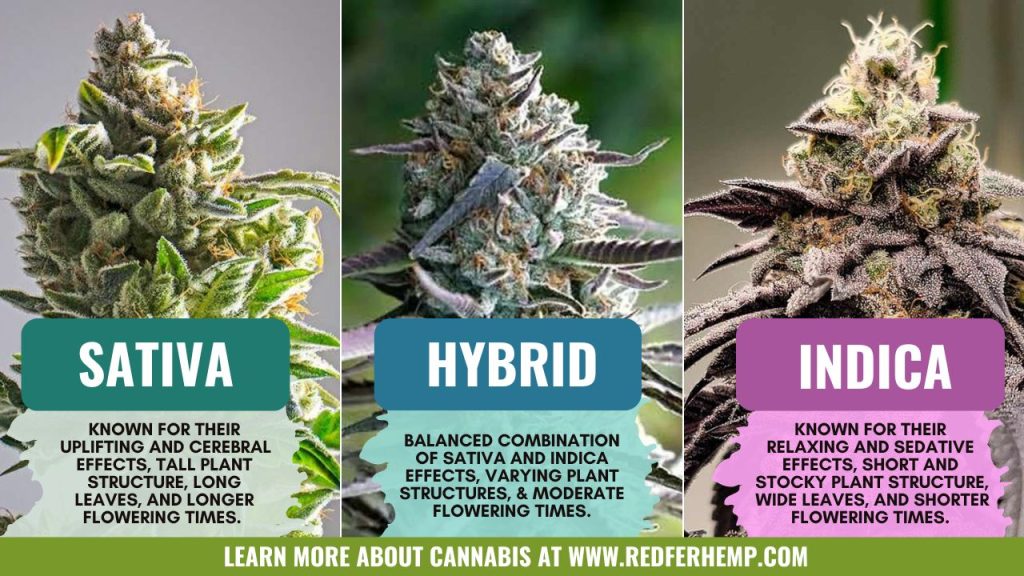
Choosing the right cannabis variety for your outdoor cannabis grow is crucial for maximizing yield and achieving your desired effects. There are three main types of cannabis: Sativa, Indica, and Hybrid. Each variety has distinct characteristics that influence its growth, appearance, and psychoactive effects.
Sativa Varieties
- Psychoactive Effects: Sativa strains are known for their uplifting and cerebral effects. They often produce a clear-headed, energetic high that can be stimulating and creative.
- Plant Structure: Sativa plants tend to be tall and slender, with long, thin leaves that have 7-10 blades per leaf. They can reach significant heights, especially in outdoor environments.
- Growing Requirements: Sativa strains typically have longer flowering times than Indica strains. They thrive in warm climates with ample sunlight and can be more susceptible to pests and diseases.
Indica Varieties
- Psychoactive Effects: Indica strains are known for their relaxing and sedative effects. They often produce a heavy, body-focused high that can be ideal for pain relief and relaxation.
- Plant Structure: Indica plants are typically shorter and stockier than Sativa plants, with short, wide leaves that have 4-7 blades per leaf. They have a more compact growth habit.
- Growing Requirements: Indica strains generally have shorter flowering times than Sativa strains. They are well-suited for cooler climates and can be more resistant to pests and diseases.
Hybrid Varieties
- Psychoactive Effects: Hybrid strains combine the characteristics of Sativa and Indica varieties, offering a wide range of effects that can vary depending on the specific genetic makeup. Hybrids can produce a balanced high, or they may lean more towards Sativa or Indica effects.
- Plant Structure: The height and leaf shape of hybrid plants can vary depending on the dominant parent strain. Some hybrids may be taller and more slender, while others may be shorter and stockier.
- Growing Requirements: The growing requirements for hybrid strains can also vary, depending on the dominant parent strain. However, hybrids generally have moderate flowering times and can be relatively easy to grow.
Choosing the Right Outdoor Cannabis Variety
When selecting a cannabis variety for your outdoor grow, consider your desired effects, growing conditions, and personal preferences. If you’re looking for a stimulating and uplifting high, a Sativa-dominant strain might be a good choice. If you prefer a relaxing and sedative effect, an Indica-dominant strain could be more suitable. Hybrids offer a wider range of options, allowing you to find a strain that perfectly suits your needs.