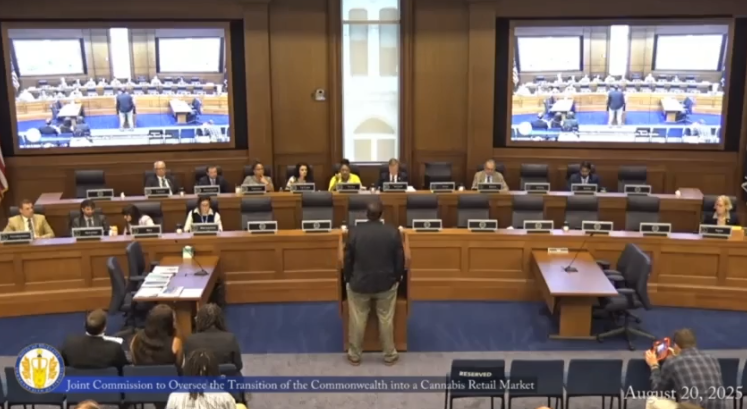
In this powerful 7-minute presentation, Graham Redfern, owner and operator of Redfern Hemp Co., Redfern Market LLC, as well as, being a board member of both Virginia’s Farm Bureau and Cannabis Small Business Association, passionately advocates for a comprehensive approach to cannabis agriculture in Virginia. Drawing from his experience as owner of Redfern Hemp CO, Redfern shares critical insights into the untapped potential of cannabis beyond smokable products.
Virginia Hemp’s Deep Taproots
Hemp has deep roots in American agriculture. For centuries, it was grown for rope, sailcloth, and seed oil before prohibition policies in the 20th century cut short its potential. Today, Virginia stands at a crossroads: it can continue to treat cannabis as a narrowly defined, dispensary-driven market, or it can seize the opportunity to embrace hemp as a full-fledged agricultural commodity.
As Graham Redfern put it in a recent address:
“If lawmakers and stakeholders want this to be a true agricultural industry, we really need to think about the farmer and ask for his opinion.”
Graham Redfern’s words underscore a principle that policymakers and advocates must take seriously. To unlock Virginia hemp’s true potential, Virginia must treat it not as a specialty product, but as an agricultural foundation for diverse markets.
Listening to Farmers First
Farmers know best what grows, what fails, and what markets can sustain their livelihoods. Yet, too often, they are sidelined in favor of corporate and regulatory interests. Including farmers in cannabis policymaking ensures that regulations reflect on-the-ground realities.

The U.S. Department of Agriculture emphasizes that commodity markets succeed when producers are directly engaged in decision-making (USDA AMS, 2022). In Virginia, this would mean creating advisory boards with farmer representation, holding public comment sessions in rural communities, and ensuring that small-scale growers aren’t drowned out by larger industry players.
Looking Beyond the Smoke
Too much cannabis policy has focused exclusively on smokable products. As Redfern reminded audiences:
“Marijuana is not all smoking. The plant will produce way more than a flower to roll in a joint.”
This truth is echoed globally. Hemp is used for textiles, paper, biofuels, animal feed, and even as a replacement for plastics. The Congressional Research Service estimates that hemp has more than 25,000 potential product applications (CRS, 2019). By pigeonholing cannabis as only a “flower crop,” Virginia risks missing out on entire industries that can thrive off its soil.
Diversifying the Virginia Hemp Economy
Virginia has the potential to lead in multiple cannabis-related markets. Redfern emphasized expanding into:
- Edible products
- Cosmetics
- Topicals
- Minor cannabinoid production
These markets already show strong growth – as evident by many Redfern’s own extensive product line available for purchase online. Companies like Unilever and L’Oréal are investing heavily in hemp-based skincare (Grand View Research, 2022). The nutraceutical industry is exploring cannabinoids like CBG, CBC, and CBN for wellness applications. The Brightfield Group projects that hemp-derived CBD alone could reach over $6 billion in annual U.S. sales by 2026 (Brightfield Group, 2021). For Virginia, supporting these sectors means encouraging innovation, supporting processing infrastructure, and opening pathways for farmers to tap into new revenue streams.
Building Fair and Flexible Regulations
Regulations should not leave farmers feeling, in Graham’s words, “victimized through this whole process.” Yet overly strict THC testing rules and short compliance windows have cost farmers millions nationwide, as crops are destroyed for being marginally over the legal threshold.
A 2022 University of Kentucky study found that more flexible THC thresholds would save significant revenue for growers while still maintaining consumer safety (UK Ag Econ, 2022). Canada’s hemp program, often cited as a model, uses broader compliance margins and has successfully built a stable national industry (Health Canada, 2021). Virginia can learn from these examples by designing rules that balance safety with farm viability.
Recognizing Hemp’s Economic Potential
Hemp is not just a crop; it’s a potential economic engine. As Redfern warned:
“Virginia will never see the true economic impact that cannabis can accrue if it doesn’t recognize cannabis as an actual agricultural commodity.”
The data backs him up. According to the Brookings Institution, rural economies benefit most when hemp is integrated into a farm-first strategy (Brookings, 2021). Hemp processing plants, cooperative networks, and ancillary businesses create local jobs and strengthen agricultural supply chains. States like Colorado have demonstrated that hemp can revitalize rural communities, generating revenue far beyond what a dispensary-only model provides.
Shifting From Dispensaries to Agriculture
The dispensary-first model, while profitable for some, is not an agricultural strategy. Redfern argued for a broader vision that supports “the farmer, the small business, and all the ancillary businesses that go with an industry as such.”
This means shifting cannabis regulation into the domain of the Virginia Department of Agriculture, where commodity markets are developed, rather than treating it solely as a retail or medical issue. Such a move would align hemp with crops like corn, soybeans, and tobacco — industries that benefit from systemic infrastructure and policy support.
Building a Virginia Hemp Ecosystem
Hemp’s success depends on infrastructure. Farmers cannot scale production without local decortication facilities, fiber processors, and stable supply chains. This is why China and France dominate global hemp markets: not because they grow more hemp than Virginia could, but because they invested early in processing and manufacturing capacity (FAO, 2020).
For Virginia, investing in cooperatives, research hubs, and rural processing plants would ensure farmers aren’t left with crops they cannot sell. Federal grants, public-private partnerships, and state economic development programs can all play a role in making hemp a true commodity industry.
Conclusion
Virginia has a choice: treat hemp as a narrow, dispensary-driven market or embrace it as a full agricultural commodity with vast potential. By following Graham Redfern’s call — to listen to farmers, expand markets, create fair regulations, and invest in ecosystems — the Commonwealth can position itself at the forefront of the next great American agricultural movement.
The opportunity is there. What remains is the political will to seize it. If you want to support Graham, and the rest of the Redfern Team, in pursuing commonsense cannabis legislation, please send an email to: research@redfernhemp.com .
References
- Brightfield Group. (2021). U.S. CBD Market Forecast 2021-2026. Brightfield Group.
- Brookings Institution. (2021). The economic case for hemp: Supporting rural revitalization. Brookings.
- Congressional Research Service. (2019). Hemp as an Agricultural Commodity (R44742). CRS.
- Food and Agriculture Organization (FAO). (2020). Hemp production and trade overview. FAO.
- Grand View Research. (2022). Cannabis Cosmetics Market Size Report. Grand View Research.
- Health Canada. (2021). Industrial Hemp Regulations. Government of Canada.
- University of Kentucky Department of Agricultural Economics. (2022). Economic Implications of THC Testing Thresholds in Hemp. UK Ag Econ.
- U.S. Department of Agriculture, Agricultural Marketing Service. (2022). Stakeholder Engagement in Agricultural Policy. USDA AMS.