Why Grow Hemp Biomass Alongside Other Biomass Crops?
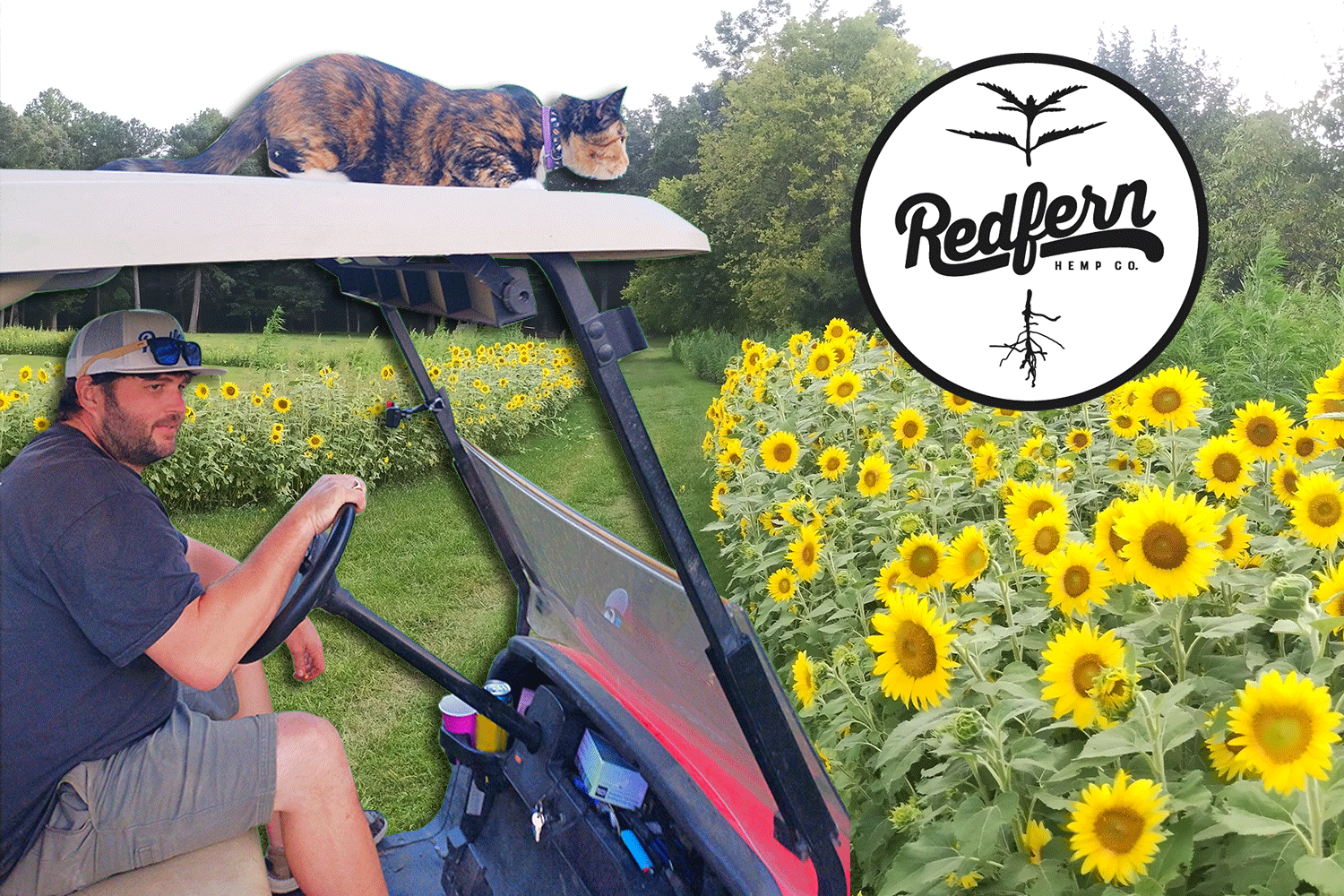
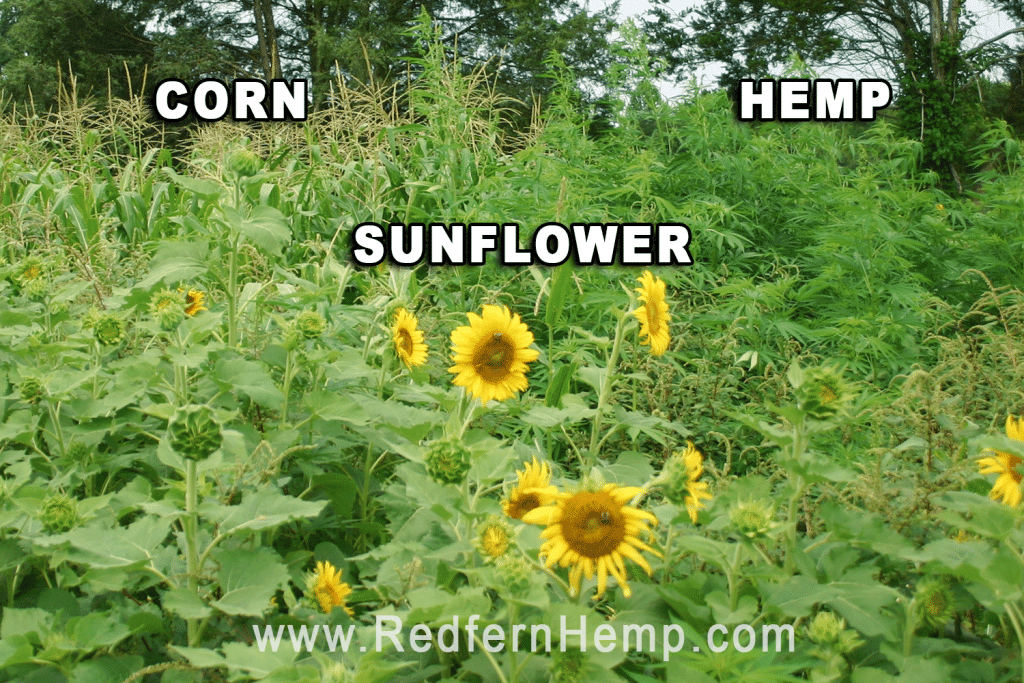
Hemp agriculture couldn’t have come at a better time! The prospects of sustainable hemp biomass playing its role in the green revolution and the circle economy many sounds promising, yet not many farmers understand how to incorporate it within their rotation cycle. Here at the Redfern Farm we’re showcasing how hemp can easily be grown alongside other biomass crops.
We believe hemp agriculture is not another mono-culture crop; we believe it can be complementary alongside everything farmers are already producing. Moreover, we believe growing hemp alongside corn and sunflower will provide natural benefits such as pesticide resistant, therefore improving the overall production of each crop respectively.
All our hypothesis stem from simple known assumptions which we’ve enumerated below for you.
1. Increased Biodiversity:
- Pest and Disease Control: A diverse mix of crops can confuse pests and diseases, making it harder for them to establish themselves.
- Reduced Reliance on Pesticides: Natural pest control mechanisms can be more effective in diverse systems, reducing the need for chemical inputs.
2. Improved Soil Health:
- Nutrient Cycling: Different crops have varying nutrient requirements. By growing them together, you can promote nutrient cycling and improve soil fertility.
- Reduced Erosion: Diverse root systems can help to anchor the soil and prevent erosion.
3. Enhanced Productivity:
- Synergistic Interactions: Some crops can benefit from growing together. For example, nitrogen-fixing legumes can improve soil fertility for other crops.
- Risk Management: If one crop fails due to pests, disease, or adverse weather, others may still thrive, reducing overall risk.
4. Increased Economic Diversification:
- Multiple Income Streams: By growing a variety of crops, you can generate income from multiple sources, reducing your reliance on a single market.
- Reduced Market Risk: If the market for one crop declines, you may be able to rely on others to maintain your income.
5. Environmental Benefits:
- Habitat Creation: Mixed cropping systems can provide habitat for beneficial insects and pollinators.
- Carbon Sequestration: Diverse crop rotations can help to increase carbon sequestration in the soil.
Attracting the Native Birds, Bees, Insects & Wildlife
Since the very beginning of our hemp biomass experiment we’ve documented the diverse species which have been attracted to the our unique Eco-system. One thing that has surprised us is how much the bumblebees absolutely love the pollen from the hemp male plants. Moreover, friendly beetles and lady bugs have found a natural home mostly among the female hemp plants.
Native Virginia Beetles
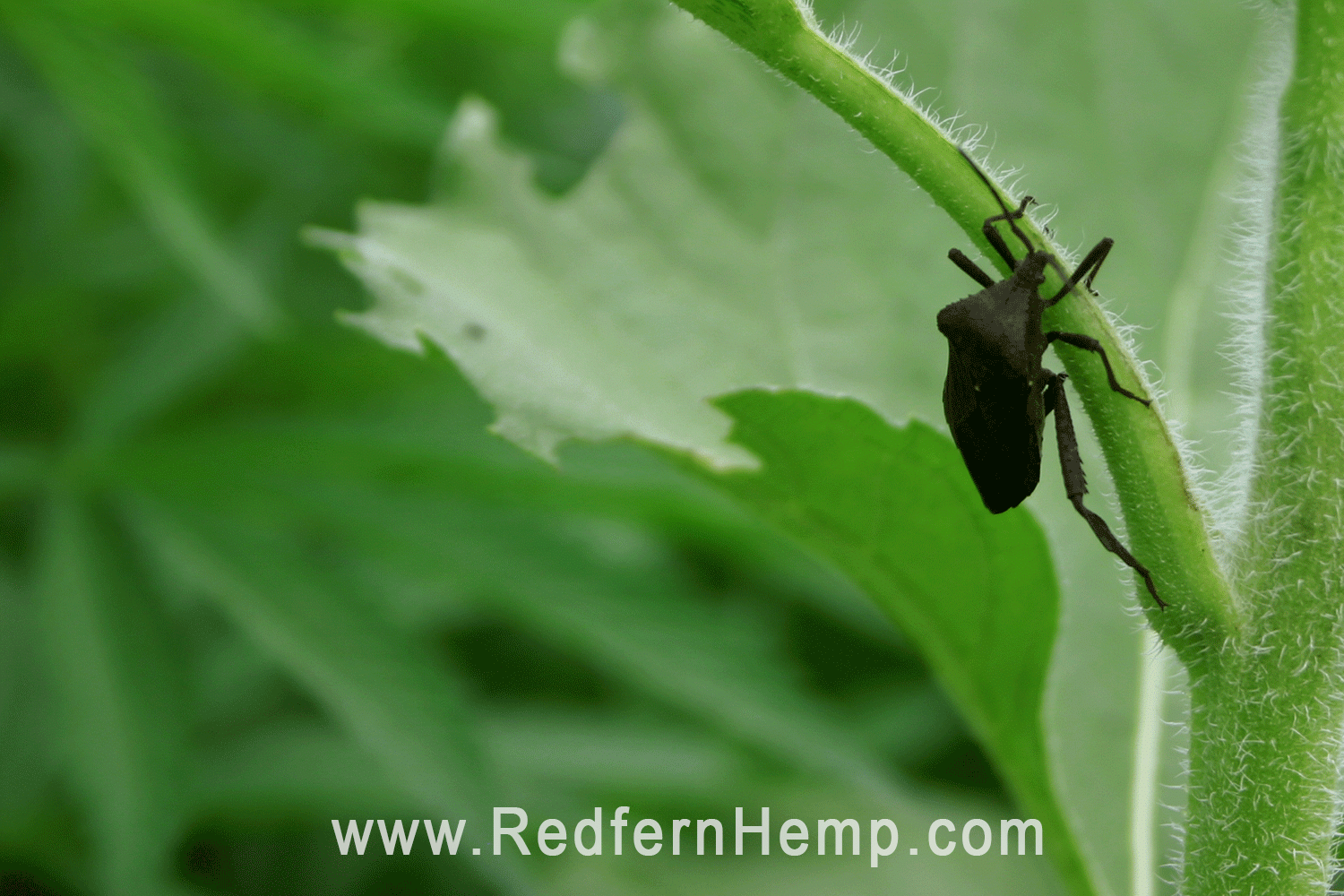
This black beetle among many others have gravitated to all the biomass crops. For better or for worst, a lot of them have taken to the hemp!
In terms of wildlife, the deer can’t resist the corn (same with the cows if they’re able to escape)! We allow our Longhorns to graze our hemp fields (without sunflower or corn) and they’ve done a terrific job topping the plants and keeping the weeds down. The cows seem to enjoy eating the hemp leaves and seem to be using the hemp field to cool down as they would in a silvopasture.
Lastly, the birds, also, are bountiful. Right now we have a lot of Golden Finches but the Doves are starting to come on now in late August. We’re expecting Lots and lots of Doves in September! Just like Graham theorized, the birds have been, first, attracted to the sunflower seeds but, soon after, take to the hemp seeds which they really seem to enjoy.
Understanding the Conversion Process:
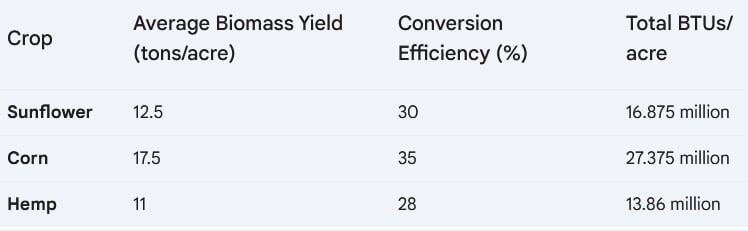
Although we do not have the final results from our own hemp biomass experiment, it’s still important to study previous studies to temper our expectations. Therefore, to convert biomass yields into energy production, we need to consider the efficiency of the conversion process and the energy content of the biomass. The energy content of biomass is typically measured in British thermal units (BTUs) per pound or kilocalories per kilogram.
Conversion Factors and Efficiency:
- Energy Content: The energy content of biomass can vary depending on the crop, its moisture content, and other factors. However, a general estimate is that 1 ton of dry biomass is equivalent to around 4.5 million BTUs.
- Conversion Efficiency: The efficiency of converting biomass into energy depends on the method used (e.g., combustion, gasification, anaerobic digestion). Typical efficiencies range from 25-40%.
Calculating Energy Production: To calculate the energy production from a given biomass yield, we can use the following formula:
- Energy Production (BTUs) = Biomass Yield (tons) * Energy Content per Ton (BTUs/ton) * Conversion Efficiency
Example: Let’s assume we have 10 tons of dry sunflower biomass and a conversion efficiency of 30%.
Energy Production = 10 tons * 4.5 million BTUs/ton * 0.3 = 13.5 million BTUs
Hemp Biomass for Biofuels
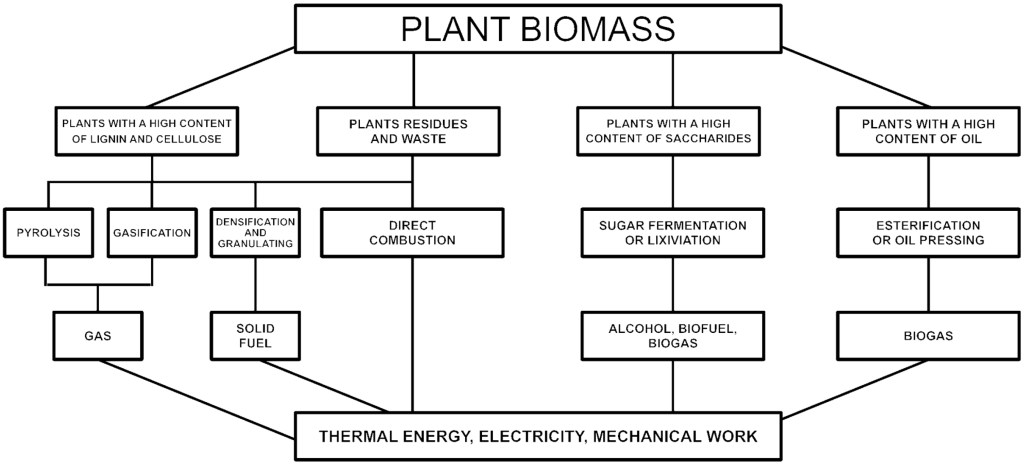
- Solid Biofuels: Hemp biomass can be used to make briquettes and pellets, which can be burned in household stoves. It’s a good choice due to its high cellulose and hemicellulose content.
- Liquid Biofuels: Hemp can be converted into bioethanol, a renewable fuel alternative to gasoline. It has a high cellulose content and low lignin content, making it a good candidate for this process.
- Biogas: Hemp can also be used to produce biogas, a renewable gas that can be used for heating, cooking, and generating electricity.
Hemp’s Advantages
- High Energy Content: Hemp biomass has a high heat of combustion, making it a good source of energy.
- Versatility: Hemp can be used to produce a variety of biofuels, making it a flexible option.
- Environmental Benefits: Using hemp for biofuels can reduce reliance on fossil fuels and help to protect the environment.
Challenges and Future Research
- Regulatory Restrictions: In some areas, hemp cultivation may be subject to regulations due to its historical association with cannabis.
- Processing Costs: Converting hemp biomass into biofuels can be expensive.
- Market Development: The market for hemp-based biofuels is still developing, and there may be challenges in finding buyers.
Future research will focus on improving the efficiency and cost-effectiveness of hemp biofuel production, as well as exploring new applications for this versatile plant.
The Quick Pros & Cons for Each Biomass Crop
Sunflower:
Pros:
- High oil content: Sunflowers are primarily grown for their oil, but the remaining biomass can be used for biofuel production.
- Adaptability: Sunflowers can grow in various climates and soil conditions.
- Nutrient-rich: Sunflower meal, a byproduct of oil extraction, can be used as animal feed.
Cons:
- Susceptible to pests and diseases: Sunflowers are prone to certain pests and diseases, requiring careful management.
- Harvesting challenges: Harvesting sunflower heads can be labor-intensive and may require specialized equipment.
- Lower biomass yield: Compared to corn, sunflowers may have a slightly lower overall biomass yield.
Corn:
Pros:
- High biomass yield: Corn is one of the most productive crops for biomass production.
- Versatility: Corn can be used for various applications, including biofuel, animal feed, and food.
- Established infrastructure: There’s a well-developed infrastructure for growing, harvesting, and processing corn.
Cons:
- Water-intensive: Corn cultivation can be water-intensive, especially in regions with limited water resources.
- Nutrient-demanding: Corn requires significant inputs of fertilizers and pesticides.
- Environmental concerns: Some concerns exist regarding the environmental impact of large-scale corn production, such as soil erosion and nutrient runoff.
Hemp Biomass:
Pros:
- Rapid growth: Hemp is a fast-growing crop with high biomass yields.
- Versatility: Hemp can be used for various applications, including biofuel, fiber, and industrial products.
- Environmental benefits: Hemp can help improve soil health and reduce erosion.
Cons:
- Regulatory restrictions: In some regions, hemp cultivation may be subject to strict regulations due to its historical association with cannabis.
- Processing challenges: Processing hemp biomass for specific applications may require specialized equipment and techniques.
- Market development: The market for hemp-based products is still developing, and there may be challenges in finding consistent buyers.
Overall, the best choice of biomass crop depends on various factors, including climate, soil conditions, available infrastructure, and specific end-use applications.
Resources:
https://www.mdpi.com/2076-3417/13/17/9733
file:///C:/Users/navac/Downloads/Industrial_hemp_for_biomass_production.pdf