
Honoring the Fallen on Vietnam Veteran’s Day
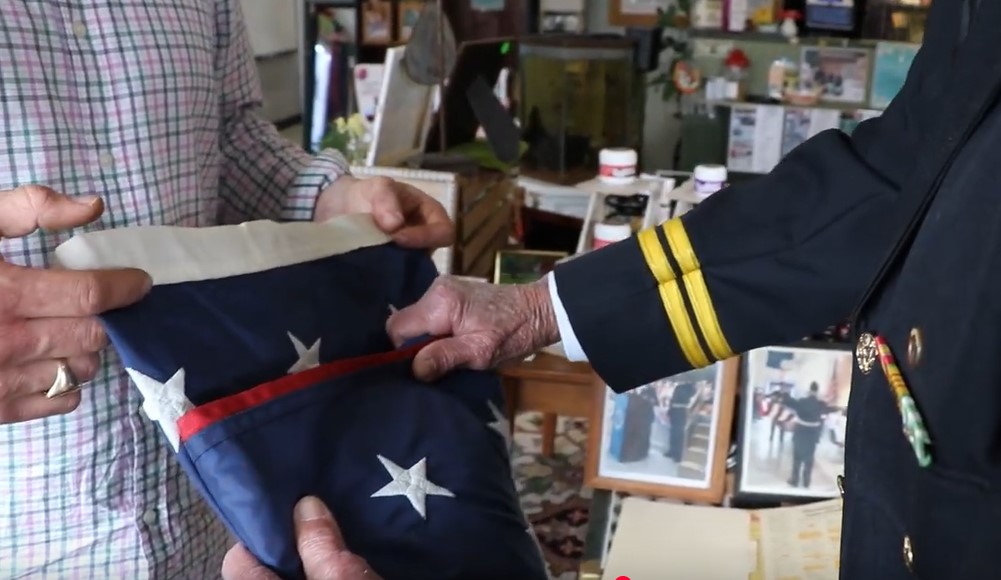
Graham Redfern and James Peacemaker, a Vietnam Veteran whom patrolled the Mekong River during the TET offensive, honor the fallen at the Redfern Market on Vietnam Veterans Day. Peacemaker demonstrates to both Graham and Corey the art of properly folding a casket flag.
The ceremonial folding of the American flag, traditionally a casket flag at funerals, involves a precise 13-fold process, each fold imbued with symbolic meaning. The folds represent concepts such as life, eternal life, honor to veterans, trust in God, and tribute to the nation. The process requires careful handling, maintaining tension on the flag, and concludes with a specific salute, even for civilians. This act is a solemn and deliberate expression of respect.
Peacemaker Goes to War
Jim Peacemaker, a Vietnam War veteran, served in the U.S. Navy from November 1964 to December 1968. Initially stationed at Little Creek and Norfolk, he deployed to Southeast Asia in 1967. Expecting to serve as a “blue water” sailor on the open ocean, he instead became a “brown water” sailor, tasked with patrolling the rivers of Vietnam—effectively placing him in a ground combat role.
Assigned to Task Force 116 (also known as the U.S. Navy’s “Game Warden” operations) Peacemaker served aboard a military transport ship, enduring a mine explosion and subsequent repairs in the Philippines, Guam, and Japan. He participated in the Tet Offensive from January 30 to March 31, 1968, and was promoted to Second Class Petty Officer.
More About the U.S. Navy’s Task Force 116
Strategic Importance of Waterways: South Vietnam possessed an extensive network of rivers and canals, which were of vital importance for both transportation and access to essential resources, particularly within the fertile Mekong Delta. This intricate network made control of these waterways a crucial strategic objective, as it essentially meant controlling the heart of South Vietnam.
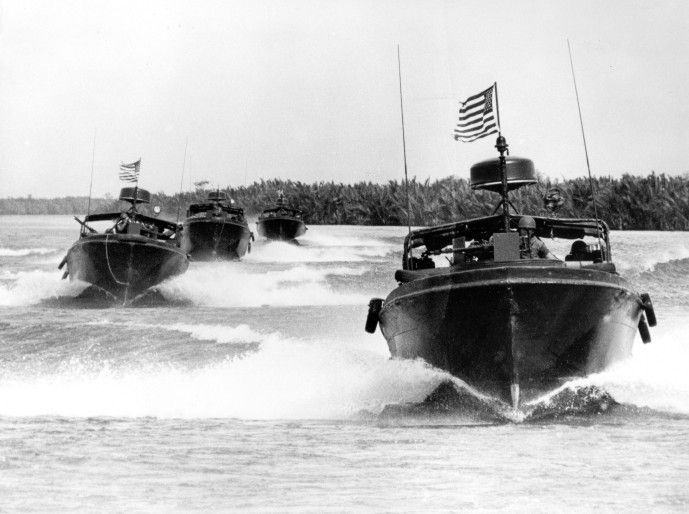
River Patrol Force (Task Force 116): Task force 116 was established in 1965 to secure the waterways, primarily through “Operation Game Warden”. The task force utilized River Patrol Boats (PBRs), which were modified over time to improve performance and durability. There was experimentation with Patrol Air Cushion Vehicles (PACVs), however those vehicles proved to be impractical. The task force relied heavily on air support, initially from Army helicopters, then from Navy Helicopter Attack Light Squadron (HAL) 3 “Seawolves” and later Light Attack Squadron Four (VAL-4) “Black Ponies”. The “Black Ponies” provided significant fire power and ordnance support. Naval Special Warfare (SEALs) teams conducted special operations. Mine clearing forces, using minesweeping boats (MSBs) and specialized landing craft (LCM(M)), were essential for securing vital shipping lanes, particularly the Long Tau River.
Operations and Challenges: The operations conducted by the Task force 116, included patrolling the rivers and canals, the inspection of vessels traveling along those waterways, and the setting of ambushes at locations suspected of enemy crossings. The task force also provided gunfire and transportation support for the SEAL teams, and enforced curfew restrictions within their operational sectors. Operation Jack-Stay was a significant early operation that took place within the Rung Sat Special Zone. The Viet Cong presented a constant and significant threat, employing mines and ambushes to disrupt allied shipping. Task force clearwater was created to secure river ways near Hue. Also the PBR Mobile Base II(Mobase II) was used as a floating base of operations.
“Joining the Service Was a Turning Point”
“The military isn’t just a job; it’s a profound commitment. It’s about belonging to something larger than yourself, a unit, a service, a nation. And within that structure, I learned a powerful lesson: respect is given to the uniform, not the individual. It’s a recognition of the sacrifice and dedication that uniform represents, transcending any personal differences.
For me, joining the service was a turning point. It offered a path to self-discovery and unlocked a potential I never knew I possessed. It was a challenging journey, but one that ultimately shaped me into the person I am today. It instilled discipline, resilience, and a sense of purpose. And while the welcome home we deserved was delayed, the enduring impact of service remains. It was, without a doubt, one of the best things that ever happened to me.”
Lastly, although Peacemaker is a Veteran, he is still a warrior for all things Redfern. He has literally become a part of our family and we wouldn’t have it any other way. He fought for freedom, and now he’s fighting for American Citizen’s consumer rights to enjoy a natural remedy like Cannabis. Peacemaker uses Redfern’s Body Butter which help him with several ailments.
We appreciate everything that you do to make this world a better place!
SOURCES:
https://www.mrfa.org/us-navy/us-navy-mobile-riverine-force/task-force-116/