
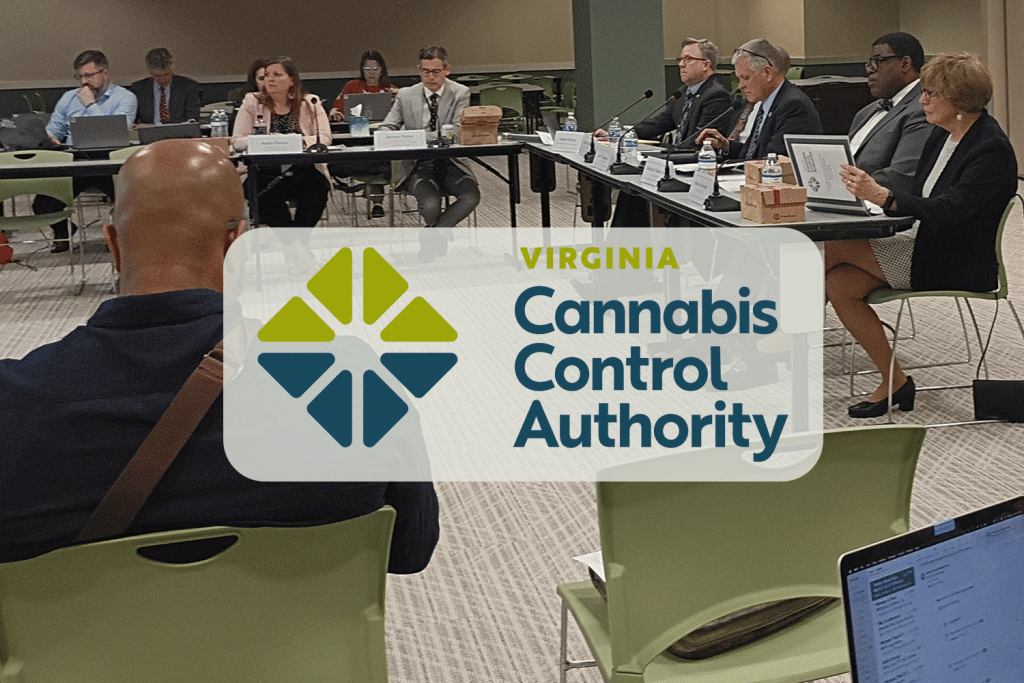
The Redfern Hemp Team attended the Virginia Cannabis Control Authority meeting on Wednesday, March 26th, in support of Virginia’s hemp industry. One of the most important moments happened at the end, during public comment, when Pharmacist Benjamin Sypniewski rose to the podium and spoke.
The kind of thing I get asked all the time about medical cannabis: is medical cannabis and firearms. I get this question asked the most from new patients or people trying to enter the Medical program. And that information is on the VCCA site in the education tab. My comment publicly, today, is that you should get your firearms before you get your medical cannabis certification. Thank you.
Although Ben’s comments were brief, they were profound because they touch on one of the most controversial subjects that concerns would-be medical cannabis cardholders.
It should be noted: we followed-up with Ben's suggestion and visited the VCCA's website and after a thorough search of the entire site, there was no warning about forfeiting your gun rights once receiving your medical card.
Answering a follow-up question, Pharmacist Sypniewski further explains the impact that these regulations are having on medical cannabis accessibility.
So the data is telling us that we’re only serving 10% of the population that consumes cannabis. That is a small percentage. So, yeah, there’s a lot of reasons and barriers of why people are not coming to the store.
Redfern’s Stance on Medical Cannabis & Gun Rights
Although the rest of this article reviews the debate surrounding second amendment rights and medical cannabis, it’s important to remind the reader that Redfern Hemp Co. sells compliant hemp products – not medical cannabis. Hemp entities are regulated under the Virginia Department of Consumer Services’ Hemp Enforcement Program. Moreover, since we sell a federally legal food product, no one looses their first amendment rights to enjoy hemp.
Furthermore, Redfern Hemp Co. believes in widespread cannabis accessibility. Although you can buy compliant hemp products without loosing your 2A rights, we’re strong advocates for those medical cannabis cardholders who’ve lost their gun rights simply for seeking a medicinal remedy for health purposes. With that said: hemp products are NOT a substitute for medical cannabis for those who truly need it.
If you have a story concerning anything in this article we want to hear from you! Send us an email to research@redfernhemp.com.
The Crossroads of Cannabis and Carry: Second Amendment Rights for Virginia Medical Marijuana Patients
The burgeoning legality of medical cannabis across the United States has intersected with deeply held Second Amendment rights, creating a complex legal landscape. In Virginia, where medical marijuana is legal, this intersection presents a unique set of challenges and ambiguities for patients who also wish to own firearms. This article delves into the issues surrounding the Second Amendment rights of medical cannabis cardholders in the Commonwealth, outlining the key parties involved and their respective stances.
The Core Conflict: Federal vs. State Law
The central issue stems from the ongoing conflict between federal and state laws regarding cannabis. While Virginia has legalized medical marijuana, federal law classifies marijuana as a Schedule I controlled substance under the Controlled Substances Act (CSA). This federal classification has significant implications for firearm ownership.
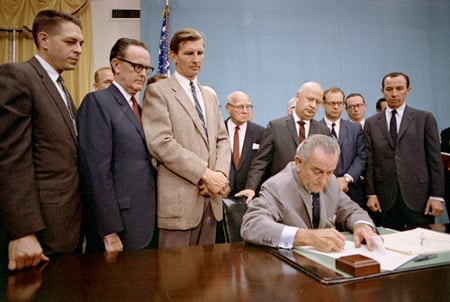
Federal Law and Firearm Ownership: The Gun Control Act of 1968 makes it illegal for individuals who are “unlawful users of or addicted to any controlled substance” to possess firearms. The Bureau of Alcohol, Tobacco, Firearms, and Explosives (ATF) has interpreted this to include medical cannabis cardholders, reasoning that possession of a medical cannabis card indicates current or past marijuana use, even if legal under state law. An open letter from the ATF in 2011 informed firearm dealers that anyone possessing a valid medical cannabis card is prohibited from acquiring a handgun from a licensed dealer. Furthermore, ATF Form 4473, which prospective gun owners must complete, asks whether they use cannabis. Answering “yes” will lead to the denial of the firearm purchase, and answering “no” while holding a medical card could be considered perjury.
Virginia State Law on Cannabis and Firearms: Virginia has made significant strides in legalizing marijuana, initially for medical purposes and later for adult recreational use. However, Virginia law also presents restrictions. According to the Code of Virginia § 18.2-308.4, it is a Class 6 felony to possess a firearm while simultaneously and unlawfully possessing a Schedule I or II controlled substance, which includes marijuana under federal law. This means that while Virginia permits medical marijuana use, the state prohibits owning a gun and using cannabis at the same time.
Parties Involved and Their Stances:
- Medical Cannabis Patients in Virginia: These individuals seek to access medical cannabis for therapeutic benefits as permitted by Virginia law. Many also wish to exercise their Second Amendment right to own firearms for self-defense or other lawful purposes. They are caught in the middle of conflicting federal and state regulations. Their stance is generally that their legal medical status under state law should not infringe upon their constitutional right to bear arms, especially when they are not actively impaired.
- The Federal Government (ATF and Department of Justice): The federal government, through agencies like the ATF and the Department of Justice, maintains a strict stance based on the CSA. They consider marijuana a prohibited substance regardless of state laws and view medical cannabis cardholders as “unlawful users,” thus barring them from firearm ownership. Their position is that federal law supersedes state law in this matter.
- The State of Virginia: Virginia has legalized medical cannabis and decriminalized simple possession. However, the state also has laws that prohibit the simultaneous unlawful possession of controlled substances and firearms. This creates a complex situation where the state recognizes medical cannabis use but also has restrictions that align with the federal concern about drug use and firearm possession. While Virginia allows medical cannabis, it does not explicitly protect the Second Amendment rights of its medical cannabis patients in the face of federal prohibition.
- NORML (National Organization for the Reform of Marijuana Laws): NORML advocates for the legalization and responsible use of marijuana. They have actively engaged in the debate surrounding medical cannabis patients’ Second Amendment rights, arguing that the federal ban is unconstitutional, particularly in light of the Supreme Court’s decision in New York State Rifle & Pistol Association, Inc. v. Bruen. In an amicus brief submitted in the case Vera Cooper et. al. v. Attorney General of the United States et. al., NORML argues that historically, there was no basis for disarming citizens based on their status as cannabis consumers. They contend that cannabis is historically deeply rooted in American culture and that the prohibition movement was based on racism and political oppression, not valid science. NORML’s stance is that medical cannabis patients should not be prohibited from firearm ownership as a class of individuals based solely on their choice of medical treatment.
- The Courts: The judiciary is tasked with interpreting and applying these conflicting laws and constitutional rights. The Supreme Court’s Bruen decision, which emphasizes historical analysis for Second Amendment cases, is now a key factor in challenges to the federal ban. Lower courts are grappling with how to apply this historical test to the issue of medical cannabis and firearm ownership. Cases like Cooper v Garland are directly challenging the constitutionality of the federal statute barring medical cannabis patients from owning firearms. The Ninth Circuit Court of Appeals previously ruled in Wilson v. Lynch that prohibiting the sale of weapons to medical cannabis users did not violate their Second Amendment rights. However, the legal landscape continues to evolve, especially in light of Bruen.
2A Gun Rights & Medical Cannabis Ambiguity in Virginia:
For medical cannabis patients in Virginia, the situation is fraught with uncertainty. While state law allows them to use cannabis for medical purposes, federal law and a strict interpretation of Virginia’s firearm laws create a scenario where they risk federal prosecution for possessing a firearm and potentially state charges for simultaneously possessing cannabis and a firearm.
It is important to note that in Virginia:
- There is no explicit state law prohibiting someone from owning a gun solely because their spouse has a medical cannabis card. However, federal “constructive possession” laws could create complexities.
- Possessing an expired medical cannabis card could still raise concerns under federal law as it might be seen as evidence of past marijuana use.
- Virginia law is strict regarding firearm possession during drug-related offenses, carrying significant penalties.
Looking Ahead:
The intersection of Second Amendment rights and medical cannabis continues to be a dynamic area of law. The Bruen decision has injected a renewed focus on historical analysis, which advocacy groups like NORML are using to challenge the federal ban. The outcome of cases like Cooper v Garland could have significant implications for medical cannabis patients’ gun rights nationwide, including in Virginia.
In the interim, medical cannabis patients in Virginia must navigate a complex web of federal and state laws. It is crucial for individuals in this situation to seek legal counsel to understand their rights and responsibilities and to stay informed about any future legal developments that may impact their ability to both access medical cannabis and exercise their Second Amendment rights. The tension between state cannabis legalization and federal prohibition, coupled with the fundamental right to bear arms, ensures that this issue will remain a subject of ongoing legal and political debate in Virginia and across the country.
Lastly, Are There any 2A Restrictions with Consuming Hemp Products?
In Virginia, there are no explicit Second Amendment restrictions specifically concerning hemp products containing 0.3% THC or less. Virginia law, through HB 1839, aligns with the 2018 Farm Bill by excluding industrial hemp, hemp products, and oil with a THC concentration below 0.3% from the legal definition of marijuana.
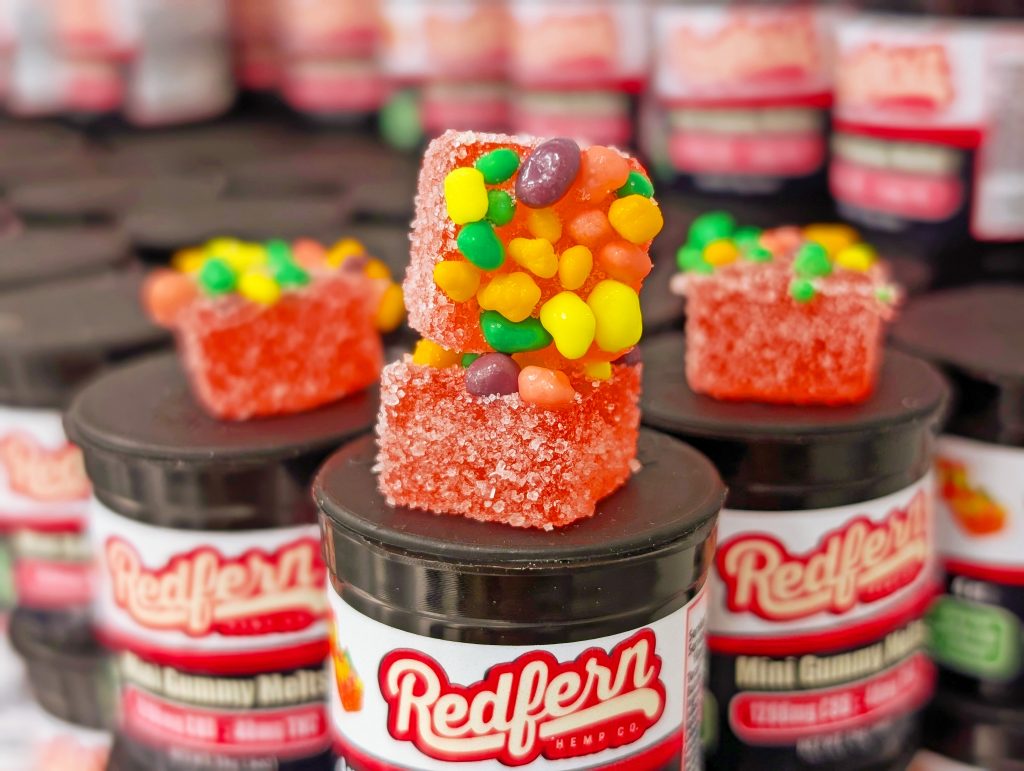
Virginia’s gun laws primarily target controlled drugs, particularly those listed in Schedule I or Schedule II of the Drug Control Act. Because federally legal hemp (containing less than 0.3% THC) is not classified as a controlled substance under the 2018 Farm Bill, and Virginia law reflects this distinction, it does not fall under these firearm restrictions.
Therefore, as long as a hemp product’s THC content remains at or below 0.3%, its possession or use in Virginia is unlikely to impose any specific limitations on your Second Amendment rights under state law. Furthermore, federal law differentiates between hemp and marijuana, indicating that federal firearm restrictions related to “unlawful users of or addicted to any controlled substance” would likely not apply to individuals who use federally legal hemp products.
SOURCES:
https://www.cbsnews.com/news/marijuana-guns-atf-legalization-states-minnesota