
Hemp was a stubborn servant, hard to break and demanding rigorous labor before it yielded anything at all. Yet once worked and brought to market, it underwrote the expansion of empires as well as security at home. Hemp became an indispensable component of both national and personal armories, supplying the sinews of war, trade, coercion, and even spectacle.
John Taylor, the so-called Water Poet, understood this with crystalline clarity. His Praise of the Hemp Seed reads less like poetry than an inventory of essential naval stores.
“This grain grows to a stalk, whose coat or skin
Good industry doth hatchell, twist, and spin,
And for mans best advantage and avails
It makes clothes, cordage, halters, ropes and sails.”
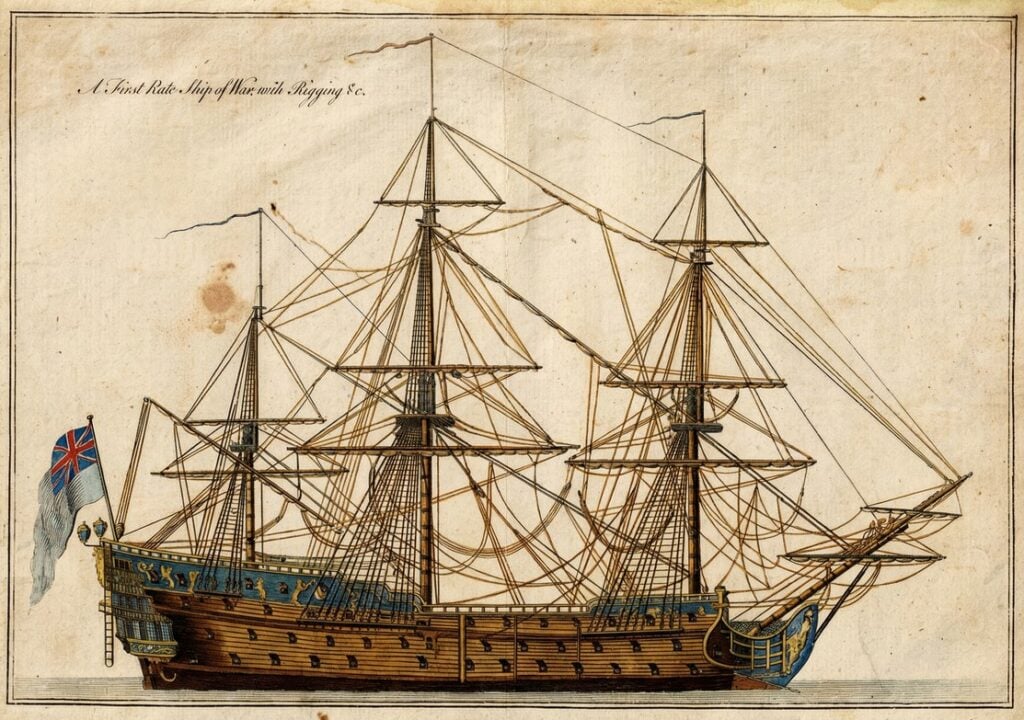
Nowhere was that dependence more visible than at sea. A single first-rate man-of-war required roughly 180,000 pounds of rough hemp just for its sails and rigging. To grow that much hemp took about 424 acres of land for a single year (Phillips, 1821). One ship consumed a landscape. Britain, more esteemed for its woolens and fine linens, did not have the capacity, or the profit incentive, to grow enough hemp fiber for all its maritime needs. Naval supremacy depended on agricultural capacity, trade routes, and alliances. The empire’s reach was literally tethered to hemp, diplomacy, and economies of scale.
Yet even before the great seafaring powers, the ancients understood hemp’s importance as a commodity in trade. Pliny the Elder, writing in the first century, carefully cataloged the value of many natural resources, hemp being no exception:
“The best is that of Arab-Hissar, which is specially used for making hun ting-nets. Three classes of hemp are produced at that place: that nearest to the bark or the pith is considered of inferior value, while that from the middle, the Greek name for which is ‘middles’, is most highly esteemed. The second best hemp comes from Mylasa..”
Milas and Hisar mattered to the ancient world for the same fundamental reason: they occupied positions that trade could not bypass. Milas, known in antiquity as Mylasa, mattered because it sat near Aegean ports while also granting access into a fertile, resource-rich interior. Olive oil, timber, stone, textiles, and fibers moved through its roads and markets, sustained by remarkable political continuity under Persian, Hellenistic, and Roman rule.
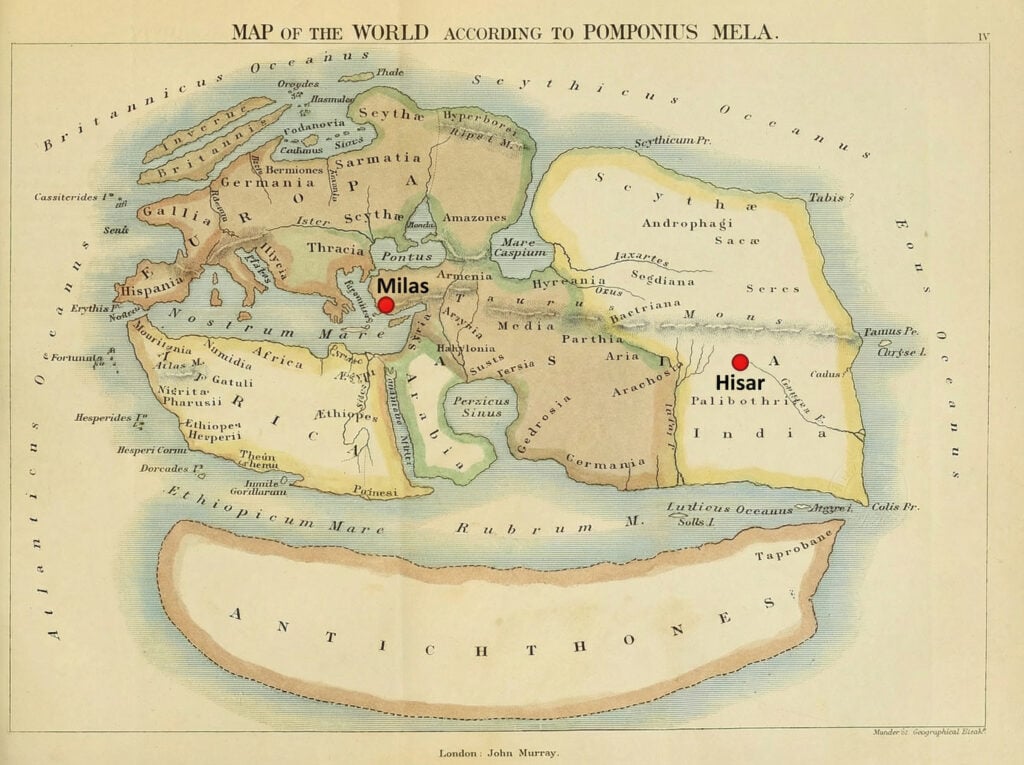
Hisar played an equivalent role across the vast interior of Central Asia. Positioned on critical overland corridors linking Persia, Transoxiana, India, and China, it controlled caravan routes essential to Silk Road commerce. The fort’s repeated capture since the time of Cyrus the Great testified to its strategic value: whoever held Hisar could tax trade, secure supply lines, and project authority across enormous distances.
Pliny’s distinctions reveal a sophisticated material culture. Hemp fiber was graded, according the Greeks, with “that from the middle” considered most highly esteemed. One omitted fact, however, is how many unfortunate animals met their end in the snares from an ancient hemp net.
Yet hemp did not belong solely to states. It lived in the hands of ordinary people who used it not for conquest but for survival. In The Secrets of Alexis of Piemont, hemp, when properly prepared, could distort perception:
Take Common Salt, and fine Chalk Powder, with which powder very will some Hemp or Flax, dipping them in good Aqua Vita, then set them on fire, first putting out all other Lights, and you will see Wonderful Things.
Hemp also commonly served as a burning medium in fire pots, which have been used since prehistoric times to carry flame from place to place, to provide warmth in transit, for cooking, in religious ritual, and even as instruments of war.
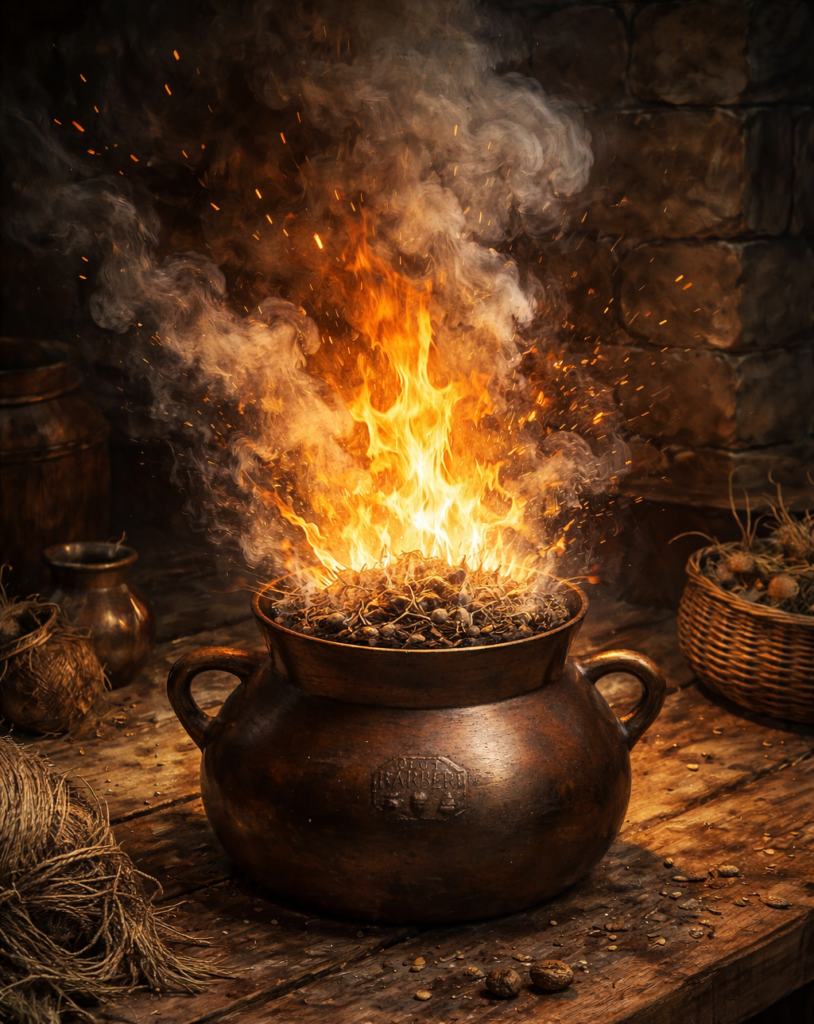
Take six ounces of fine powder, one ounce of powdered rosin, and four ounces of arsenic in fine powder. Mix them together with yarn and a small amount of hemp, fill your pot, and ignite it as you wish, and you will see the effect.
Even hunting was enhanced by hemp. A stopple made of hemp fiber, grease, and hog’s lard, packed firmly upon the gunpowder, purportedly increased both range and lethality, allowing the shooter to bring down quails, stock-doves, and ducks, for “you need not come so near as is usual because this carries great way.” Power, however, was not expressed only through violence and distraction. Fashion, the poet John Taylor understood, established its own sphere of influence among the liberal arts world.
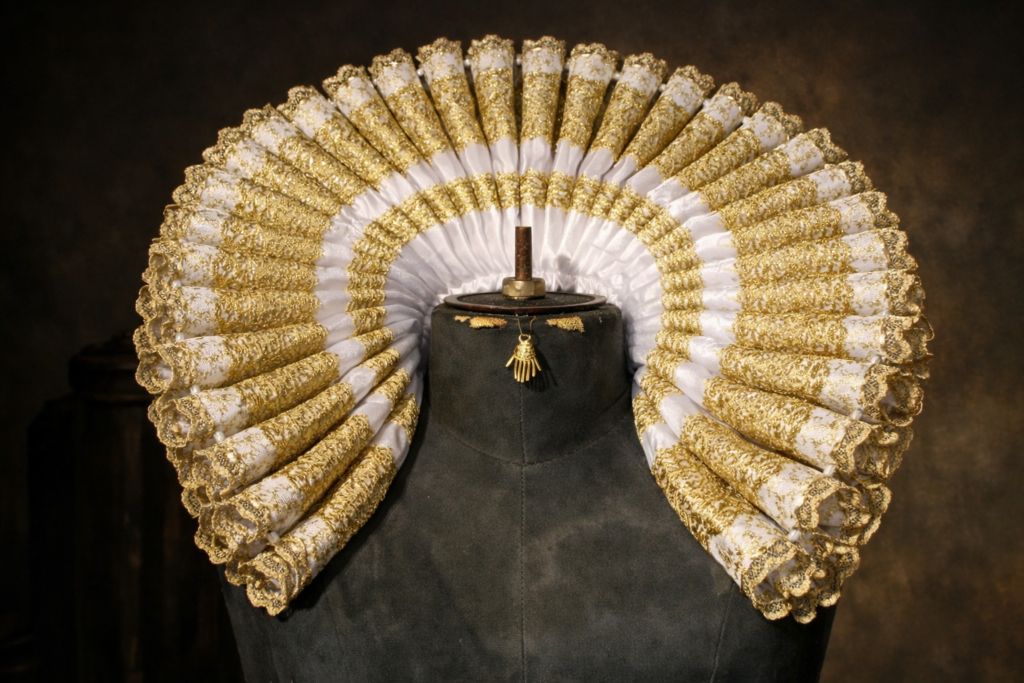
And say, O hemp-seed, how art thou forgotten
by many poets that are dead and rotten?
And yet how many will forget thee still
till they put on a Tyburne pickadill.
The piccadill, a decorative collar edging of the late sixteenth and early seventeenth centuries, symbolized status, confidence, and projection. That even this ornament depended on hemp underscores the plant’s ubiquity. From the cordage that projected power across the seas to the attire that projected it within arm’s reach, hemp played a quiet but essential role in mediating authority in every sphere. Taylor concludes his Praise of the Hemp Seed with a self-aware acknowledgment of both his own ambition and his humble subject’s illustrious importance to the annals of history.
Thus ending, like to Jason’s Golden Fleece,
this work of hempseed is my masterpiece.