
Episode Synopsis:
In this episode of Talkin’ Dirt, host sits down with Graham Redfern, founder of Redfern Hemp Co., and Joe Domino, the company’s Research Director, for an in-depth conversation about Virginia’s rapidly changing hemp industry and the regulatory challenges threatening its future.
The discussion begins with the origins of Redfern Hemp, tracing Graham’s journey from construction and banking into agriculture after discovering hemp’s enormous potential as a renewable industrial crop. From hempcrete and biodegradable plastics to birdseed, textiles, wellness products, and regenerative farming, the conversation highlights how one plant can support dozens of industries beyond cannabinoids. As the discussion unfolds, the focus shifts to Virginia’s evolving hemp regulations. Graham and Joe explain how the Commonwealth’s 2023 hemp framework encouraged businesses to invest in farming, manufacturing, retail operations, and product development, only for those same rules to be fundamentally rewritten through the 2026 state budget.
The episode explores the elimination of Virginia’s 25:1 CBD-to-THC standard, the new two-milligram THC-per-package limit, and why many hemp businesses believe those changes jeopardize years of lawful investment. Listeners also gain insight into the practical realities of operating a vertically integrated hemp business—from obtaining licenses and laboratory testing to complying with ever-changing regulations and educating consumers. Graham explains how cannabinoid products helped finance broader research into industrial hemp applications, including bioplastics, sustainable building materials, grain processing, and agricultural innovation.
Throughout the conversation, the guests discuss the economic consequences they believe the new law will have on Virginia’s hemp industry, including inventory losses, uncertainty surrounding future investment, impacts on employees, retailers, and consumers, and the difficulty of planning a business when regulations continue to change. They also describe the efforts of the Cannabis Small Business Association to engage policymakers and pursue legal remedies. More broadly, the episode becomes a conversation about agriculture, entrepreneurship, public policy, and the challenges of building new industries under evolving regulatory frameworks. Whether listeners are interested in hemp, farming, small business, or government policy, the discussion offers a firsthand look at how legislative decisions can affect an entire supply chain.
0:25 | Host
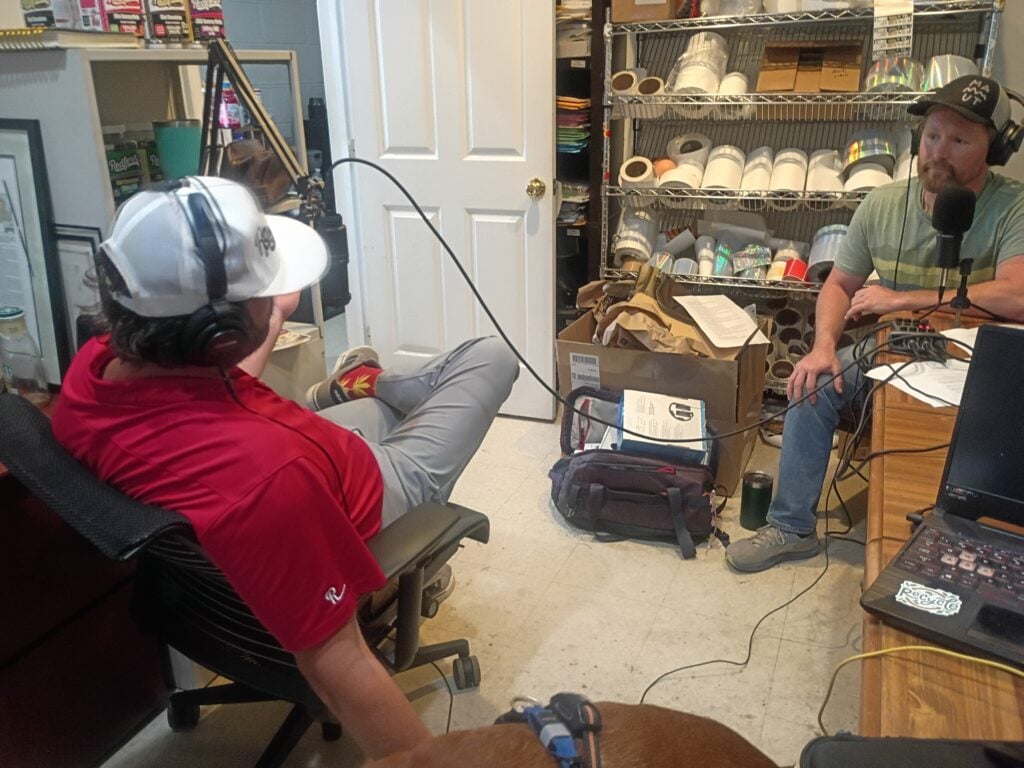
Welcome back to Talkin’ Dirt. A lot of the conversations on this show are about the quiet challenges farmers face: the weather, markets, labor, and what it’s like trying to make a living from the land. Now, this one’s different. It’s about what happens when the biggest challenge isn’t growing the crop. It’s trying to keep up with the rules surrounding it. In this conversation, I sat down with Graham Redfern, founder of Redfern Hemp, and Joe Domino, the company’s research director, to hear the story of a business that spent years trying to build Virginia’s hemp industry from the ground up. Now, Graham didn’t come from farming; he started in construction and banking before becoming convinced that hemp could play a role in everything from sustainable building materials to birdseed, biodegradable plastics, textiles, wellness products, and everything in between, what followed was years of lobbying, research, farming, product development, and building a vertically integrated business, all centered around a plant they believe has enormous untapped potential. But the conversation turns pretty quickly into something much bigger than hemp itself. We spend most of our time unpacking the maze of state and federal regulations that govern the industry, why Virginia’s latest legislative changes threaten to shut down small businesses like theirs, and how constantly shifting rules make it nearly impossible for farmers and entrepreneurs to plan for the future, this conversation is a fascinating look at how public policy, agriculture, and small business collide in the real world. Now, what I appreciated most was that this wasn’t simply a conversation about cannabis; it became a conversation about who gets to shape an industry, what happens when regulation moves faster than innovation, and why knowing the people who grow our food, and in this case, our crops still matters. Even if hemp isn’t something you spent much time thinking about, I think you’ll come away with a better understanding of the challenges facing the people trying to build something new in agriculture today. If you’ve been enjoying this show, I’d really appreciate it if you take a minute to leave a rating or review wherever you listen to podcasts, and if you think this episode will resonate with someone you know, I’d be grateful if you share it with them. It really does help more people discover what we’re putting together here at Talkin’ Dirt. So, I hope this conversation gives you a deeper understanding of some of the people behind Virginia’s ever-changing hemp industry and the rules surrounding it. Here’s my conversation with Graham Redfern and Joe Domino from Redfern Hemp. Cool. Well, yeah. I mean, levels over here look pretty good. So cool. I’m gonna just kind of keep fiddling. I might adjust a few things as we’re going, just based on what I’m seeing over here, but all right, nice. So today I am hanging out down at Redfern Hemp. We’re in Caroline County. Is that right, guys? That’s correct. Nice. I’m with Graham Redfern and Joe Domino, and you guys have quite the quite the complex thing going on here, as we’re going to get into. So we’re going to talk a lot about the regulatory framework of hemp in Virginia, which is entangled in all sorts of craziness. Graham, can you introduce yourself? Tell us how you got into ag in this in the first place, and how this all got started.
3:32 | Graham Redfern
Yeah, sure. My name is Graham Redfern. I’ve been in the hemp world since 2014 when we started lobbying, but prior to that, I was in the banking world, and before that, I started my career out after college in the construction world. But so in the farming side, we I didn’t start in the agricultural industry until 2017 because we were able to get the laws changed in Virginia to allow for university research, which the first program was 2016 into 17. I joined in with four of the universities: UVA, Virginia Tech, JMU, and VSU. And then, when the farm bill changed in 2018, we were allowed to commercialize the plant, and we created Redfern Hemp. 2019, we created Redfern Market in 2021, and so we farm in Caroline County. We farm for an array of products. The plant in itself is a regenerative plant that we use to rotate. And I’ll make sure the phones aren’t ringing the whole time. No worries. But so on the farming side, yeah, we farm for bird seed and everything else that comes around. From that one product, so we have a lot of a lot of co-products that come from the plant, and so our job is to educate the public and try and make markets that don’t get crushed by the government.
5:12 | Host
Cool. Yeah, that’s that’s one of the things about hemp that fascinates me is just all the different use cases. So I’m excited to jump into that for sure. Joe, tell us about yourself. How’d you get into this? How’d you and Graham come together?
5:24 | Joe Domino
Well, when we first legalized hemp in Virginia, it was part of a coalition called the Virginia Hemp Coalition, led by Jason Amatucci. So it was basically strange bedfellows that kind of came together. None of us had businesses. We had a lot of brewery meetings. I actually went out to the first University of Kentucky Hemp Field Day in 2015, I believe, and that was only when universities can grow it. So that was my first time I ever saw a hemp plant, and I fell in love ever since. I jumped into the grain business. We had a company called Gourmet Hemp Foods. We got a hot sauce and all the Food Lion stores called hemp hottie sauce was using hemp seed oil, so we didn’t have any cannabinoids in there, and that’s kind of a big distinction in the food world. Hemp grain, seed oil, hemp hearts, things you see in the grocery store-they have a GRAS approval, so that’s generally recommended as safe through the FDA, the cannabinoids-that’s the CBD. The FDA has kind of been undecided about that, and that’s kind of where we are in this whole state and federal gray working area. But I actually partnered up with Graham, and when COVID hit, you’d be surprised how bad COVID hit hurt the hot sauce world. You know, you couldn’t have a hot sauce on the table without killing the person across from you or handing it to them. So, but see what? Yeah, let me tell you more
6:50 | Host
Hot sauce during. Dude, I
6:52 | Joe Domino
Read every CDC, every FDA, every Virginia Health Department rules during COVID, and they were trying to destroy small business. No hot
7:00 | Host
Sauce for you.
7:01 | Joe Domino
Yeah, it was it was bad. Hot sauce business was not good. Then all the chefs, they lost their jobs, so they created a hot sauce brand. And then you know there was a shortage on five ounce fluted bottles. That’s a whole nother story. But you know what was interesting during COVID was you know a lot of people said CBD helped. Yeah, we can’t say that officially, but that part of the business started growing. So it was really just a partnership of convenience. Graham’s business was growing, and I jumped on board. And you know, he’s not just the cannabinoid side; he has a 40-acre farm. So we’ve been trying to write for grants to develop these higher volume, lower margin margin markets, such as the grain industry, such as the paper industry, or the plastic industry, or the fashion industry. You know these markets aren’t developed here in the United States. When you see your hemp shelled seeds, a lot of that’s coming from Canada, and they’ve got a lot of market share here. So it’s hard for us to kind of get it online and compete. But that’s what we’re trying to do. The cannabinoids was a high-margin product that was financing a lot of the development on the other side of the business. But now a lot of that’s in flux, and I’ll let Graham talk about that.
8:12 | Host
So let me see if I got this right real quick. So it sounds like you were in banking and construction, and then an opportunity came up to where you probably bought some land. I’m assuming, or did you already own some land? I
8:22 | Graham Redfern
Leased a piece of land.
8:23 | Host
You leased a piece of land. You said, “All right, now’s the time’s right for me to grow some hemp.
8:26 | Graham Redfern
That’s correct.
8:27 | Host
And was that in 2000? I can’t remember the time frame. 2014 when the farm bill came through.
8:31 | Graham Redfern
2018 is when the farm bill came through. So the first original farm bill was 2014, and it would allow for research. The 2018 farm bill would allow for commercialization.
8:41 | Host
Gotcha. And so you said so commercialization check, and you said I’m gonna go grow some hemp. That’s basically. Yep. Cool. So from there, where’d it go?
8:51 | Graham Redfern
Well, we’re still here, which is crazy because in this industry, you have to change your business plans every six months because of the General Assembly in Virginia, and also because of the way that the cannabis the cannabis industry is run federally. You have a marijuana industry, a recreational marijuana industry, a medical marijuana industry, and a hemp industry and the medical marijuana industry is run by Wall Street companies that go into each state and set up medical marijuana laws for the purpose of converting those medical marijuana laws to recreational laws once the time has come. So when you have a Democratic governor, you can get a lot of things done, and what we’re seeing here in Virginia now is the Wall Street coming in, creating laws, and then slowly bleeding the hemp industry through legislation, like in 2023. We dealt with a massive change of industry. All national guys got out because Virginia decided to be more restrictive than the federal law.
10:08 | Joe Domino
And there was a bill. It was called SB 903. Yeah. So if anyone wants to look it up, but it was a take and give. It was more strict than federal, but it gave the industry a lot of legitimacy in age gating, child safety, and those weren’t in the federal law.
10:25 | Graham Redfern
It cleaned up a lot of the products that were marketed to kids. It cleaned up the synthetic industry. So the plant is best when it’s close to its natural form without synthesizing much of it. But when companies realize that there are plays within the federal law, it allows for wiggle room, and that allowed for the explosion of cannabinoids and synthetically derived cannabinoids. And Virginia did a very good thing in getting all of those bad products off the market, but they redefined hemp in 2023, and they gave only the ones who wanted to comply an avenue, a stable avenue to play in a Virginia specific. So growing going out of state with a product Virginia specific is hard to do because you’re still dealing with the federal in North Carolina, where they don’t care about they care about the most milligrams per product, and that is not what we are.
11:33 | Joe Domino
Well, we should say that the federal farm bill they had this percentage, which is point 3% THC per weight of biomass, but that was hemp off the field. So if there was more than 0.3% of THC in that plant, that was considered marijuana, and that would happen when Graham had to burn down his field, which I’m sure we’ll we’ll talk about. But that same definition was converted into retail products. So if you have a piece of chocolate, you know, just take the grahams. You know that weighs 200 grams. Then you could put point 3% THC in that. So whatever that math is of 200, you probably know that can. So you could
12:18 | Host
You could take your product and even it out. If you had a chocolate, for example, you could even it out so that the chocolate was less than.3, exactly in compliance. So a lot of people are doing
12:28 | Joe Domino
Some wonky stuff. But what Virginia did was it got rid of that whole.3 percent definition on federal, and then it said, “No, we’re going to go with a two milligram per product retail product, and 25 to one ratio, which is the 25 to one ratio is CBD to THC, and I don’t think they necessarily knew how that was going to evolve. So there’s been a lot of buyer’s remorse how the markets evolved, and I think that’s kind of where we caught ourselves in this conundrum. But I think you know even what they call a loophole was just their ignorance of how the plant works, and
13:04 | Host
It sounds sorry to interrupt. It sounds to me like I’m hearing. So the federal government has its framework for cannabinoids, and each state government has their own framework as well. So you’re trying to work within Virginia framework, both federal framework, and then if you have to go to North Carolina to put some product down there, then you have to deal with that as well, or West Virginia or wherever it may be. Every state is
13:25 | Graham Redfern
Different,
13:26 | Host
Right? Right? Right? I wonder how common that is amongst other industries as well. Not, I don’t know, we’re here to talk about hemp, but I’m just wondering how common that is and how much it really holds. Alcohol
13:36 | Joe Domino
Is a great example, and we’ve always said that hemp is the beer to the medical marijuana, which is liquor, and then the wine would be the recreational marijuana. the problem is the low dose market, which two milligrams product or some you know with the 25 to one ratio. What that translates into is a gummy with 10 milligrams of THC with 250 milligrams of CBD, and you know, taken responsibly, that helps people go to sleep. Of course, if you take a whole jar, because they didn’t put caps on the retail products, so we could have products with 1000 milligrams of THC in it, as long as there was equal amount 25 times of CBD. So that would be what 2500 or 25,000. I know the math is kind of wonky, so I think a lot of these politicians saw these high THC products, and they’re saying that’s not what we wanted. But the ratio was still consistent with the law, so the things evolved. But we developed market share that essentially the big medical marijuana guys can’t live with, and they want now all that product development that we’ve done into their recreational system.
14:46 | Host
So, can we take a step back? When you started the farm in 2018, you said you bought 40 or you leased 40 acres of land, and you put a bunch of hemp on the in the ground. I’m curious to know. You started. Using like the other materials of the hemp plant, right? The stalk for like paper and rope and things like that. So before you got it, for mulch
15:09 | Graham Redfern
Right now for mulch. Yeah, mulch. People
15:10 | Host
Use it for hay to eat animals. Well, they’re
15:12 | Graham Redfern
Not going to eat the fiber. Some will the grain. They will, but we chip it up and mulch it, and it sold to this day.
15:23 | Host
So, was that the primary business, I guess, purpose in the beginning?
15:27 | Graham Redfern
No, it was to figure out and research what markets were available from this plant because the plant has been it pushed away by law for so long. It’s bringing back what markets actually exist today, and then introducing this commodity back into certain markets, and doing the research on the way.
15:48 | Host
So yeah, so you went into this. You’re saying, all right, I’m going to try and get into this market beyond just using it as paper and roam. Yeah, your goal is using cannabinoids essentially.
15:58 | Graham Redfern
Well, the goal no originally was for insulation purposes because I was in the construction world and at the time green building became a thing, and I actually got into the hemp world in 2014 from being down and seeing a house that was built out of hemp, and it was just amazing the R values that came out of the insulation and the carpets that were made from it, the linen on the sofa to the wall being made out of hemp, it was just insane to see that everything other than the electrical wires were derived from a plant that was grown in Europe, and that’s wild. Yeah, and they couldn’t be grown in the states because it was illegal, and so that’s what kicked off my journey of well, if I want home insulation to get into the home building world, we need to grow it here because the cost of shipping it is just too much, and it’s not going to be a very big commodity if you if you can’t keep it close, and so got into that world in the industrial side, but then realized that the birds actually love the seed more than anything I’ve ever seen in my life. I’m a bird hunter, a dove hunter. I every year opening day I watch the sunflowers that are grown for specific dove hunts, and after I put sunflowers out in a field beside hemp, and then watch the birds fly over the sunflowers into the hemp field and not leave, it was like well then we also have a product that can literally feed the birds. Then you go into poultry feed. Then you if you take it to all extremes on why the birds love this so much and why aquaculture could benefit from the and the fish love it so much. So we just do a bunch of. This is why we got Joe. Joe is literally the guy who will outreach to everybody and ensure that in some way, shape, or form, hemp can be inserted as an ingredient in so many different large-scale industries, daily industries that we just want to be able to survive to get there, and that’s where the cannabinoid world came in. We were the only way to make money in the industry at the still to this day because there’s no money in the grain or fiber industries, because there’s no processing set up from the state to actually have a end product, so we are in the cannabinoid world to reinvest to build those industries. And in the meantime, Joe’s connecting with
18:36 | Joe Domino
Literally, for example, everybody.
18:38 | Joe Domino
We’re working with Northern Illinois University’s Bioplastic Lab, you know, to just get a formulation that’s a food-safe plastic for us to develop cutlery or plates and things of that nature, it’s gonna be $125,000. Just R and D development. So I mean, those are the type of upstart costs that we’re looking towards. You know, we’re looking at the USDA grants for opportunities. So we’re asking the government if you want to see a hemp industry devoid of cannabinoids, then you really need to start subsidizing, you know, the people that are growing this. We need seed banks. We need continuity supply. We need processing, and most importantly, we need R and D dollars and the partnership. You know these public-private partnerships to actually make this thing work.
19:26 | Host
Yeah, that’s one. That’s good to hear. I mean, it sounds like you know what you need, but now we need to get people on board to help you get there. But that’s one of the things I loved about hemp. You know, 10 years ago, I always heard hemp grows so fast, and it’s so durable, and you can use it for all these different things. You can replace plastics with it. You can replace paper with it. Stop cutting down so many trees. And I’m just like, this seems so common sense to me as somebody from an outside perspective who doesn’t know shit. This seems so common sense to me. Why aren’t we doing this? And. It’s really refreshing. It’s a transition.
20:02 | Joe Domino
I mean, it’s a transition. Your cotton industry for your textiles. First off, we don’t really have a textile industry. We don’t really have a paper industry. I mean, we have international paper here in the United States, but a lot of your paper is being made in Canada, and they don’t want American hemp. They have their own industry up there. So I think a lot of hemp presents a fundamental problem of reshoring for America. So, if we want to reshore, we also have to retool. We have to retool in processing. We have to retool in the way we think about making our textiles, making our commodities, our consumer use packaging. That’s going to take a lot of will.
20:36 | Host
Cool. So, let’s keep going with the story. You planted a farm, 40 acres. Let’s keep going from there. Tell us more.
20:44 | Graham Redfern
Then we, so I had the farm. We were able to make a product. I got a processing license from the state. So in Virginia, you have to be licensed throughout the whole process. I got a commer. I had a research license. I think I signed up number one, two, and three of the first program in Virginia, and then when the commercialization signed up, literally the day one the applications came in. I think I got 30, and I’ve held that one since 2018. But then you have to get the plant processed, and so we got a processor’s license, and which also then goes into the manufacturing of a branded product. And so, 2018 through 2021, we were building a brand with literally Nothing, and we got into a concert series right down the road from the farm. When we got into that, we realized that the retail market was a lot. Talking to the customers face to face was something our team was just excelling at, and being able to hear the stories from our customers firsthand at the concert series before we had a store was just whoa hold on there’s something big here.
22:06 | Host
What kind of stories were you hearing?
22:07 | Graham Redfern
Well, anything from my dad had the worst gout ever, couldn’t walk, and now he’s walking. To my mom’s arthritis is now gone. To my dog’s hip is better. To I’m sleeping better. To my autistic child is doing better in school.
22:25 | Host
Yeah.
22:26 | Graham Redfern
It doesn’t end, and the stories keep coming. Ever since we released the first product to today, in this shop, we will hear multiple stories of the benefits of the plant. And so, 2021 COVID, the concerts he kept going with, and we were like, “All right, well, let’s start a store. I got this store; it opened up in 2021. We’ve had it; we’ve been compliant on the retail side, which we also have a license for. So, in all, I think that since the beginning, we’ve got what 25 plus years of licensing with the state, and then we got a kitchen done in Richmond. We started growing the brand, really started picking up. 2023 hit, and that’s when all the national brands left, and it gave us an opportunity to capture market share with a great brand, a built-in brand already, and so 2023 on, we’ve been rocking and rolling. We have been stable. Why all the
23:32 | Host
National brands leave?
23:33 | Graham Redfern
Because of the 25 to one rule. So we created a product. The reformulation of all the products. They weren’t going to look at Virginia and reformulate a product specifically. We created
23:42 | Joe Domino
A cottage and a structure,
23:44 | Host
So actually those those regulatory frameworks kind of benefited. Oh, 100% But then,
23:50 | Joe Domino
But then recently they pulled all those frameworks that benefited us out from underneath. Everything keeps
23:55 | Host
Changing.
23:55 | Graham Redfern
Well, yeah, and now they killed us. So we have August 15 as our dead date. We every product that we reformulated for is now going to be illegal, considered marijuana, on August 15, and they did that in the budget this year, not in the General Assembly, so that we could not fight it, and now we are stuck with a product two milligrams only per per package, meaning that if I have a 50 milligram gummy, which some people use to sleep because that’s just everybody’s body is different.
24:30 | Host
Is that 50 milligrams THC?
24:32 | Graham Redfern
THC
24:32 | Joe Domino
With 1500 milligrams in the same of
24:35 | Graham Redfern
CBD to my 20 so that matches the race. That’s my 25 to one. So that product is sold to 1000s and 1000s of people throughout the state, and now with the new budget bill, the consumer has to buy and consume 25 gummies to the one gummy that they’re currently eating, and that means 25 label. To every label that for every one label that I’m doing right now,
25:04 | Host
Which costs money,
25:04 | Graham Redfern
Which costs money, the
25:05 | Joe Domino
Material and the packaging
25:07 | Graham Redfern
Cost will not work as a manufacturer unless
25:11 | Host
We can make the stuff out of hemp.
25:12 | Graham Redfern
Yeah, exactly. But the amount of money on the overhead to get that thing going,
25:16 | Host
Right?
25:17 | Graham Redfern
And so they know what they’ve done. They’re bleeding us dry. Unfortunately, there is no pathway to what they’re doing in the new recreational market in 11 months. So that’s July 2027, and so they kill us in August of 2026. They give me zero revenue for the next 11 months. I can’t survive to their lottery. Well,
25:37 | Joe Domino
I think maybe it’s a good time for us to maybe tell this story because we’re getting an after the fact of this budget process. Even how we got to the budget process, it started about six months prior, and I know you saw Graham because of the article he was in. Do you want to talk about you know how you found us?
25:55 | Host
Yeah, I saw that you guys that essentially the government came in and mandated that you burn your hemp fields. That’s that’s what I saw, and I was like, “Oh man, I got to talk to these guys. That’s crazy. Yeah. And just as a consumer, somebody who’s been watching the THC industry over the years, I’ve just noticed none of it really ever makes sense. I’m going to give you a quick example. I have a brain tumor, and I had a brain tumor. I haven’t told my listeners this, so back in 2015, I was prescribed the right to use medical marijuana here in Virginia, but I couldn’t get the product right. So they prescribed it. They said you can use this legally here, but you can’t actually get it here. So they set up this framework of like you can use it. Good luck getting it to the state legally, though, and it just it didn’t even make sense then when they were implementing it. It just seems like the rules don’t make sense. They keep changing, making things really difficult for you guys. And I saw you guys on Instagram, and I was like, “Wow, that’s a crazy story. I got to hear about what’s going on. Yeah.
26:58 | Joe Domino
I just want to give a shout out to Tony Harris with RVA Mag, he’s the one that wanted to do this article. There’s a lot of media out there who was just bashing the hemp industry, saying we were selling to youth, although we had laws in place that penalized us if we sold to the youth. So I mean, this is just a testament to local media telling the right story at the right time. And we weren’t planning to burn the field. We were planning just like plowing it over, and then once we got there, your tractor wasn’t working.
27:26 | Graham Redfern
It was just something went down, and it was like I think it looked good actually, and that was one of the protocols is to burn the crop, and we the crop is one way. It was under 1% THC. The the funny thing is they changed the law to the 25 to one also on the plant form. So prior to it was only ingestibles food, and then they made inhalables a food as well, and so that 25 to one rule came into play on the farm for a finished product because if I was to cut a limb, dry that limb, and then sell it to somebody to smoke to relax on a Sunday evening, the ratio that came back in that sample was 35 to one, and I was under 1% I was at point nine seven, so I met all of the state rules, but the state never reassigned the point three delta nine total THC on the farm, and so I was breaking federal law because it was over 0.3, all right. But I was meeting Virginia law in one way, shape, or form. I was compliant in that the plants should never have been burnt like a 1% and also meeting state law. So I said, like, we’ll burn it. So,
29:04 | Host
When did they ask you to do that?
29:05 | Graham Redfern
That was right after my test results. So, after once you get a test result, you either get a letter from the state saying you are good to harvest and turn that into a product, or you need to destroy it. And this variety was one of those. All right, well, it’s a beautiful genetic. It’s actually the best genetic that you could create, which we have done a lot of breeding with. But when you want a high CBD content, the THC is not enough to get you high at that 1% like that. It is. It can to someone who is very very sensitive to it, but this is like a 1000 milligram CBD bottle. This is a full spectrum CBD, high CBD, low THC, and the entourage effect is in full force because there is a little bit amount of THC. But we had to burn it. It’s part of the rules. We follow them.
30:03 | Host
Did the whole county smell like weed? The
30:06 | Graham Redfern
Cold county always does this exit when the wind blows right when the when the flowers are mature. It definitely smells around here. That’s great. Yeah, and he
30:14 | Joe Domino
Didn’t burn down all his fields. It’s just one genetic.
30:16 | Graham Redfern
It was one variety. Yeah, it was one of the different
30:18 | Host
Varieties you all have on the field. Well,
30:20 | Graham Redfern
That last year we did five. Cool. Yeah. So four out of the five were good.
30:23 | Joe Domino
And part of the cost of doing business is each one of those varieties he needs to pay for a test. So and then every time he makes a product he needs to pay for a test. So there’s so much nickel and diming just to stay compliant. Yeah. It’s a lot
30:37 | Graham Redfern
Of it’s a lot of money to just get this get it right and comply. And when you spend all that money, and then they say no, well, we’re just going to stop what your entire business is doing, and then call you a criminal. Now, it here we are, and so and
30:55 | Joe Domino
Between that article and this budget process we’re talking about, we’re working with an association called the CANNRAbis Small Business Association, so we realized if we stand alone, we’re going to fall. We have to unite. So Graham’s partnered with a bunch of other farmers, retailers in this space, small businesses, and we worked through the right proper channels. Met with politicians, paid for a lobbyist collectively, Spanberg even vetoed this recreational bill, and even before that, we were told they weren’t going to hurt hemp in this recreational bill. So this whole bill was moot. We thought after she vetoed it, and there’s amendments that were sent to the House. They were returned. It was all this drama. So we thought it was a done deal. So the budget process is the last thing that they do, and they do this budget every two years, and they just shoved in all this language in there that essentially legalized Graham’s business and all of 90% of his products in two months. So not only did they lie to us, but they just didn’t have any empathy for his leases, I mean, people want to call him a black market player in maybe the media sphere that doesn’t understand what’s going on. But to do this industry correctly, you have to pay for these tests per variety, pay for a test per product. You got to have leases. You got to have insurance. You have to have payroll. He is doing everything above bar.
32:23 | Graham Redfern
Yeah, it’s a mess.
32:25 | Host
So, do you think that they? Why do you think they’re just kind of changing everything so much? Is it ill intent? Are they just they don’t know what they’re doing? They’re they’re changing politicians so often. I think it’s
32:37 | Joe Domino
Regulatory capture. I mean, they’ve kind of showed their cards. There’s association called CANNRA, the CANNRAbis Regulator Association, and then there’s the CANNRAbis Control Authority. So CANNRA is this coalition of all these health departments statewide, and they’ve eventually created this these conferences that are international conferences, and they say that if you’re a hemp entity on a state level, you’re not invited to their conference. They’ve created these paradigms where if you’re a plant toucher, which means if you’re someone that grows the plant, manufactures the plant, or sells the plant, you’re not allowed to their conference. They’ve taken that language out because we’ve called them out on it, and I think they realize how bad that smelled. But that’s their their mindset that they believe the police officers, the insurance agents, the nurses, the people that don’t touch the plant, but you know are part of that regulatory health apparatus or public health. They think you know you’re guilty by association and you’re not responsible enough to regulate your own industry, and we just think that’s completely fundamentally wrong, especially at two milligrams THC. I think people just look at this THC as a zero sum game, and now that people are realizing a five milligram THC drink is not nearly as bad as having you know two or three Budweisers.
33:57 | Host
Right. Yeah, five five milligrams is my sweet spot. I don’t smoke as much as I used to. Or actually, edibles, man. If I take a 20 milligram edible, I’m gone. And there’s so many
34:10 | Joe Domino
Bad stories of people who’ve taken black market products didn’t know what was in it-an edible, a brownie, might have been 100, 200 milligrams of THC. They didn’t know. They had the worst experience in their life. They’re reintroduced to a five milligram drink, and now with a regulated product which the state allowed us to sell, they’re fighting their sweet spot, and that’s what this market needs to evolve. So for them to pull the carpet underneath us while the market was developing, and then just to give it over to people who just want to sell 100 milligram edibles, they just destroyed an industry, and I actually think they are, you know, hurting their duty to the taxpayer because we paid a lot of taxes. The people in the cannabis small business association have paid a lot of taxes, and you’re not going to see that revenue for a whole year until the new marijuana market, you know, develop. And I argue that these are two distinct markets, hemp. Low dose hemp drinks should be sold in grocery stores next to wine. That’s a completely different market than the recreation marijuana market that they’re trying to push us into.
35:09 | Host
Well, but also I feel like they need to really focus on the other aspects of hemp that you can use, all the building supply materials and all that stuff. And I feel like in order to get that going, you really need to think about the whole plant, like, and
35:22 | Joe Domino
That’s their problem. And
35:23 | Graham Redfern
The farmer,
35:23 | Joe Domino
Yeah, they’re trying to separate the byproducts of this plant and to say, no, hemp is just construction materials, just this. They think that’s the way to get it going is to bifurcate the cannabinoids and say CBD, all these non-intoxic cannabinoids. That’s now marijuana, which initially wasn’t, and we think that’s just fundamentally wrong because if I’m a farmer growing for the building materials, but I’m still producing a cannabinoid byproduct on my on the plant, why would I be able to profit from that? You just want us to grow all this stuff indoors in a grid in Virginia where you have all these data centers. You’re asking even more energy instead of just growing this plant underneath the sun using the water that you know God gave us.
36:06 | Host
So some of the framework they’re setting up is they want you to have indoor grow only exclusively currently in the bill that they’re trying to pass. Okay, that’s really weird to me. Feel like it’s for you. You need to harness nature whenever you’re farming, that’s just a crucial crux of what it’s a crop. Farmers do crop,
36:24 | Graham Redfern
And they’re looking at it as a jar, an eighth jar of bud, and that’s why they want it indoors. But
36:32 | Host
When you said that they were arguing something about 100 milligram, yeah, that’s their
36:37 | Graham Redfern
That’s their max. So that’s their max per package. Okay, so they’re gonna have 100 milligrams. They have to have then so a chocolate bar with 10 separating chocolates at 10 milligrams. They’re allowed per package. Now in the hemp world, my full spectrum CBD has 28 to 32 milligrams in a 30-day supply bottle, all right.
37:02 | Host
So that doesn’t meet the 100 graham.
37:04 | Graham Redfern
No, that is that makes it more. So that’s over the two milligram that I’m allowed to sell now. So there’s no more CBD full spectrum on the market. Zero because it’s it’s 20, and so I would have to make my 30-day bottle single bottles that the consumer put another label on it and keep it under two milligrams and take your one open one bottle, do it 30 times.
37:28 | Host
So let me see if I got this right. They’re essentially coming in and beefing up the THC side of things and cutting out the CBD side of things. Wow, that’s bonkers. There’s no more fuel that gets you super super high. Yeah,
37:42 | Graham Redfern
And my 30 day supplied bottle, no one’s drinking the oil out of that to get the 28 milligrams that is in the whole bottle that’s broken out for 30 days. That
37:52 | Host
Doesn’t make any sense whatsoever.
37:53 | Graham Redfern
Not at all.
37:54 | Host
So what are you guys doing about it? How can who’s on board? What’s changing? Because people need CBD.
38:02 | Graham Redfern
I know, man.
38:02 | Host
I could have used some last night to go to sleep.
38:04 | Graham Redfern
Yeah. Well, you’re going to have to go online and get it now because you can’t buy it at my store come August 16th, which means that all of my customers are going to go online to get the products that help them, and they’re not going to be able to get the brand that they trust, and they’re probably not going to be able to talk to the owner if they call if there’s a problem, and so now you have a completely disrupted industry that’s going to be handed to other states, handed to the black market again. They
38:32 | Joe Domino
Lost tax dollars. This is literally
38:34 | Graham Redfern
Full spectrum CBDs going. I mean, it’s no joke. All the things that CBD can do, you have to now go and wait for 11 months, and then go to a dispensary to get it.
38:45 | Host
Can you tell me all the other reasons why this is so stupid?
38:48 | Graham Redfern
There, it doesn’t end. It’s just it’s crazy what they’re doing, and they’re doing it for the benefit of a few Wall Street companies. Okay,
38:57 | Host
So they’re trying to regulatory capture. That’s
39:00 | Graham Redfern
What it is? They’re
39:00 | Host
Trying to benefit the people who are lobbying,
39:03 | Graham Redfern
Who are getting sued by other governments for antitrust laws. But there’s
39:06 | Joe Domino
Also other, you know, antagonists in this market. Big alcohol doesn’t want to compete with us, you know. But these are the trends of the next generation. These kids are drinking less. They’re not drinking Jack Daniels anymore. I mean, they want to just get a little happy, you know? Go to the brewery, and this industry too is hurting the Virginia breweries because all these Virginia breweries-they’re feeling that this younger generation aren’t paying, so they’re looking for more experiential, you know, attractions, whether it be arcade games. But you know, these THC drinks, bingo beer, for example, we’re bringing a lot of people in. Where you know you might have one friend who doesn’t drink alcohol, but now they have an option to join the rest of their buddies. But they just took that industry from right underneath the breweries, and I think the politicians who you know the big marijuana create a vacuum in policy here. You know they pay for the biggest lobbyists. They basically pay for all the backdoor meetings, and they regulated for the big corporate marijuana guys. And who’s suffering is going to be the small businesses in the long term in Virginia because they just weren’t listening to us.
40:17 | Graham Redfern
And the consumer, the consumer suffers the most. So all those stories that I was saying that we get every day, those stories are real, and they’re really going to be damaged. Meaning, their wellness, their health is going to be damaged when they’re waiting on a supply from somewhere that they don’t know it’s coming from in a month, and I can’t even handle the material anymore, or I’m a criminal to make it. So everything that I currently do, that my farm right now is legal. I legally planted legal seeds, and then I’m not able to harvest that legal crop because it’s now illegal. So my entire farm is going to be considered marijuana now, and given the language that they wrote, the amount of THC that you need to go to jail for life, take two steps in any part of my operation, and I’m going to jail for life on many different terms. Damn it! Do it.
41:17 | Host
Damn. Yeah. No. And this is someone who’s had a back
41:20 | Joe Domino
Every time he wants to grow hemp, he gets a background check.
41:24 | Graham Redfern
Yeah, FBI. See, he’s been
41:25 | Joe Domino
More background checked by FBI than pretty much anyone that I’ve known. But now they’re going to turn him a criminal overnight because they slashed the definition. So a couple questions
41:33 | Host
With that. One, what are you going to do with your crop?
41:38 | Graham Redfern
I’m going to burn it again. Well, or I’m gonna shake it down and let the birds eat it. Uh huh.
41:43 | Host
I like that option. Yeah. Two. Can you shift? You mentioned that they have these requirements like an indoor grow that obviously takes a lot of capital to get going. And it’s
41:55 | Joe Domino
A lottery too. So you’re not guaranteed a license. There’s no. There’s no marriage. So there’s no
41:59 | Host
Shift that you can make no
42:00 | Graham Redfern
Pathway.
42:01 | Joe Domino
They promised a transition, and they’ve given us. It just seems like
42:04 | Host
They did it in some sort of reasonable way to allow small businesses like yours to keep making their product. And I mean, it actually kind of goes back to when I’m doing these interviews talking to people. One of the themes I hear the most is know your farmer. Exactly. That is kind of what I’m hearing here. Is like now your consumers aren’t going to have the opportunity to actually meet their farmer, know where their product’s being made, and trust you. Yeah, I mean, and we’re
42:28 | Graham Redfern
Vertical, so the whole quality control we take very seriously, and so from farm to kitchen to consumer, it’s touched and monitored the whole way, and so all the third party testing comes from us. We are ensuring that, and we are the ones who-I mean-we found the products that work for our customer base, and we’re not zero complaints, like literally no complaints since day one. No problems whatsoever with law enforcement. Very close with law enforcement, they’ve helped us build our brand. Being a part of the community and helping literally all first responders, all the families, we are sponsors of a lot. Yeah, these big marijuana
43:13 | Joe Domino
Companies don’t give back to their community. We’re very much a community. They don’t give their employees promotions. If anything, they’re losing their ass in other states and taking their profits because they created little mini monopolies through those medical laws. We have five health service areas, and then five companies were promised geographic monopolies, and then these are the same companies that were promised nine licenses in the recreational markets. You can see that the big medical you know operators are nothing but a Trojan horse to dominate the market, and that’s why their business model has essentially been to put us out of business. So we’re victims of our own success.
43:48 | Host
Wow. So
43:50 | Graham Redfern
What do you do? That is the million-dollar question because their pivot moves from this are so few and far between because I have no revenue. That’s my issue. Is my payroll cost a lot of money every week, and for the last three months, sales have been going down to because no one wants inventory right now. No one wants to carry inventory over into August 15, knowing that they’re immediately potentially going to jail, and also unless they took it out, our consumer gets charged a misdemeanor from buying from us after august 16 as well. So the consumer is now becoming a criminal from buying from a legal entity right now that they’ve been doing for years. Now they’re a criminal for buying from a criminal, which is insane. But it’s the way that they can take us over, and their pivot moves are well. Yeah, we’d like to take out the microplastic problem with a massive amount of biomass from hemp plants, but I can’t pay
44:58 | Joe Domino
In bills.
44:59 | Graham Redfern
I cannot. It’s going to take the state to put in millions of dollars and partner with us so that we can get the facilities to process this plant.
45:07 | Host
Yeah,
45:07 | Graham Redfern
But that’s going to be five years from now, and we, without revenue, I will not be able to survive. And then it’s go what wait 11 months and get into the lottery system because there’s no merit-based structure for a path for a company that has been building around the cannabis industry since early well 2018-2019, and so now we do not know what to do. I mean, all of my employees at all three locations is just we’re up in arms right now. Wow. Yeah, I mean my landlords have been notified, so it’s to that point zero revenue. This whole process has been
45:46 | Joe Domino
Completely, you know, beyond my bullhorn, and
45:50 | Host
The state’s not going to cover. Yeah, well, I’m saying
45:52 | Joe Domino
It’s been a vindictive process. It’s been a two-phase process. They told us one thing, they promised a transition, and their transition was, oh, well, the new market we’re gonna give 20 licenses to hemp operators, but they’re not gonna be vertical licenses like the medical operators are given. They’re gonna be either or processing or retail. Is that right? Yep. And then but growing
46:14 | Graham Redfern
And processing, but there’s no retail. And I said that my 500,000 for the grow for the you have to
46:20 | Joe Domino
Pay $500,000 just for that transition. Yeah. So it’s not small business friendly whatsoever,
46:26 | Graham Redfern
And it’s a lottery. So there’s there’s more than 20 people that would qualify, but only 20 licenses, and there’s only 20 grows and 20 processing, but there’s not 20 retail. And so my current business model is farm, process, and sell. If I farm it, I’m going to farm it. I’m going to process it into a gummy, an edible, something that’s going to go to the wholesale retail world, but they do not allow it. I said I will give you the 500 for the grow, 500 for the kitchen, but I’m going to do that to dilute the chances of my competition. I get the license. I’m going to give you that money back if you don’t give me a way to sell it. There’s no way to sell it in the current
47:02 | Joe Domino
So fundamentally the state of Virginia they’re picking the winners and the they are picking the winners and losers and they’re not the very nearsighted they and then to kind of give you the history of this whole recreation medical apparatus that got formed in Virginia you know it wasn’t under Youngkin that medical got created. If McAuliffe talking about three years ago for or four years ago for a governor race, if McAuliffe would have been elected as Virginia’s governor, he would have passed a recreational bill. But Youngkin vetoed this bill.
47:35 | Host
North of them started it. Yeah, Northern started.
47:37 | Joe Domino
But Youngkin, a Republican, vetoed this recreational bill three years in a row. So when Spanbergerer got in, this was their time to take over the market and to and this whole time we were building market share on the hemp side on the rules and regulations that existed in the in the free market. And I think they resented that fact. So they took this opportunity, passed a bunch of language in the budget that was kind of, you know, the big cloud in the sky that they wanted to accomplish, and now they’re seeing a lot of the repercussions. I think people are gonna, when they hear this interview, they’re gonna hear that Virginia legalized weed for the youth, because they put stuff in the budget, not in an independent standing bill, and they’ve really muddled the waters. And you can’t redo a budget. It’s a two-year process, so they really have to look through and comb through every silver line in that budget. And now they might call a special session just to fix what they did the marijuana market.
48:32 | Graham Redfern
And that’s you said they might. I’ll explain. So they just passed. That’s good, right? It is not because what we don’t know what they just did in attorney generals around the state. So Commonwealth attorneys are saying they’ve read the new language in the budget, and the government made what there’s gonna be called a clerical mistake in the budget, saying that all marijuana cannabis charges are ended on July one of 2026, but they wrote the bill saying they’re not enacting, they’re not regulating any more cannabis charges until July of 2027. So now there’s a year that all cannabis charges cannot be prosecuted against because it’s not part of the law. So then, as of right now, you could stay open. That is right, but then and sell marijuana, which also and Joe mentioned it. You’re going to see it on the news that they legalized the sale of marijuana to kids as well because it nixed the 21 and up law that they had that allowed for 21 and up to possess two ounces, but that’s gone now. So then now the black market can come in and legally sell to a lot of hypothetically. They
49:50 | Joe Domino
Might fix all this real fast. They’re going to probably do
49:53 | Graham Redfern
That because of the kid thing. The thing
49:56 | Host
Is, yeah, I don’t think we should be selling weed.
49:58 | Graham Redfern
No, but the black market does.
49:59 | Host
Right. That’s the thing.
50:02 | Graham Redfern
Exactly. That’s not going to change. It is. It’s. It’s a matter of education. It, the vape side, the alcohol side, and the marijuana plus the pills now are all in the high schools. They always have been in the high schools. It’s just a matter of for us as a business. I don’t want any of my products ever entering into the high schools. We age gate, and you have to be 21 and up to literally almost buy a dish towel here. It is to that point. We don’t want to be a part of that, but they are opening up. They’ve been fighting to knock the black market out, which we have been doing in the community legally, paying tax money on. But now they jump the gun. They kill us, but they have to go back for a special session now to correct a massive error that allows the black market to thrive right now.
50:50 | Host
So since they have to do a special session in order to fix this, we’re going to try to keep you a window. We’re hoping so
50:56 | Graham Redfern
Because they might have done a clerical mistake when they crossed out the current law, and so which was also pretty much unconstitutional because they changed the definition of a law in the budget, not in the law.
51:10 | Joe Domino
So they’re looking; they’re just doing this really hastily because they look at this whole medical recreation apparatus being a big tax fundraiser to get the state of Virginia out of debt. There’s a budget crisis that people have been talking about. They have to make up their deficits, which is
51:24 | Host
Never going to happen because the money system is broken. Yeah, whole different conversation. But it’s going to keep getting. But our question
51:31 | Joe Domino
Is, if it was the money issue, then why put us out of business by August 14th when we’re paying taxes? You pushed everyone into the black market for an entire year. I mean, this is just counter too. If you’re trying to make up money and kill the black market, then why’d you take out hemp? It makes no rational sense.
51:47 | Host
So, what’s your plan during this window when they go back in to address the? We don’t know what’s happening. We don’t know right now.
51:53 | Graham Redfern
It’s this just came out two days ago.
51:56 | Host
What can people do to help?
51:58 | Graham Redfern
Really, we’ve we’ve asked so much of our consumer base and of the public, it and they have come as an army. The thing is, the government doesn’t listen. They don’t care. They are not listening to. They have been told the story as it’s supposed to be told. They have been how it’s going to harm the farmer, how it’s going to harm small business, how it’s going to harm the consumer. There’s zero way to tell me that they do not know the harms of what they’ve currently done. They do not listen. They do not care. They have intentionally lied to us, saying that we’re going to be fine, and then they change the laws in the budget, which makes it even-I mean-it’s impossible for us to defend. And so the way that they have done it is exactly the way our government is run. It’s just absolutely backwards right now.
52:44 | Host
Are there any states? Not that you guys can just pack up and move. Yeah. But are there any states where it looks like North Carolina and South Carolina
52:52 | Graham Redfern
Are perfect? Oh yeah. I mean, but the thing is, I cannot pick up my entire operation and move it down there and then get to enter into a saturated market already is impossible, and so that’s where we have had a very good share of Virginia, and that’s what they don’t like. They do not like me selling to who they want to be their consumer customer, and this is how they do it. And there is no good outlook that I can foresee on what’s about to go down. I cannot afford my rents without any revenue, right? And that’s it. And that’s the unfortunate part is them draining us and bleeding us dry over the course of this whole legislative process, scaring the industry to death, and then now ultimately giving us 40 days to kill it without being able to get rid of our inventory. There is-I don’t even know how to guesstimate-but hundreds of millions of dollars worth of inventory on the market right now that is going to be literally gone,
53:55 | Host
Illegal,
53:56 | Graham Redfern
Illegal, and with no path to get rid of it. And so they’re literally going to be enforcing extreme state police now, immediately on august 16. When you’re not going to give the person a time to even get it off the shelf and sell it through it, who’s already paid for it? Me as a manufacturer, I cannot buy it back. I didn’t create this, and but they’re asking for me to buy it back, and they’re not making any orders. They’re asking me literally for me to give them money back for my product, and I that kills your business really fast.
54:28 | Joe Domino
Yeah, but they’re ruining people’s lives. They just don’t care. I mean, this is a microcosm of just you know government helping the big boys at the expense of the small boys, and yeah, we were very successful. I think in the lobbying of our own industry, creating a coalition, getting meetings, getting these politicians to promise not to hurt this industry for them to just to go behind closed doors and do what they wanted to do all along. So if anyone hears our story, I mean, we’re not giving up on the hemp industry. We have to. Retool. I mean, there might be some legal liability the state is facing, but you know they’ve done this very strategically. You know, a lot of our us as activists for eight nine years. You know, we are for the free market of this plant. We weren’t for the relicensing or recriminalization, so big marijuana can make more money off this. This is actually, you know, the decriminalization of this plant that we thought we were a part of was almost like, you know, they switched it out for the big marijuana monster behind the curtain.
55:34 | Graham Redfern
Well, and they call it a public health crisis. We’re a public health crisis, but yet they’re about to do the exact same thing. the
55:41 | Unidentified Speaker
The
55:41 | Graham Redfern
Plant does not. The only difference
55:43 | Joe Domino
Is the CCA has a nurse on their board, so they’re responsible.
55:47 | Graham Redfern
It’s the same plant, but it’s a public health crisis when we grow the plant and then sell the plant. For them, it’s no. This is just a way for people to get high, and we’re the only ones that can do this. Regulatory capture. Yeah, all day long. I mean, CBD is gone for THC joints, and that’s that’s the problem. Is this is not just our THC gummies? This is all of our wellness side. There is no more full spectrum in Virginia. It’s it’s isolate only, which is not as effective as full spectrum. When you remove THC from the product or the plant, you are going to have an inferior product when you isolate the cannabinoids. It’s no longer the entourage effect. It’s an isolate, and you’ve isolated one cannabinoid, CBD, so that there is zero way of getting someone intoxicated off of a 30-day supply of coconut oil infused with hemp oil, and that’s what it is. And no one’s going to chug coconut oil. I mean, and also for their sleep, like they’re not trying to get high from these products. These products don’t get you high.
57:03 | Joe Domino
You know, I respect the bureaucrats and the agencies in Virginia.
57:07 | Host
I don’t. I say
57:10 | Joe Domino
That you know a little two-faced, but no. I mean, but we’ve tried to work with them. We tried to educate them. Say, hey, we don’t think this is good. This is bad, but when you have the head of the hemp enforcement agency that sits on the CCA’s health, they have this. the CCA has a board, and then they have a health policy, you know, sub board or kind of a advisory board to the other board. But the head of our hemp enforcement sits on that board, and she’s getting told how to manage this industry by big marijuana, and she does not listen to the people in which she’s regulating. You know, they haven’t gone out of their way and say, “Let’s have public comment. How’s, you know, the regulatory framework been? Instead, they’ve sent their regulators in here, and they have permission to go in our offices, and you know, basically scare the hell out of your employees, and then give you $10,000 fines
58:08 | Graham Redfern
A day. Can’t
58:09 | Host
Respect that. Yeah,
58:10 | Joe Domino
A day. So I mean, and we’ve obliged and take these punches, and then for them to just pull the rug out from any of those and not listen to us at all feels feels very disingenuous. Feels like why the hell are we paying taxes to this government in this state? And then number two, it’s just we were never wanting to be marijuana, and they just took the VDAC Hemp Enforcement Program and threw it into the CANNRAbis Control Authority without any input from the people that have been paying licenses for the last four or five years, and they didn’t do this with an independent bill like they did SB 903 when they created the program. They just got rid of this program through the budget. So it’s just why should anyone get involved in their government if they’re going to steamroll you and just ignore you all the way?
58:56 | Graham Redfern
Yeah, and we paid $1,000 for this store to sell compliant products that the state allows us to sell. My license is good through May of 2027. August of this year, they’re not giving me my money back. They’re saying that I can still operate under that license, but the license is getting transferred from VDACS to the CANNRAbis Control Authority, and the license that I’m I spend $1,000 for, none of the products are legal anymore, and so it’s zero reason for me to get this license. I want my money back for the prorated amount, they which they didn’t put in the budget, and so because now I’m targeted, now I feel very targeted. When I pay the state and then tell them that I’m selling certain products, when they ask me what I’m selling, and I, in good faith, sell off and have products on their list of products that I’m able to sell, when that list is now. No good, and my $1,000 is no good. I want my money back.
1:00:04 | Host
Right? You think they would at least? I mean, you’re trying, but
1:00:06 | Graham Redfern
They’re allowing people to still apply right now until they’re taking their money.
1:00:09 | Host
Huh?
1:00:10 | Graham Redfern
They’re and they just released two days ago. First time we’ve heard from VDACS all year. Hey, the program’s going and getting transferred to the CCA now. Just letting y’all know, in 45 days, your license is are still allowed, but you can’t sell enough. Yeah, and when you do, law enforcement’s coming in now, and that’s state law enforcement with the DEA, and they’re going to go for 50 pounds or more of THC, and they’re going to measure the packaging. They’re going to measure the packaging as well. So my tubs right there is almost a life. I mean, literally, actually, on this one shelf will get me in a massive amount of trouble, and this is just a dirty shelf. So
1:00:52 | Host
What are you going to do, dude?
1:00:53 | Graham Redfern
I don’t know. I don’t know. We’re we’re screwed. That happened so fast. There’s
1:00:58 | Joe Domino
A lot of lawyers giving us a lot of insight. I mean, some lawyers think Graham should just sell past the date. Said you gave me permission to do this, and you took it away without passing the bill. So he, you know, forced him to take the product back. But you know, he didn’t get into business to be a martyr, right? You know, but unfortunately, not many people have put himself in a position where he’s vertically integrated. So Graham, by the nature of his ambition of trying to be a vertically integrated hemp company, has made himself into a martyr.
1:01:28 | Graham Redfern
Yeah, well, and the thing is, if my consumer my wholesale accounts don’t buy, I cannot afford my kitchen, and the kitchen is the lifeline because there’s not much money on the farm, on the
1:01:41 | Host
Until they get the structure in place for them to actually start using the hemp products. Correct.
1:01:46 | Graham Redfern
There’s exactly so right now the farm is not the revenue generator. The kitchen is because it sells to the hundreds and hundreds of stores around the state, and when all those hundreds of stores can no longer buy, and they’re not going to buy because they don’t want inventory. It bleeds me dry, and that’s where we’re at now. And I wish I had a solution. I’m screwed. Well, the
1:02:09 | Host
Solution is to do things that make sense. Yeah, I feel like like going back to what I said 10 years ago. I became interested in hemp because of all the things that you could use it for. Yeah, if they would just use their common sense and allow make some processing facilities that can allow us to take this plant and use it in productive capacities.
1:02:30 | Graham Redfern
Yeah,
1:02:30 | Host
Boom, problem solved.
1:02:31 | Graham Redfern
Exactly.
1:02:32 | Host
But now, but you can’t do that. It doesn’t
1:02:34 | Graham Redfern
Exist. It
1:02:34 | Host
Doesn’t exist. It
1:02:35 | Joe Domino
Sounds good when a politician says hempcrete could do all this great stuff and hemp make 25,000 things, but when the rubber meets the road, they just care about the tax dollars that marijuana is going to make them.
1:02:47 | Host
Well, and the lobbyists that are giving them money, yeah, to control their their shell
1:02:52 | Graham Redfern
Companies that hide that lobby money so that they can’t get trailed behind. And we audit it. And in other
1:02:59 | Joe Domino
Countries like Europe and Canada, I mean, they have a different form of government. You know, they’re looking at their hemp industry as a long-term strategic play, 1015, 20 years out. But when in Virginia you have a governor that can’t get reelected, they have to basically get their agenda done in four years, and then they’re out. They’re just looking at the revolving door. Who’s going to pay them money? Who’s going to hire them afterward? Yeah.
1:03:20 | Host
One of my goals. I mentioned this before we started. I’m about to go to British Columbia in about a month or so, and I’m looking to talk to a hemp farmer up there just so I can get a juxtapose the way that we’re doing it here versus how they’re doing it there. I’ll report back to you guys. Yeah, please
1:03:35 | Graham Redfern
Do because a lot of those companies are part of the Wall Street game. So a lot of Canadian companies have ownerships in the Virginia company.
1:03:45 | Host
Interesting. Okay, so they could be part of the regulatory capture.
1:03:48 | Graham Redfern
100%
1:03:49 | Host
Wow.
1:03:50 | Graham Redfern
Yeah. Along with the debt collectors, they’re buying these things up for hundreds of millions of dollars because the original companies that wrote the original laws are no longer because their overhead was too much. They’re not good business people, and now we are stuck with a bunch of debt collectors owning the monopoly. Man, this is pissing me off.
1:04:05 | Joe Domino
The big marijuana companies you look at where their stock tickers are located. It’s not Wall Street; it’s Toronto.
1:04:11 | Graham Redfern
Yeah,
1:04:11 | Joe Domino
Yeah. A lot of them have their stocks in Canada, and they’re all Canadian based because they know that they’re creating state little conclaves with this medical program that are opposition to federal law, so they want to make sure they don’t have their stocks located or their companies actually located in this country.
1:04:30 | Graham Redfern
It’s crazy.
1:04:30 | Host
Well, so hold on. I know I already asked. What are you going to do? But you’re like a month out from this.
1:04:35 | Graham Redfern
We’re we’re we’re literally yeah. It’s it’s a crumble right now. He’s not the only
1:04:39 | Joe Domino
One, and there’s a lot of operators, and we’re looking to link arms to see. You know, we’re getting legal advice. I mean, the nature of how they got this budget, and now a lot of people are looking how they screwed up on the medical side. I think people are now seeing well, maybe they screwed up in other places too. So we think there’s a case, but it might is. Juice worth the squeeze. A lawsuit costs 500, $150,000. Graham can’t finance on his own, so we need a lot of players to come together to fight this, you know, collectively. But I think Graham has one of the most potent stories to share about how he’s been treated on every stage of the supply chain.
1:05:17 | Host
Yeah, I believe that based on everything we’ve talked about today. So you guys have laid out a really interesting story. That interesting is not the right word. I’m gonna say fucked up. Yeah, but
1:05:30 | Graham Redfern
That’s all it is.
1:05:32 | Host
But I guess if there was one thing that you could tell policymakers about what you’re going through about what they need to do, what would
1:05:44 | Graham Redfern
It be? Well, since Virginia is an agriculturally based state, the largest industry, largest revenue producer for the state, then start at the farm, and realize that you’re killing the farmer. You’re also not giving him an opportunity into the new market because the farmer is not a warehouse shelf grown. A row cropper cannot vegetable farm. They don’t want a vegetable farm, and a vegetable farmer wants to grow outside, not inside a warehouse in Fairfax, Virginia. So when you follow the money, and you’re hurting the agricultural crop that George Washington touted so long ago, and then you give it to Wall Street guys.
1:06:29 | Host
It reminds me of the commoditization of our food supply when cows started living in feedlots. That it’s very similar to that whole thing, and it was again a regulatory capture and big food coming in and sucking everything up, stripping everything away from our small farmers. Sorry to interrupt you. Yeah, no, it’s the same kind of like there’s no craft
1:06:48 | Graham Redfern
Anymore. Like the even in the marijuana industry, just like breweries and vineyards, there’s that craft market for a farmer to be or a landowner in rural America to be able to do this is what it is regulatory capture with a farmer. It starts at the farm. This is a crop that I grow outside that I do on my farm. So for a politician to knowingly not support that, knowingly support something that is going against an agricultural commodity that George Washington touted so well, I would tell them to open their eyes and then talk to their consumer because I’m going to have their consumer vote against them if they turn the consumer into a criminal because Wall Street wants to grow in a warehouse and sell you joints. That’s literally what’s happening right now. They don’t realize that they’re going to need the farmer to grow the amount of edibles that are required in the THC system that they’re creating. When you put roadblocks up on 95 North, 95 South, 81 coming in, and you say zero more, no more 18 wheelers of black market material comes into the state, Virginia grown only. That’s what this law is. That’s what they want to create. Well, when you do that, you have to be prepared to supply what you say is $3 billion of black market money. You’re actually not on the streets, and you haven’t looked at the line of 18 wheelers. It’s like $6 billion, and when you have a system made for indoor growing only, there is no way that you can support the edible market without the farmer growing acreage. And the fact that you can do that outside as well as while growing bird seed, and your hempcrete, and all the things that hemp and the cannabis plant can offer, then you immediately do not understand your supply chain. You will immediately flunk at the supplying the demand that it takes to cut off 95 North and South with the everyday truckers bringing in black market material. Well, then you lose the farming opportunity because the farmer is 100% required to grow. Was required actually required in Virginia to grow back in the day. Well, they’re going to be asking the farmer in about three years when they realize that they cannot supply it without the farmer because these warehouses are meant for bowls and joints and blunts. There’s no more material left because they chop that plant up to put it in a jar. No, where’s the edibles coming from? Where’s the CBD? Where’s the full spectrum CBD coming from now?
1:09:33 | Joe Domino
Where’s the THC CBD for top? Where’s all the
1:09:36 | Graham Redfern
Dog treats coming from now? You can’t have that without the farmer, and so now they’re killing the farmer. Hey, government, don’t kill the agricultural farmer in the largest agricultural industry revenue source for Virginia, but then the stores with lines beside the ABC stores and food lines currently the 2800 plus retail outlets that pay you. $1,000, you’re cutting that down to 350, and so now there’s
1:10:05 | Host
Sorry come against
1:10:06 | Graham Redfern
350 new licenses.
1:10:08 | Joe Domino
We had about 2000 hemp licenses growing over, and that was smoke shops, but it was also breweries. This was restaurants. The market was evolving and expanding because of a lot of because low dose THC beverages.
1:10:20 | Graham Redfern
Current market 20 2800 plus stores. Now, 2027 well 2026 august 15, 2800 stores cannot sell any product. Each one of those stores pays leases at places like Food Lion. You just look at all the shopping centers. There’s a line at ABC and there’s also a line at the vape store, tobacco store. Well, they can no longer sell that now. They’re going to 350, and out of a lottery, and giving them 18 months to set up after the application is approved. So you’ve got 18 months until that business starts up. Where are people going to get their CBD for the next two and a half years, right? And they’re going to get it online.
1:11:03 | Host
Online, yeah.
1:11:04 | Joe Domino
If I had to put it and put in, I would say stop building a moat between the industry and the regulators. You know, this industry wasn’t developed just to be a political fundraiser for your coffers, for your big corporate donations. This industry, the activists wanted an industry to help a new generation of innovation, a new generation of manufacturing, a new generation of you know non-alcoholic products. So we’re really hurting the next generation by these jerky reactions, and I think we haven’t felt the repercussions yet.
1:11:42 | Host
Well, guys, I think this might be a good place to put a button on it. But I’ll tell you what, I think we should try to get this out there. And I mean, we mentioned that the government doesn’t listen to us, anyways. But I feel like this is definitely worth people raising hell about. And I know it’s really affecting you guys and other small growers, but to me, it’s just blasphemy that they’re coming in and they’re essentially capturing the whole system and bending it to the weird framework that they have. It doesn’t make any sense. Well, they
1:12:13 | Joe Domino
Don’t like us because we actually spend the time and read this whole weird framework. I mean, every time they change this bill that ultimately was vetoed, Graham read it. It was 120 pages long, and we saw line by line how that affects our business. And then we write letters to our legislators. That’s the part they never expect anyone to do.
1:12:31 | Graham Redfern
They asked for our opinions and red lines on this bill. We gave it to them as they said we are going to accept your edits. We’re going to look at them very seriously, and we’re not going to harm you. Don’t worry about hemp being crushed because we’re not worried about hemp. They told us that entire time, and then out of the blue, we
1:12:51 | Joe Domino
Supported this bill. Yeah,
1:12:52 | Graham Redfern
We supported it until they rewrote it. Yeah, we were all for it. We were helping them get it through because they weren’t going to touch hemp. And then in the budget, they went in, did it behind closed doors in the conference, and boom, we’re
1:13:04 | Joe Domino
Done. So I mean, what we’ve just explained probably, you know, is a whole college course, maybe a 500 level college course, just government, you know, fuckery. Yeah. But if anything you take away, it’s a very comprehensive, very convoluted subject. Every single thing we talked about, from you know different uses of the plant to cannabinoids to different cannabinoids, they’re all research subjects in themselves. But what we’re really fighting for is the opportunity for you know someone that’s born 10 years down the road to create a company and to compete in this industry, not to just pick winners and losers now and now we’ve essentially plateaued.
1:13:42 | Host
Very well said. Yeah, it makes me want to just say, “Hey, government, get out of our get out of our pocket, you know.
1:13:48 | Graham Redfern
And it makes me not want to go to the black market, but I have a lot of customers. The problem is the backlash of this for the consumer. I’m not going to be able to legally create, and I’m also not going to have the lease where I do it anymore on the products that they’re saying. Let me buy you out, and I can’t sell the whole lot to one person because it’s helping their life so much. There’s so many others that they need it too, and now I’m in a position of like, how do you disperse the left, like all that’s left, to then have people calling in a year. Where do I get it? Where do I get it? I’m out from the however much you bought at the end of supply. We don’t have an answer for them, and they don’t. You’re not going to be able to find the same products that we make on the market. We have very unique creams that do not exist anywhere else, and they will not find it. I’m going to have to tell them how to make it themselves, which not everybody wants to
1:14:50 | Joe Domino
Do. And the damage is existential. I mean, you’re not going to get 2,800 stores to join a market back if they try to recreate it. Yeah, there’s only
1:14:57 | Graham Redfern
350.
1:14:58 | Joe Domino
Yeah, in a
1:14:58 | Graham Redfern
Lottery.
1:14:59 | Joe Domino
Yeah, and. I’m saying even we do get an injunction, potentially. You know, yeah, the damage
1:15:04 | Graham Redfern
Is done. Yeah, who
1:15:05 | Host
Can we call?
1:15:07 | Joe Domino
I hate to say it, but like Trump’s been on our side a little bit on the federal level. So, I mean, if we can get the executive branch to make this an issue on a federal level, then we can possibly override Virginia law with federal law,
1:15:22 | Host
So maybe if there was a more cohesive framework federally, that could kind of like make it so that the states can’t skirt around that. Yeah, that might be better if it was just like one comprehensive thing. But the state is
1:15:36 | Graham Redfern
Allowed to do what they want, so that’s the thing. And so it’s already done it. Virginia has already created their own system under and outside the federal system.
1:15:45 | Joe Domino
It might give us some leverage moving the next session. It may. I mean, the damage is done though.
1:15:49 | Graham Redfern
The problem is that we can always create a new bill. So hold
1:15:51 | Host
On, but who can people call? Can we blow up somebody’s spot?
1:15:54 | Graham Redfern
We’ve been blowing them up. That’s the thing. Is we’ve had mass amounts of emails, calls for the last six months, and some of the campaigns. It is, I mean, immediately we got 500 emails to the governor. 600, 600, like last week
1:16:11 | Joe Domino
Before the budget, right before the budget. Yeah, and no one listened to us. Not
1:16:14 | Graham Redfern
One.
1:16:15 | Joe Domino
I mean, they had their mind made up. I mean, I feel like we got a lot of lip service. Spanbergerer vetoed that recreational bill because I think she felt like she was bum rushed with this whole big medical marijuana apparatus. Who, without Youngkin there vetoing, just you know, he was going to veto anything. They just thought Spanberger was had to basically pass whatever they put in front of her, and I think she pushed back a little bit and says, “I want to learn a little more about that, but even after her veto, they went behind closed doors, and you know I think a lot of people are learning how government works from after all this. I know this is probably a long interview, longer than you usually do, but you know I think that this these subjects is bigger than just hemp, and I think people really need to look into just how their government works and get involved on any issue.
1:17:05 | Host
Yeah, that’s very well said. Well, I encourage you know people to go out there and I mean maybe go ahead and send some emails. Yeah, I mean we’ve
1:17:11 | Graham Redfern
Got links that we can give you to go and sign up and just send an automatic email. It will automatically you just put your name in and it’ll automatically go to the governor and all of the cabinets that actually matter. Our Secretary of Ag just wants to throw her hands up in Virginia for all things hemp. She does not look at the history of hemp in Virginia the way we do, and it’s unfortunate to have the leaders of the state just throw us out to the literally the wolves.
1:17:39 | Host
Well, how can our listeners support and help you guys out? You said I would say where can they find that email?
1:17:45 | Joe Domino
So, I mean, we’re definitely a great example of the victimology happening here in the hemp industry in Virginia. But it’s not just us. The CANNRAbis Small Business Association, which is the CSBA association.com, definitely go there, join that newsletter list because that’s kind of our clearinghouse of really pushing the policy and what we’re doing next. And we’re kind of being cagey right now about we might take legal action. We don’t put the cart before the horse. So this is definitely an evolving issue. It’s not been you know put to bed yet. So definitely stay involved.
1:18:22 | Host
Cool. Well, you know, I wish you guys good luck as you’re going into this August mid-August deadline. I know that’s really kind of crazy. Everything’s about to change for you. I think this would be fascinating to follow up in the future with you guys. You know, maybe a year or two out and kind of see where you’re at because I know you’re probably going to dig forward and try to plant your heels in and keep things going. It’ll be interesting.
1:18:43 | Graham Redfern
It’ll be interesting to see where we end up.
1:18:45 | Host
Yeah, I wish you luck and all that, and I’m excited to try and follow it and see how it goes. I think honestly, this has kind of reignited a passion in my loins to get out there and you know start sending some emails too. And I want to since you’re the first time you mentioned this. How’s your health? My health’s good. My tumor-I actually tried to kill it with. So they were like, “Hey, you got cancer? We’re gonna cut it out, give it some time before it grows back, and we need to do chemo and radiation. And I was in California at the time, and I said, “Hey, what’s this Rick Simpson oil stuff? I had heard they were killing non-Hodgkin’s lymphoma, but they were also having success with a brain tumor called like a glioblastoma or something. I can’t remember the type of tumor. So I talked to a farmer out there, literally talked to the farmer. What we should all be getting back to. If you take anything away from this conversation, get to know your farmer. You’re a hemp farmer.
1:19:38 | Graham Redfern
Know your farmer.
1:19:38 | Host
But anyways, I got to know the farmer out there, and I ended up getting some Rick Simpson oil, and I was taking that every day. I took it for a long period of time to try and kill the tumor because they had some success with it. It didn’t help me. My tumor stayed,
1:19:54 | Graham Redfern
Yeah.
1:19:55 | Host
So I had to kill it with chemo and radiation, but it’s been gone for almost 10 years now. Hell yeah! Yeah, the doctor said once I get to 10 years, the chances of remission are significantly less.
1:20:05 | Unidentified Speaker
Fantastic! Yeah, appreciate that. But the
1:20:07 | Host
Medical cannabis thing, you know, it was a good option for me to try. I’m glad I did. But like I said, the framework in Virginia really wasn’t there. I had I had to get it here in a sketchy way, basically. Well, and
1:20:18 | Graham Redfern
That’s what they’re forcing you to do now. And and the thing is that the plant, it the science behind the cannabinoid research and the medical values haven’t reached its fullest potential to be able to maybe knock that tumor out in a way that science can only do. You taking Rick Simpson oil, a rice grain in your body, might not be the acute way of getting to that tumor, but science can figure that out, and that’s where we’re looking at the VA. It’s huge in the VA. Like, hey, this is helping in so many ways, but we don’t know how to. It can kill the tumors. We see it in dogs. How do we get it in the human brain, kind of thing, and without that research, without the true medical studies on this, it’s it’s all anecdotal, and the anecdotal is showing proof that there is benefits, and for the tumor and all the health benefits to come from the plant, I don’t I don’t think the government should tell us what we can and can’t use.
1:21:23 | Host
Well, and that’s part of this whole thing too. Is that because all of these drugs have been listed as Schedule One, you can’t actually have the clinical trials that you that you need in order to find the efficacy of the particular drug on whatever particular you know disease it is. And so, yeah, I mean, I do believe that’s why they
1:21:41 | Joe Domino
Called medical marijuana a Trojan horse for recreational because it’s not a medicine, something that has blind, double-tested. They never did trials, right? They never did it. The bud that you buy there is from a warehouse, and they don’t treat their growers very well, so it’s probably not as good as most of the growers are growing four plants in their house. So it’s definitely not a medical grade product whatsoever. I mean, they don’t put their money towards medical testing or quality control or making sure that bud is an exact graham that you buy. There’s, if you look at these people’s Yelp pages in Virginia, I’ve actually collected a couple of the bad reviews. No one gives good reviews. They leave Virginia and they go to D.C. and Baltimore, where there’s better service up there. So I think we’re just rewarding bad actors who are just in it for the profit. They’re not. They’re using patience as a, you know, kind of a word speak type thing. It’s just market share. That’s all they care about.
1:22:37 | Host
Yeah, it’s jacked up, and it is. It’s affecting potential outcomes for people’s health, I think that they could probably utilize this drug in a in a better way to help help society. You know, that’s one thing I do like about what Trump is doing with ibogaine right now. Yeah, I’m sure you saw he or kind of fast tracked ibogaine, and I feel like that plant based medicine has the potential to help a lot of people with a lot of different ailments. No doubt. So I think this administration is kind of taking certain things serious in that domain. Yeah. I haven’t seen anything as far as medical marijuana and what they’re doing with that, but hopefully they can start to get figure things out because I do think that there is potential to help cure a lot of sickness. Oh
1:23:21 | Graham Redfern
Yeah, no doubt, it does. It. I mean, we get our stories. We get a lot of people that are off pills. Yeah, a whole lot of stories of people getting off the prescription pharmaceuticals that were given to them for the doctors to mask issues. Where when you start looking at the stories from what cannabis uses, you’re not masking it; you’re actually healing it. And arthritis is the easy one to look at. The art, and I don’t make medical claims. These are stories coming from firsthand customers, but the efficacy that our cream has on people with arthritis, where debilitating pain in their hands to rub in the cream on, and for a week they’re good, and so it’s like I just rubbed my cream on on a Sunday night, and I’m good now. We can’t. We can’t make these. I’m not making claims. This is no. I know what I’m saying. If you put, I know
1:24:15 | Host
Somebody personally who has used a CBD cream that has helped alleviated their pain. You don’t have to make the claim. Yeah, I know it’s real hand stories. These
1:24:25 | Graham Redfern
Are these are the stories from our consumers, and and so it’s just unfortunate that we are being forced out of business. It’s just terrible.
1:24:35 | Joe Domino
And I have to also say the independent media has been a big ally in the in this fight because without you know, I mean, cannabis has its own media sphere. You know, you have marijuana moment, a lot of these cannabis magazines and stuff, but no one’s going to take them seriously. Right. So we need people from outside looking in and giving an objective take. So I really appreciate you. I know you don’t do. Lot of cannabis interviews specifically, or hemp interviews, but for you to come in and just just see it and not knowing you know have a preconceived notion and just hearing our point of view, I mean that means the world to us. So thank you. Well,
1:25:13 | Host
No problem. I’m not sure how many people are taking me seriously either, but at the same time, you know I am out there trying to help spread the good word and hopefully people can hear it, and you know, call call your people. They might not be listening, but it doesn’t hurt at least. Yeah, does not hurt. I feel like there’s a lot of things we can do to try and help decommoditize this whole process with food and farmers, and
1:25:33 | Graham Redfern
Yeah, it’s a messed up system right now.
1:25:35 | Host
Yeah, it’s pretty jacked. So, guys, I appreciate you taking the time, sit down, chat with me today. I’m looking forward to following up at some point, and I really hope this transition goes as smooth as possible for you. Thank you, and appreciate it. Thanks again. Thanks so much for listening to Talkin’ Dirt. If you enjoyed today’s episode, I’d love it if you’d hit follow, maybe leave a quick comment or review, or share this show with your friends. Every little bit of support helps me grow this community and keep bringing more voices from the farm to your ears. I really appreciate you being a part of this journey with me.