

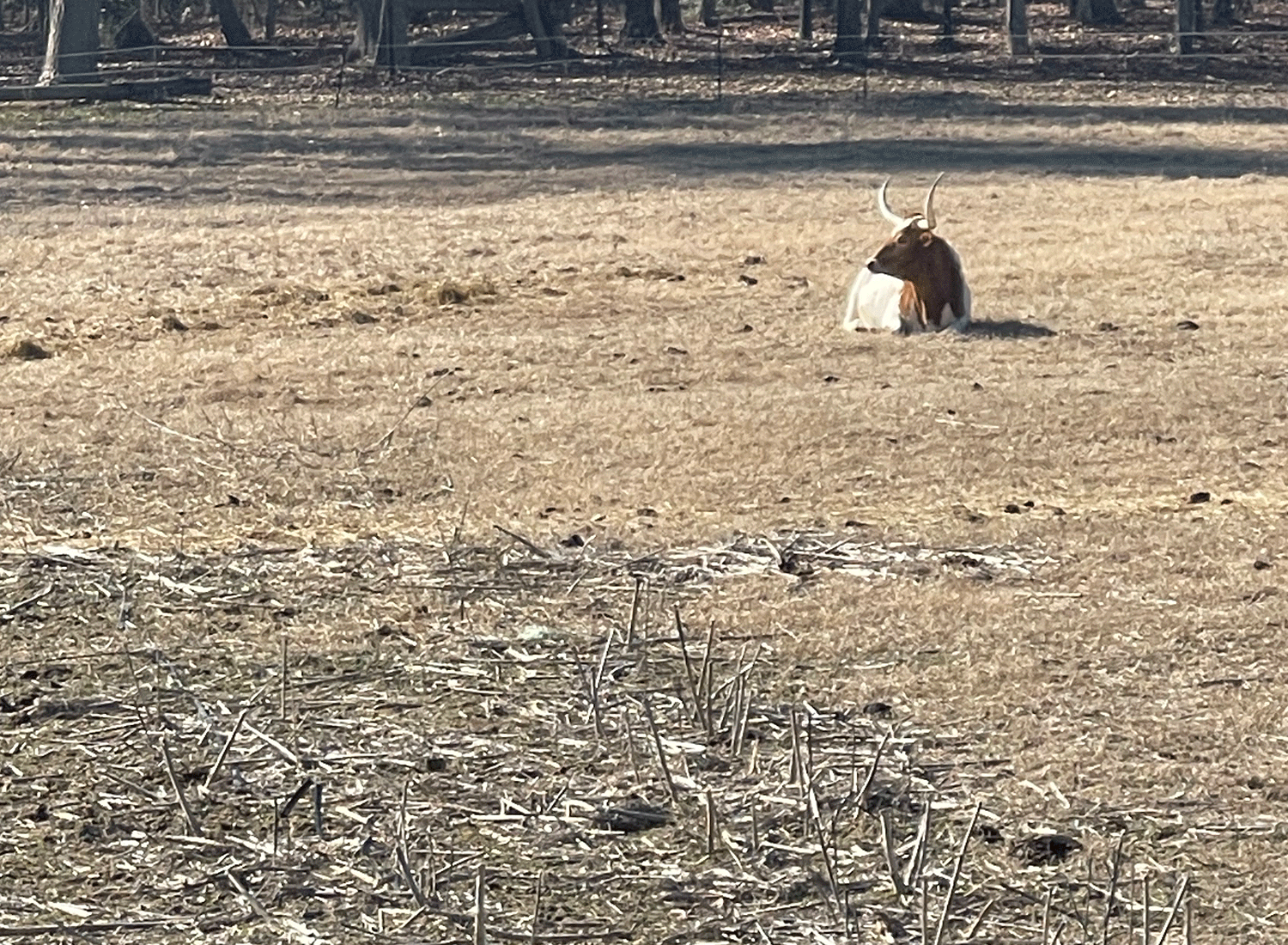
When people see our monster hemp plants and huge Longhorn cows out at the Redfern Farm they immediately ask two questions:
- How much do you spend on fertilizer?
- How much does it cost to feed your cows?
Surprisingly, thanks to our regenerative grazing practices, the answer is not much. On our 42-acre Caroline County Farm in Virginia we allocate about a hectare (2.47 acres) for our several Longhorn cows, as well as, for growing our hemp. Although it’s a lot of handwork to rotate our pastures, it certainly pays off in the end when it comes to animal feed and fertilizer savings.
Environmental benefits of Regenerative Grazing
- Improved soil health: Grazing patterns mimic the natural movements of herds, promoting nutrient cycling and fostering a diverse soil microbiome. This leads to increased soil organic matter, improved water retention, and enhanced carbon sequestration.
- Reduced erosion and desertification: The hoof action of cows and their manure help break up compacted soil, improving infiltration and reducing susceptibility to erosion. Diverse plant cover, encouraged by regenerative practices, further protects the soil from wind and water damage.
- Increased biodiversity: Regenerative grazing encourages a wider variety of plant species, attracting a richer fauna of insects, birds, and other animals. This creates a more balanced and resilient ecosystem.
- Reduced reliance on synthetic inputs: By harnessing the natural processes of grazing and soil health, regenerative practices can minimize the need for fertilizers, pesticides, and herbicides, contributing to a more sustainable food system.
Benefits for cows:
- Enhanced health and welfare: Grazing on diverse pastures provides cows with a more natural diet, richer in nutrients and promoting better gut health. Additionally, rotational grazing systems allow ample rest periods, reducing stress and improving overall well-being.
- Improved meat quality: Cows raised on diverse pastures often produce meat with higher levels of omega-3 fatty acids and antioxidants, contributing to greater nutritional value.
Potential economic benefits of Regnerative Grazing:
- Increased profitability: Improved soil health can lead to higher yields and stronger resistance to pests and diseases, potentially reducing costs and boosting farm income.
- Premium market opportunities: Consumers are increasingly seeking sustainably produced meat, and products raised through regenerative grazing often command higher prices.
- Diversified income streams: Some regenerative farms implement additional practices like carbon sequestration projects or agritourism, creating new revenue opportunities.
Regenerative Grazing & Carbon Sequestration
Regenerative grazing practices promote the growth of healthy grasslands, which are essential habitats for many wildlife species. Regenerative grazing can also improve the water-holding capacity of soils, reducing runoff and improving water quality.
Recent research has suggested that regenerative agriculture practices have the potential to sequester significant amounts of carbon. One study found that regenerative grazing systems have the potential to sequester up to 3.6 tons of carbon per hectare annually. Regenerative grazing practices have been shown to sequester significant amounts of carbon in the soil. Studies have found that regenerative grazing systems have the potential to sequester up to 3.6 tons of carbon per hectare annually. By reducing the amount of carbon dioxide in the atmosphere, regenerative grazing practices can help to mitigate the impacts of climate change and contribute to a more sustainable agricultural system.
Regenerative Grazing v Industrialized Beef Production
Beef is often referred to as a high-emitting food product due to its contribution to a portion of global greenhouse gas emissions. However, it’s important to note that not all beef production is equal in terms of carbon footprint. Industrialized beef production, which relies heavily on feedlots and concentrated animal feeding operations (CAFOs), has been identified as one of the largest contributors to greenhouse gas emissions.14 These systems rely on intensive grain feeding, which requires a significant amount of energy to produce and transport, leading to high carbon emissions.
On the other hand, regenerative grazing practices can significantly reduce the carbon footprint of beef production. By promoting the growth of healthy grasslands, regenerative grazing helps to sequester carbon in the soil. Further, regenerative farming has the potential to create a carbon sink capable of offsetting more than the carbon emissions generated by the farming of cattle. White Oaks Pastures is one such farm that offsets at least 100% of its grass-fed beef carbon emissions and as much as 85% of its total carbon emissions.
It’s important to note that:
- The success of regenerative grazing depends on careful management and adapting practices to specific contexts.
- While cows can be a valuable tool in regenerative agriculture, ensuring their welfare and ethical treatment remains crucial.
- Research and innovation are ongoing in this field, with the potential for even greater benefits in the future.
Combing Regenerative Grazing & Industrial Hemp
By combining both regenerative grazing and industrial farming Redfern Hemp Co. plans to revolutionize carbon sequestration opportunities for small farmers interested in making the most out of their land. In 2024 we plan to officially track our total carbon sequestration on the hectare of land that our cows graze and our hemp is grown.
Moving forward there will be several variables, divulged below, that we will need track in order to accurately calculate our hemp carbon sequestration efforts.
1. Aboveground Biomass Measurement:
- Estimating plant biomass: This involves techniques like measuring plant height and diameter at specific points in the field and applying established allometric equations for hemp.
- Dry matter analysis: Samples of plant material are dried in an oven to determine the proportion of water and dry matter.
- Carbon content estimation: Using conversion factors based on scientific studies, the dry matter weight is multiplied by the average carbon content of hemp (about 45%).
2. Soil Carbon Analysis:
- Initial soil carbon assessment: Before planting hemp, analyze soil samples to establish a baseline carbon level.
- Periodic soil sampling: Take soil samples from the hemp field at specific intervals during the growing season and post-harvest.
- Laboratory analysis: Analyze soil samples in a specialized laboratory to measure the organic carbon content using methods like Loss on Ignition or Walkley-Black.
Are Longhorns better or worse than other cows for Regenerative farming?
Whether Longhorns are better or worse than other cows for regenerative farming isn’t a simple yes or no answer. It depends on several factors, including:
Your specific goals: Are you primarily focused on soil health, biodiversity, meat production, or a combination? Different breeds might excel in different areas. Your environment: Consider your climate, forage availability, and land type. Longhorns are known for their heat tolerance and adaptability to harsh conditions, but other breeds might be better suited to specific environments. Your management style: Are you using intensive rotational grazing or a more extensive approach? Each requires different cow characteristics.
Here’s a breakdown of some potential advantages and disadvantages of Longhorns compared to other breeds for regenerative farming:
Advantages:
- Resilience: Longhorns are known for their hardiness and adaptability to harsh conditions, making them suitable for dry climates and poor-quality forage.
- Longevity: They tend to have longer lifespans than many other breeds, reducing the need for frequent replacements.
- Low maintenance: Their long horns help deter predators and parasites, minimizing the need for interventions.
- Foraging efficiency: They excel at finding food even in sparse pastures, potentially reducing feed costs.
Disadvantages:
- Slower growth: They mature slower than some other breeds, impacting meat production timelines.
- Smaller size: They typically have lower overall body weight, resulting in potentially lower meat yields.
- Lower milk production: If dairy is a focus, other breeds might offer higher milk volumes.
- Limited availability: Finding Longhorn breeding stock might be more challenging than with commonly raised breeds.
Ultimately, the best breed for your regenerative farm depends on your specific context and goals. Researching various breeds, consulting with experienced regenerative farmers, and considering your unique circumstances will help you make an informed decision.
RESEARCH LINKS
- https://rodaleinstitute.org/wp-content/uploads/rodale-white-paper.pdf
- https://forceofnature.com/blogs/regenerate/carbon-sequestration
- https://www.fws.gov/program/central-grasslands-conservation/about-us
- https://pubmed.ncbi.nlm.nih.gov/309003/
- https://www.theguardian.com/environment/2021/sep/13/meat-greenhouses-gases-food-production-study/
- https://blog.whiteoakpastures.com/hubfs/WOP-LCA-Quantis-2019.pdf
- https://www.ncbi.nlm.nih.gov/pmc/articles/PMC7571072/