
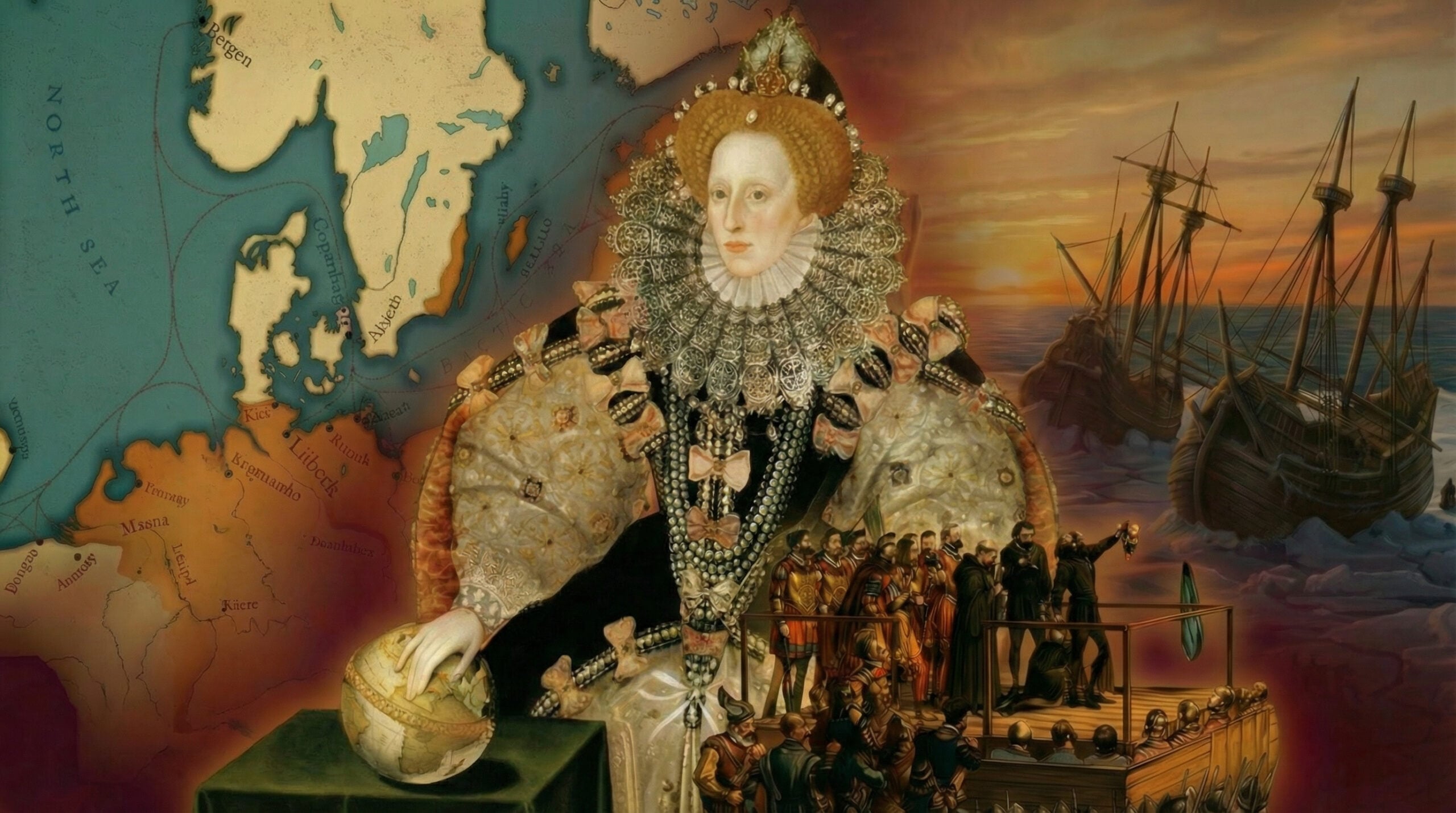
During the reign of our sovereign lord King Edward VI, and with his encouragement and approval, his subjects—following the King’s generous example—undertook, at their own risk and great expense, an expedition for the glory of God, the honor of the Crown, the increase of royal revenues, and the general benefit of the entire realm of England. They sent out three ships to discover, by sea, islands, lands, territories, dominions, and peoples previously unknown and not commonly reached by English navigation.
Before this undertaking could be completed, and before King Edward could finalize and seal the extensive privileges he had promised to these subjects in recognition of their enterprise, Almighty God called him to His mercy. After the King’s death, Queen Mary, responding to the humble requests of these same subjects, granted them formal authority through letters patent issued under the Great Seal of England at Westminster on February 26, in the second year of her reign.
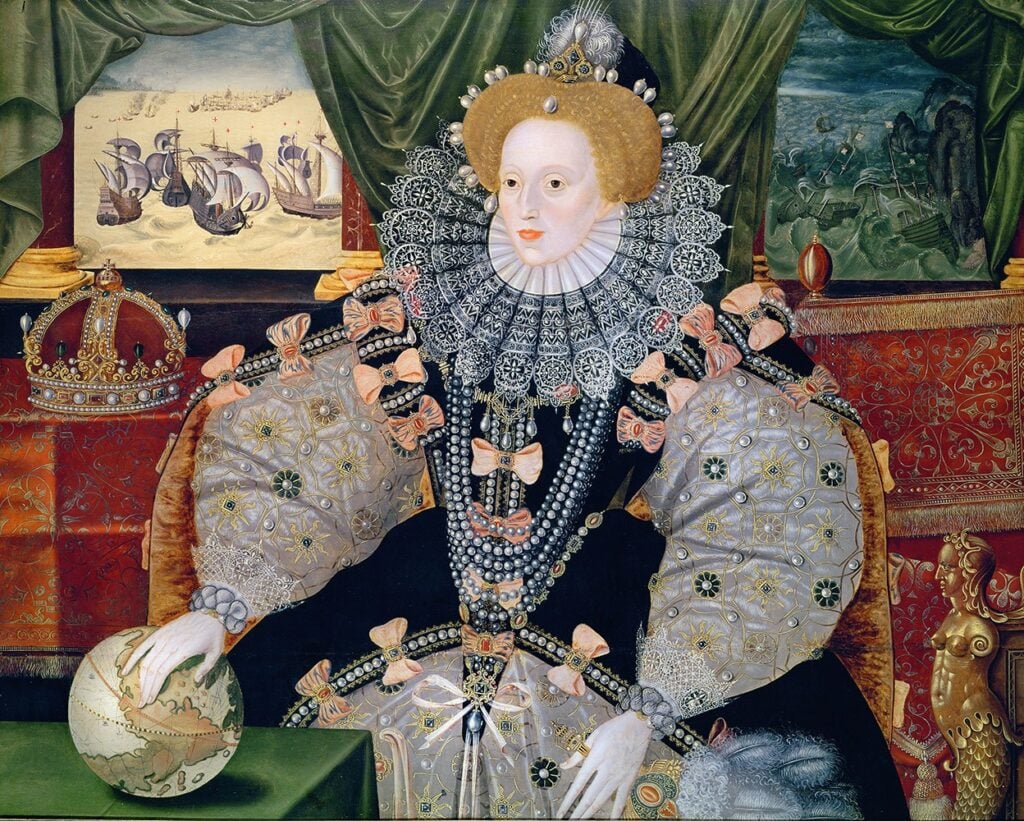
By these letters patent, the individuals named—and their successors—were formally established as a permanent corporate body under the name The Merchants Adventurers of England for the Discovery of Lands, Territories, Isles, and Dominions Unknown. This fellowship was to exist perpetually, both in name and in practice, and was authorized to govern itself through one or two governors, four consuls, and twenty-four assistants.
The fellowship was granted full legal standing, allowing it to sue and be sued, to bring and defend legal actions of any kind, and to conduct its affairs before any court or authority—civil or ecclesiastical—just as any other legally recognized corporation within the realm of England could do. In addition, the Crown granted the company various powers, rights, jurisdictions, privileges, liberties, and protections, as detailed more fully in the letters patent.
Among the matters noted in these letters was that one of the three ships previously sent out on the voyage of discovery—the Edward Bonaventure—had reached the dominions of the powerful ruler Ivan Vasilyevich, Emperor of all Russia. The Emperor received the ship’s captain and merchants kindly and granted them permission to trade freely with his subjects in all kinds of goods, along with several other favorable privileges and liberties.
| An Act for the Corporation of Merchants adventurers for the discovering of new trades, made in the eight yere of Queene Elizabeth. Anno 1566
Richard Chancellor returned to England in the summer of 1554 with more than news of survival and loss. He had failed to uncover a Northeast Passage to Asia, but he had revealed a more attainable prize: direct access to Muscovy, beyond the control of the Hanseatic League and the contested politics of the Baltic.
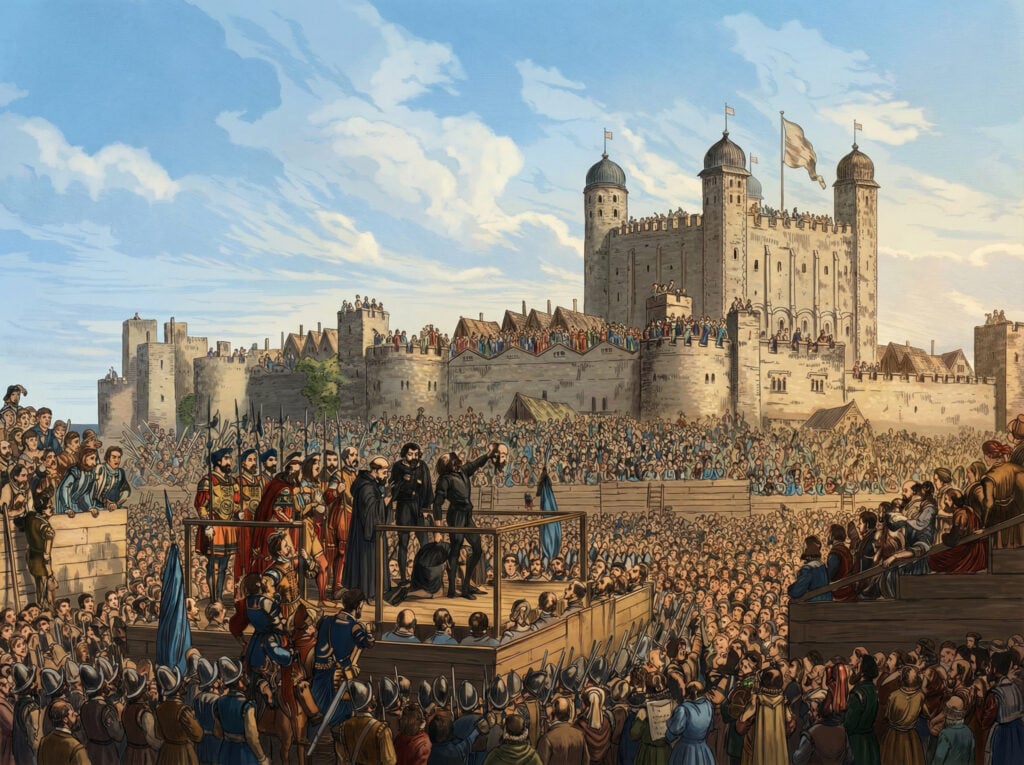
Once back on familiar shores, Chancellor and his crew quickly learned that King Edward VI was dead. His successor, the Catholic Queen Mary Tudor, had secured the throne through decisive, some would say ruthless, action, including the execution of the Duke of Northumberland, the late king’s chief minister, for attempting to place Lady Jane Grey on the throne. Yet the founders of the Merchants Adventurers of England for the Discovery of Lands, Territories, Isles, and Dominions Unknown, most of whom had been absent during these upheavals, returned unscathed by factional disputes.
That opportunity was embodied in a letter from Tsar Ivan IV, which was promptly received by the Queen. The Tsar’s message was direct and pragmatic. He offered English merchants access to his dominions, permission to trade freely, and protection from local interference. For a Muscovite ruler whose western trade was constrained by the Polish–Lithuanian Commonwealth, Sweden, and the monopolistic practices of the Hanseatic League, this was a measured overture. For England, it was an invitation to hedge against systems that omitted them from their terms.
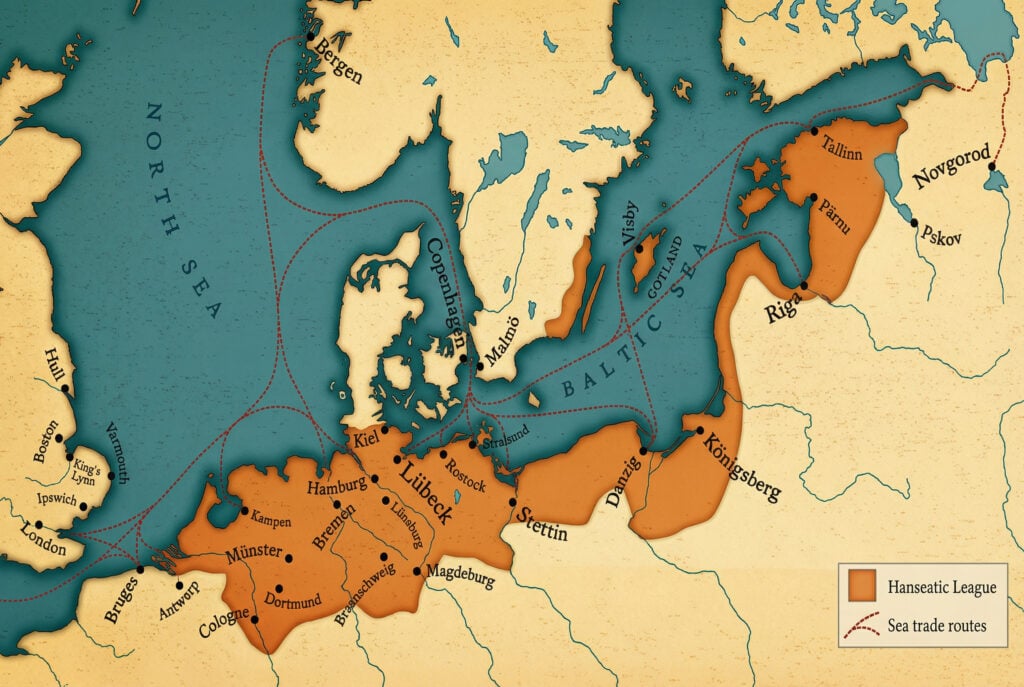
The Hanseatic League dominated the Baltic, dictating prices, privileges, and access. Earlier, in 1553, Edward VI had stripped the Hanse of its long-held advantages in England in an effort to strengthen native merchants. Mary, upon ascending the throne, briefly restored those privileges to steady relations with the Habsburg world, but the City of London resisted loudly. Even Mary’s marriage to Philip II of Spain, a Habsburg dynast, failed to resolve the issue. Philip favored the German merchants, while Mary sided with her own. The disagreement remained a point of tension within the royal marriage itself.
Chancellor’s unexpected return amid this conflict fit like a key fitting a lock.
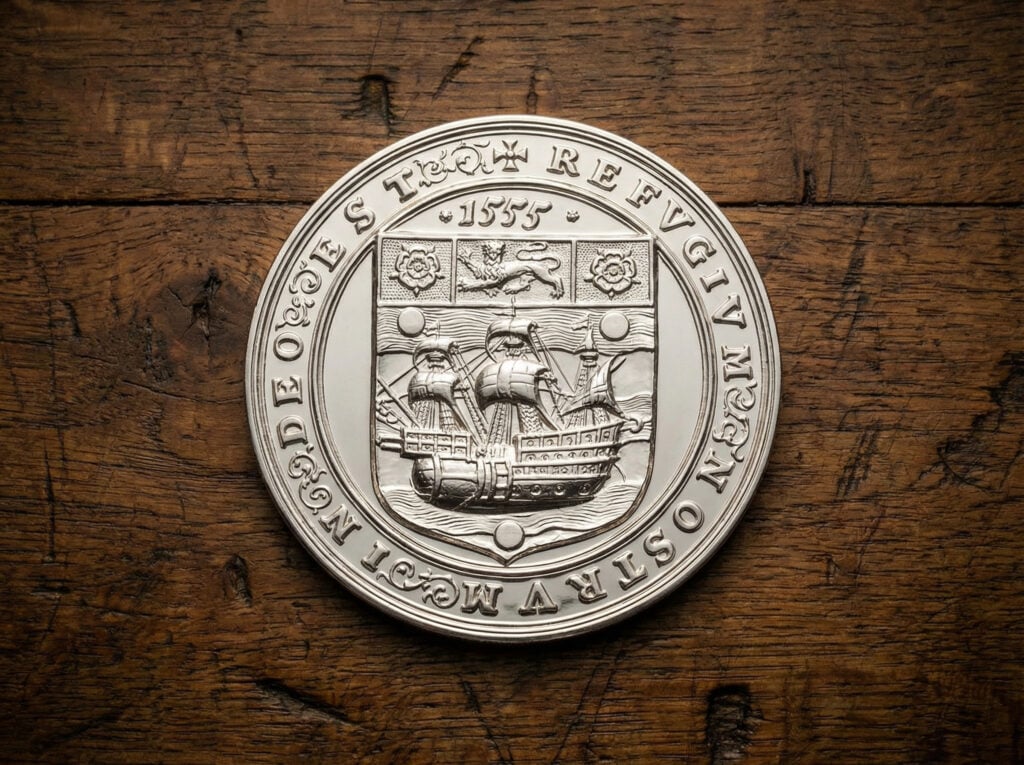
By early 1555, Queen Mary granted a royal charter establishing the Muscovy Company. The corporation’s purpose was no longer exploratory in the old sense. In its place stood a more durable objective: to institutionalize trade with Muscovy and, in doing so, reduce England’s dependence on Baltic intermediaries.
Yet even this arrangement fell short of Ivan IV’s ambitions. Attentive to the limits of Edward VI’s original instructions, Chancellor’s “sea merchants” were authorized only to trade: “to go to countries heretofore unknown, as well to seek such things as we lack, as also to carry unto them from our regions such things as they lack.” They were not empowered to negotiate interstate agreements. Ivan hinted at this distinction in his reply, requesting instead that “one of Your Majesty’s Council” be sent to him.
Whether England underestimated Ivan’s broader intentions, or whether the realm was simply preoccupied with its own religious and dynastic uncertainties, the decision was made to pursue commerce without entanglement. When Richard Chancellor sailed again for the White Sea in 1555, accompanied by fellow merchants George Killingworth and Richard Gray, he did so not as a discoverer, but as an agent of a new economic institution. The voyage marked a transition from speculative exploration to systematic exchange. The Muscovy Company thus became England’s first sustained experiment in long-distance corporate trade beyond Western Europe.
When Richard Chancellor returned to the mouth of the Northern Dvina in early summer 1555, the river was already in motion again. It was the season of return, of ships, of trade, of unfinished business. Upon his arrival, Chancellor learned the fate of Sir Hugh Willoughby and the two ships lost during the previous expedition.
During the thaw, Russian fishermen had discovered the lost English vessels where they had wintered along the Northern Arctic coast. In his final voyage, Willoughby had made one last discovery: a large landmass later known as Novaya Zemlya. No survivors were found. Willoughby’s body remained aboard, preserved by the cold, alongside his papers and journal.
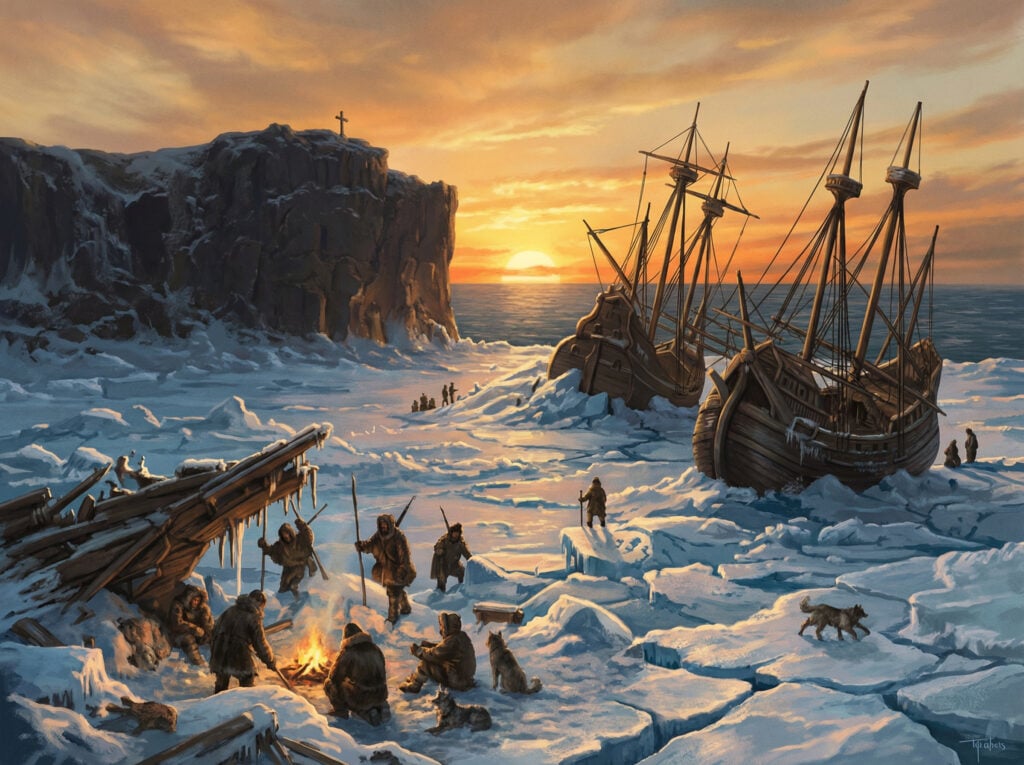
There were no signs of mutiny or violence. When the hatches were opened, the truth revealed itself slowly. The crews were still aboard. The cold had preserved them like statues. For years, the explanation seemed obvious—starvation and exposure. Yet the scene itself suggested a more plausible cause.
On one of the coldest days of the winter, the entire company may have gathered below decks to conserve heat. Every opening was sealed. Every gunport closed. Short of firewood, the cook may have turned to sea coal, a fuel known to burn hot and foul. The chimney, normally vented through an open hatch, was shut tight against the cold. Smoke and gas had nowhere to escape.
Carbon monoxide gives no warning. Unconsciousness would have come quietly. One by one, the lights of the men were stolen where they stood or sat.
The discovery was reported swiftly to Moscow. Tsar Ivan IV ordered the ships secured and transferred to the White Sea to await recovery by the English. He treated the incident as an opportunity for goodwill. Sir Chancellor eventually recovered Willoughby’s journal, preserving his words for posterity.