
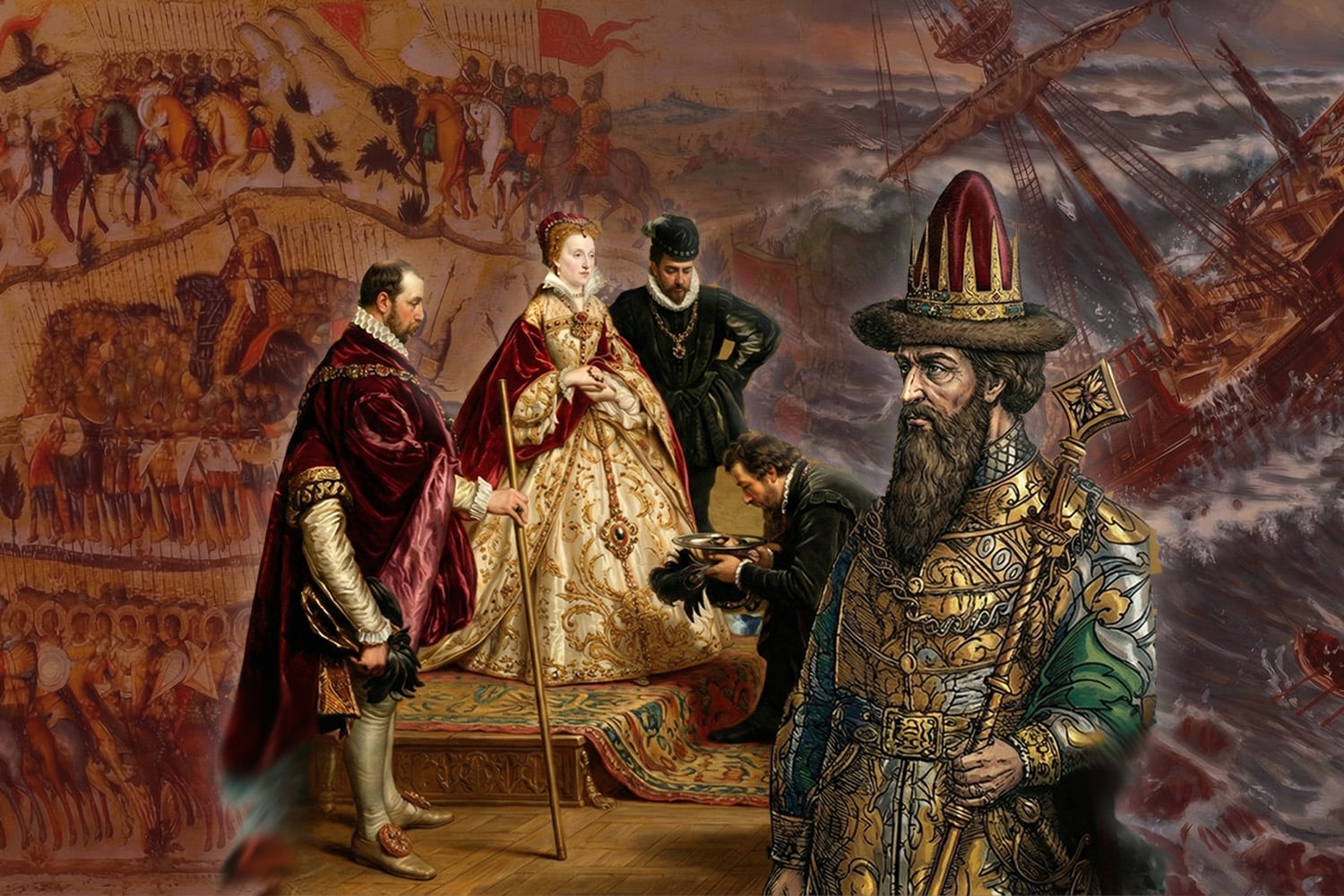
Few records survive from sixteenth-century Russia, owing in part to the devastation of the Time of Troubles at the century’s end. Russia’s first civil war followed the collapse of the Rurik dynasty (862–1598), which ended after the death of Ivan the Terrible’s son, Feodor. Feodor was born in May 1557, two years after England had established its first formal mercantile relationship with Moscow. What can be discerned from English records is that Richard Chancellor negotiated fair trading terms and pursued intelligence regarding a possible northern route to Asia.
The Tsar’s priorities were clear. Muscovy’s landlocked position remained a strategic constraint. England posed no territorial threat and offered a potential counterweight to entrenched threats. A direct commercial relationship with the English Crown therefore aligned neatly with Muscovy’s broader geopolitical interests. To advance this relationship, the Tsar chose to send an envoy.
In 1556, Ivan IV appointed Osip Grigorievich Nepeya, from the strategic center of Vologda mentioned earlier, as his representative to England. Nepeya was neither a merchant nor a soldier, but an administrator experienced in northern trade and foreign affairs. He would carry the Tsar’s words, and his intentions, westward. He would also carry wonderful gifts.
First came the furs: sable pelts of exceptional quality, complete with ears, teeth, and claws, the kind worn only by emperors. There were also four live sables, each fitted with its own collar and chain, restless and alert in their enclosures. And then there was the bird: a white gyrfalcon, rare, trained, and valuable far beyond its size. Transporting such a creature was not merely a gift. It was a statement.
In July 1556, the ships were made ready. Four vessels lay at anchor: the Philip and Mary, the Edward Bonaventure, and the two ships recovered from Willoughby’s ill-fated expedition, the Bona Confidentia and the Bona Esperanza.
The voyage, however, would once again demonstrate the persistent fragility of northern trade.
On the downward descent on Scandinavian Peninsula the fleet was divided by a violent storm. The ships “Bona Confidentia” and “Bona Esperanza”, which participated in the very first Chancellor’s voyage in 1553, crashed on stones and sank off the coast of Norway. On board the “Bona Esperanza” there were several Russian merchants, among whom were the aforementioned Feofan Makarov and Mikhail Kositsyn. None of them survived. The ship “Philip and Mary” took refuge in the Norwegian city of Trondheim and was only able to return to London the following spring. And the “Edward Bonaventure” was carried by storm to the shores of East Scotland, where the ship also crashed near Pitsligo Castle. The famous captain Richard Chancellor was among the dead. Osip Nepeya managed to survive the shipwreck by a lucky coincidence, as well as nine other Russian men.
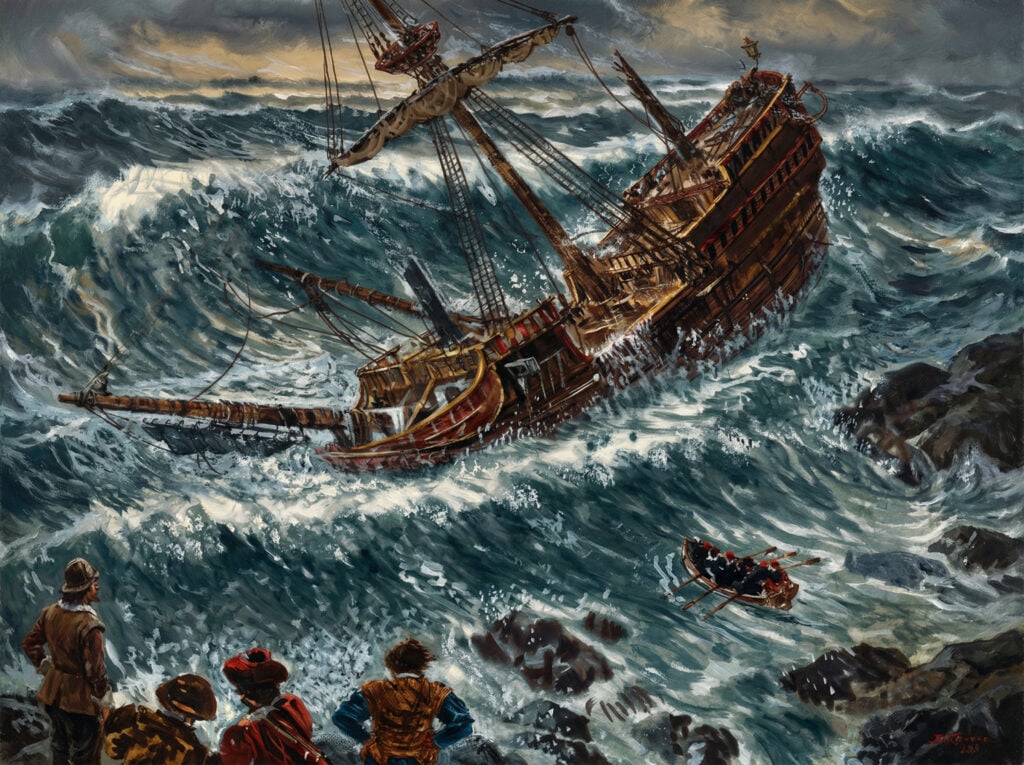
A handful of surviving passengers of the “Edward Bonaventure” landed in East Scotland. A month later, a letter came to London stating that “not only the said ship was broken, but also the whole mass and body of the goods laden in her, was by the rude and ravenous people of the country”
| (139-150) The Visit of Envoy of Osip Nepeya to England (1556 – 1557); Science Journal of VolSU. History. Area Studies. International Relations. 2021. Vol. 26. No. 4
The Tsar’s precious gifts did not survive the journey. It may have been at this point that Russian suspicions regarding English trustworthiness began to take shape, especially when contrasted with the careful preservation of Willoughby’s wreckage by local inhabitants in the north and the plundering of the Edward Bonaventure off the coast of Scotland.
Although Chancellor did not live to see the diplomatic outcome that arose so substantially from his efforts, he nevertheless accomplished a decisive task: the delivery of Russia’s de facto ambassador to the English Crown.
________
Osip Nepeya’s arrival in London in early 1557 marked a significant moment in Anglo–Muscovite relations. His entrance into London was met with much fanfare and was welcomed personally by Queen Mary and London Merchants, including the founder of the Muscovy Company Sebastian Cabot. Those who had gathered to meet the Muscovite ambassador stood exposed for more than two hours as the ceremonies played out. Observers noted the distinctive appearance of the Russian delegation—the long robes, red boots, and white caps worn according to Muscovite custom.
Nepeya arrived in London only to discover that Queen Mary’s husband, Philip II of Spain, was absent. Without him, no audience could be granted. The ambassador waited nearly a month. In Moscow, Richard Chancellor’s audiences had been prompt and decisions were centralized. In London, court schedules, illness, and royal procedure slowed the process to a crawl. For a state accustomed to swift autocratic decision-making, the delay was instructive for the Ambassador.
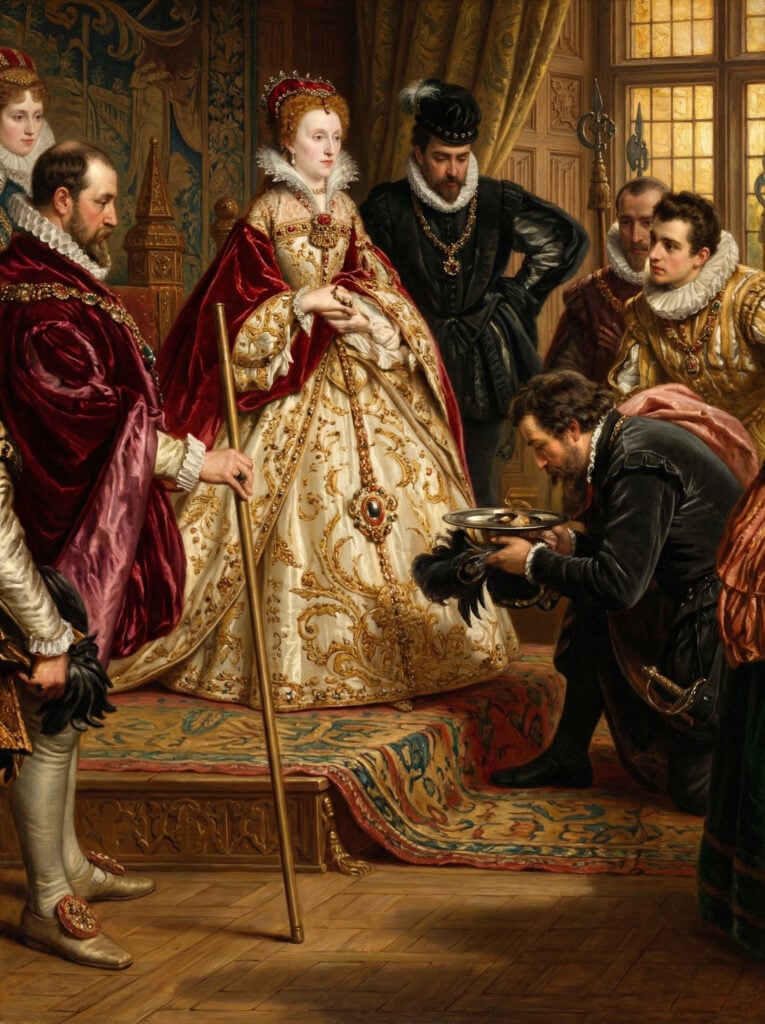
The audience finally occurred on March 25, 1557. The meeting followed established protocol. Nepeya presented Ivan IV’s letter, translated in advance, emphasizing friendship and goodwill. He then offered the Tsar’s gifts, or what was left of them: several sable furs, likely drawn from Muscovy Company reserves. Trade privileges for Russian merchants were confirmed. On paper, the mission succeeded. Strategically, however, it fell short of the ambassador’s ambitions.
For Ivan IV, commerce had always been instrumental to his primary objective. Muscovy’s overriding concern was security. Its borders were expanding eastward even as they remained vulnerable in the west and south. Sweden, the Polish–Lithuanian Commonwealth, and the Ottoman sphere all posed threats. Ivan’s interest in England extended beyond markets to military collaboration, including arms, specialists, and pressure against Ottoman positions. These expectations were not formally met. England’s priorities lay elsewhere.
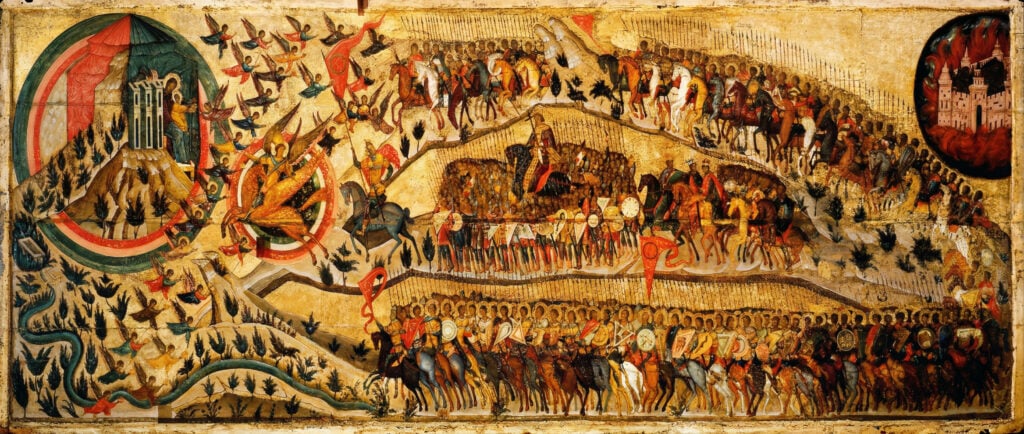
Queen Mary’s reign was constrained by religious instability, domestic opposition, and the complex demands of her marriage to Philip II. Philip, already engaged in a widening conflict with France and managing Habsburg commitments across Europe and the Mediterranean, had little appetite for entanglement in Muscovy’s struggles. Trade with Russia offered economic upside without military risk. An Alliance did not.
A month later, the merchants held a farewell dinner for their Russian guest. They assured Nepeya that all his expenses would be covered—a gesture, they said, of goodwill and friendship.In private, discontent had already set in. Letters circulated among the Company’s directors. The ambassador, they wrote, was wary, suspicious, and difficult, a man who saw deceit everywhere because he anticipated it.
From Nepeya’s perspective, the judgment may have seemed ironic. He had waited in the cold. He had waited for the King. He had waited for substance beyond ceremony. What he had received instead was courtesy, trade, and obfuscation.
On May 3, 1557, the Russian Ambassador left London with a new Muscovy Company expedition led by accomplished explorer Anthony Jenkinson. The instructions to the captains were cautious, almost anxious. Avoid Vardøhus if possible. Do not linger. If other Baltic or maritime powers knew what had been negotiated by the convoy, they might decide to interfere. Especially Sweden, who was currently at war with the warmongering Ivan.
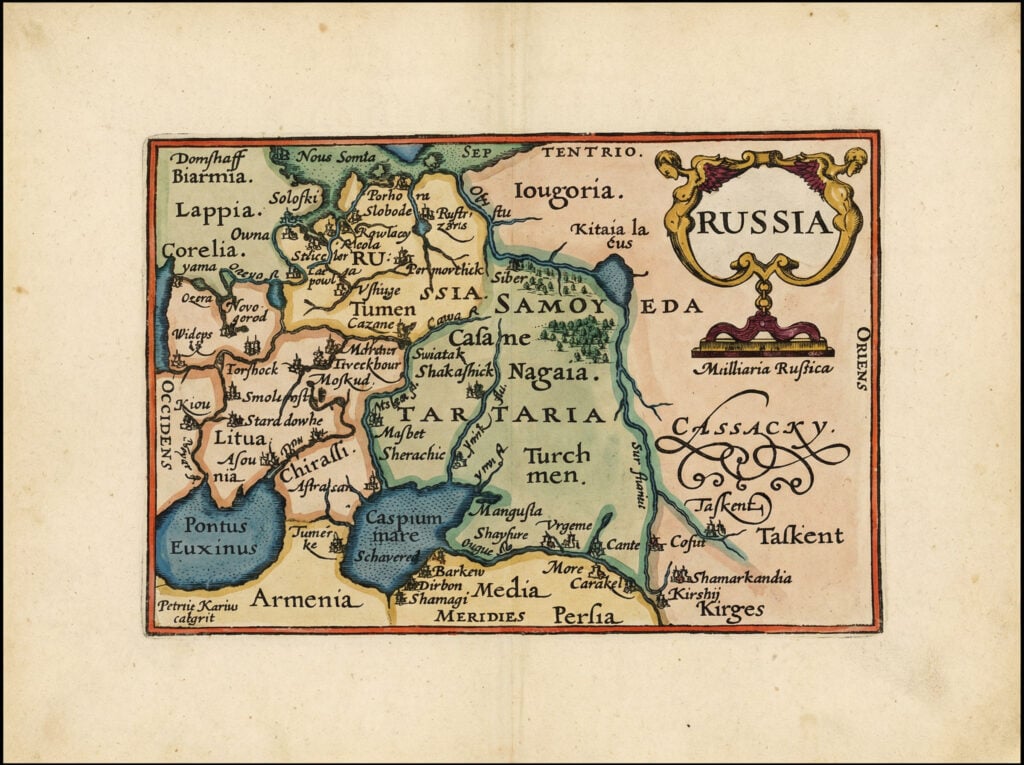
By August, Europe’s larger wars shifted. France fell at Saint-Quentin. The irascible Habsburg crisis eased. The proposed anti-Ottoman alliance quietly dissolved. Years later, Ivan IV would write to Queen Elizabeth I (coronated 1559), with evident frustration that “the Spanish king Philip and your sister Mary received our envoy with honor and let him return, nut nothing about business was reported through him.”
Trade endured. Military cooperation did not.