
The tempest arrived with little warning. By afternoon, the sea had begun to swell and visibility collapsed into a thick molasses of mist. Weather like this was common so far north, but for Sir Hugh Willoughby, unaccustomed to Northern seas, struggled to keep the fleet together.
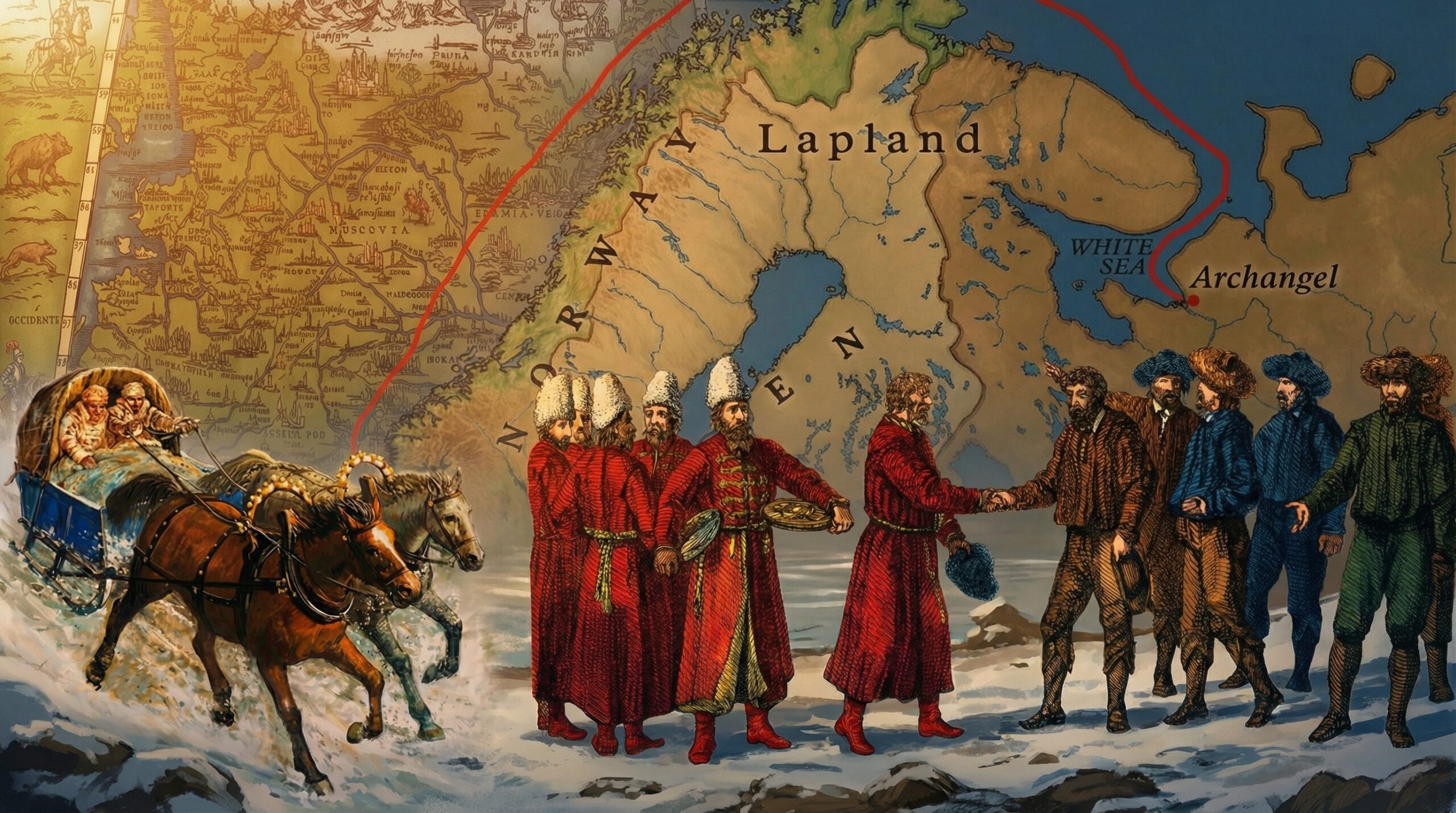
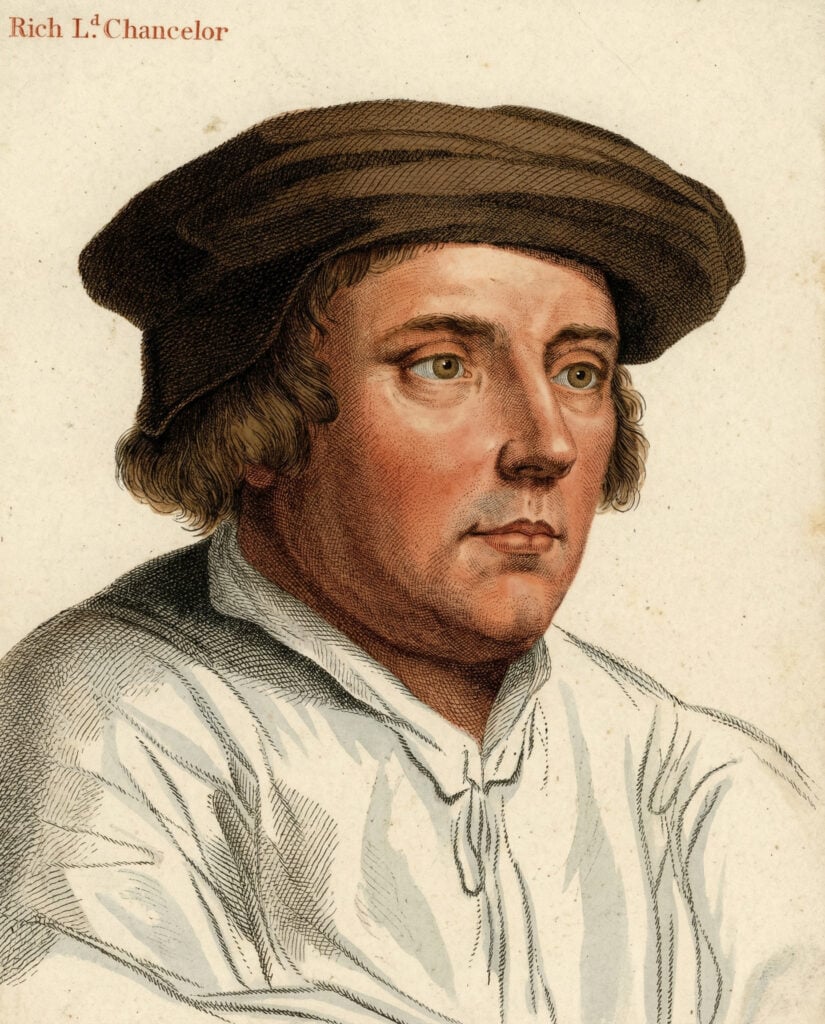
Richard Chancellor’s and Stephen Borough’s superior seafaring instincts prevailed. They did not chase the vanished ships into open water. Instead, they hugged the coast, using geography as a stabilizer, and made for the far north outpost, Vardøhus, as agreed. As they reached the point where the Norwegian Sea—part of the Atlantic—meets the yet-to-be-named Barents Sea of the Arctic Ocean, they passed an iconic landmark: a 307-metre cliff starkly shearing the coastline. Chancellor’s and Borough’s name for the North Cape endured on English maps.
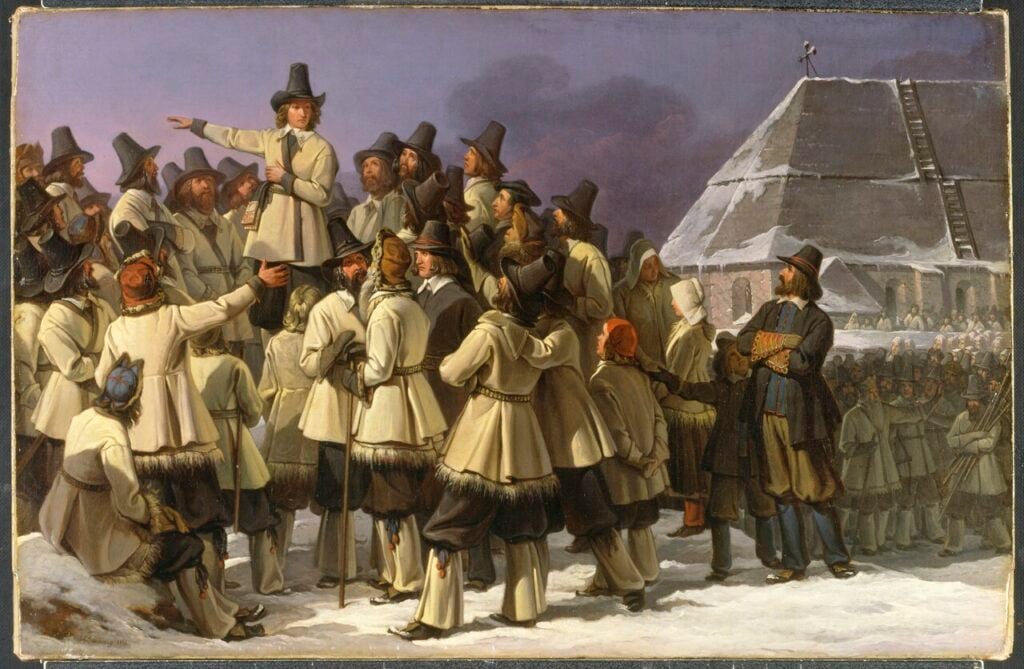
On their right flank lay Finnmark—a hard country of rock and water, its coastline fractured into fjords and headlands that offered shelter. The indigenous Sámi people knew how to navigate the terrain yet many English seamen did not. In 1511 the Norwegian archbishop, Erik Valkendorf, had visited Finnmark and observed that “the country would not be habitable for Christians were it not that the catch of fish is so plentiful as to attract people to settle down there. And this fish, which they call stockfish, is so valuable and excellent that it is exported to nearly every Christian country.”
This largely unrestricted trade with the Sami population, which English merchants had enjoyed for decades, had been sharply curtailed after 1524 with the signing of the Treaty of Malmö at the conclusion of the Swedish War of Liberation. As borders hardened, the Sámi were pushed inland, while Norwegian settlers scoured the coast, erecting churches, towns, and administrative structures. The expansion of commerce bred zealous competition and protective measures.
The voyage was never solely about finding a passage to China or avoiding the Iberian-controlled southern routes. England was also jockeying for commercial access in the Nordic world. A northern passage promised strategic advantage even if ‘Cathay’ remained out of reach. Establishing economic lifelines that circumvented the Baltic and Atlantic was a matter of sovereign independence. This supreme priority would take supernatural men to Hell’s edge and back.
At Vardøhus the crew of the Edward Bonaventure waited—seven long days. No sign of Willoughby. No sign of the other ships. With provisions dwindling and winter tightening its grip, they could not wait any longer. Against the advice of several hardened Scottish sailors, Richard Chancellor, supported by his master Stephen Borough, made the decision to push on.
______
The White Sea was a seasonal gate: open briefly, then sealed by ice from October through April. Average winter temperatures hovered well below freezing, with Arctic anticyclones capable of driving them down to minus twenty-five degrees Celsius. Once the ice formed, ships could not escape the White Sea’s frozen wall until summer.
Richard Chancellor’s decision to sail eastward into the White Sea in late August 1553 was not bravado, but a desperate move made under constraint. Retreat would have yielded little more than survival. Advance, by contrast, carried risk, yet also the possibility to salvage the investment of the Merchant Adventurers. The Edward Bonaventure pressed onward into waters no English ship had yet tested so late in the year.
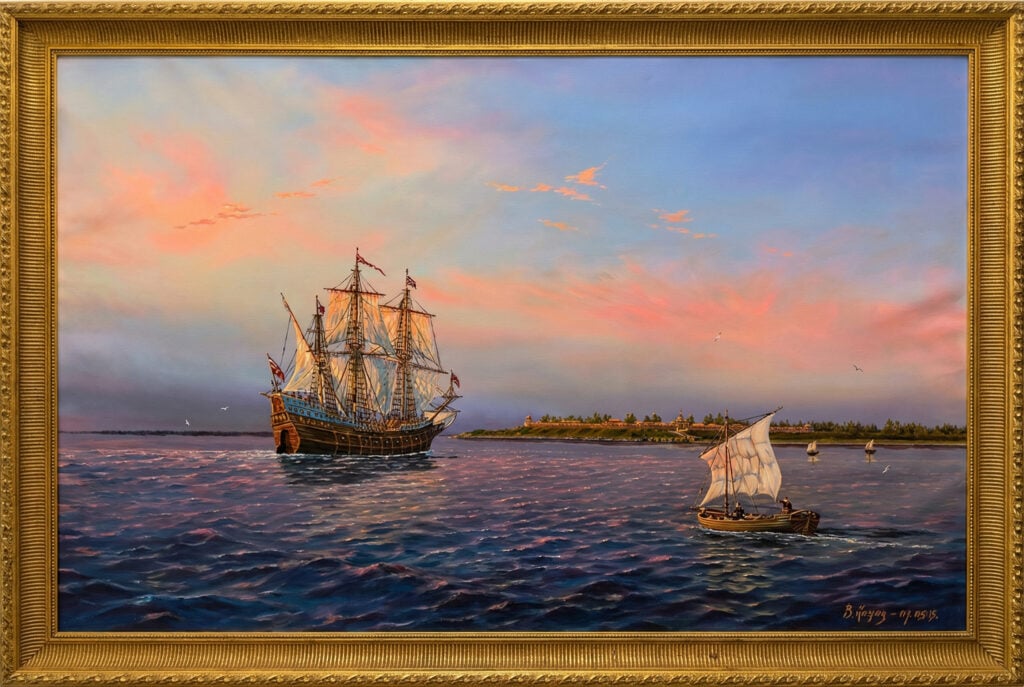
After three months at sea, the weary Englishmen reached Divina Bay in late August 1553, where the Northern Dvina River emptied into the White Sea. Locals looked on in awe at the size of the great western ships. Richard Chancellor soon made the acquaintance of a Dvina official, Feofan Makarov. Feofan was not only the elected head of the Dvina lands, recently brought under Muscovite administration, but also a local judge and one of the largest producers of salt and fish in the Russian North. He appears to have grasped the significance of the English arrival, not only for the Muscovite state, but for his own interests as well.
Following this meeting, correspondence was dispatched to the Tsar Ivan IV in Moscow, more than a thousand miles to the south. As the crew of the Edward Bonaventure awaited a response, the White Sea began to stiffen behind them.
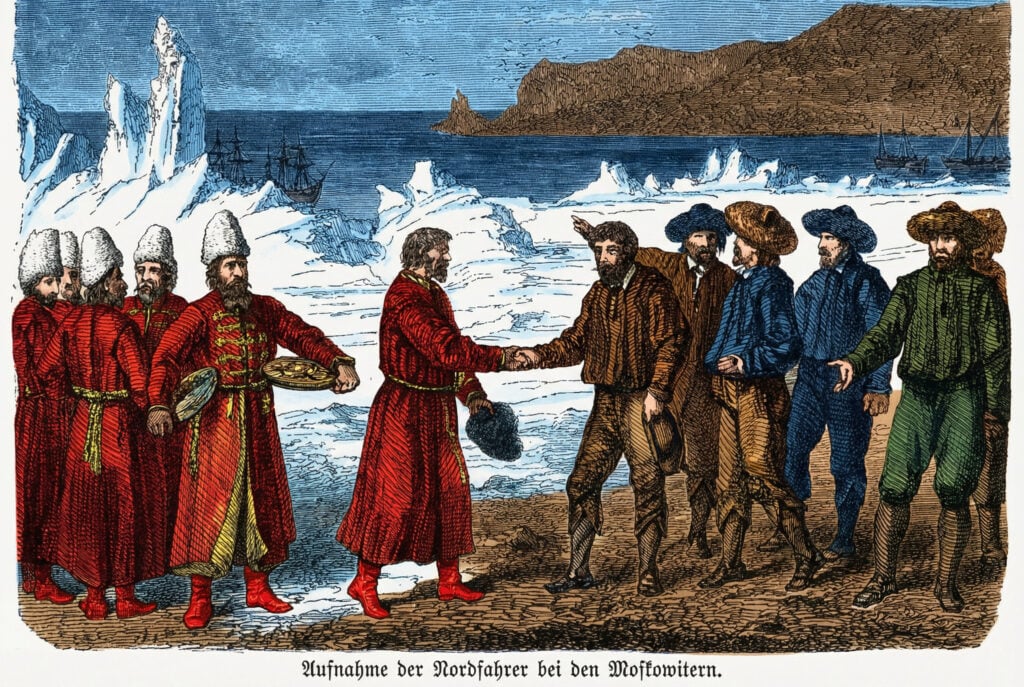
As soon as Tsar Ivan heard of the Englishman’s arrival, he wished to see their leader without delay. Ivan IV, like Feofan, understood the implications at once. Russia, landlocked in key directions and eager for Western goods and technical expertise, stood to benefit enormously from a maritime outlet not constrained by hostile powers.
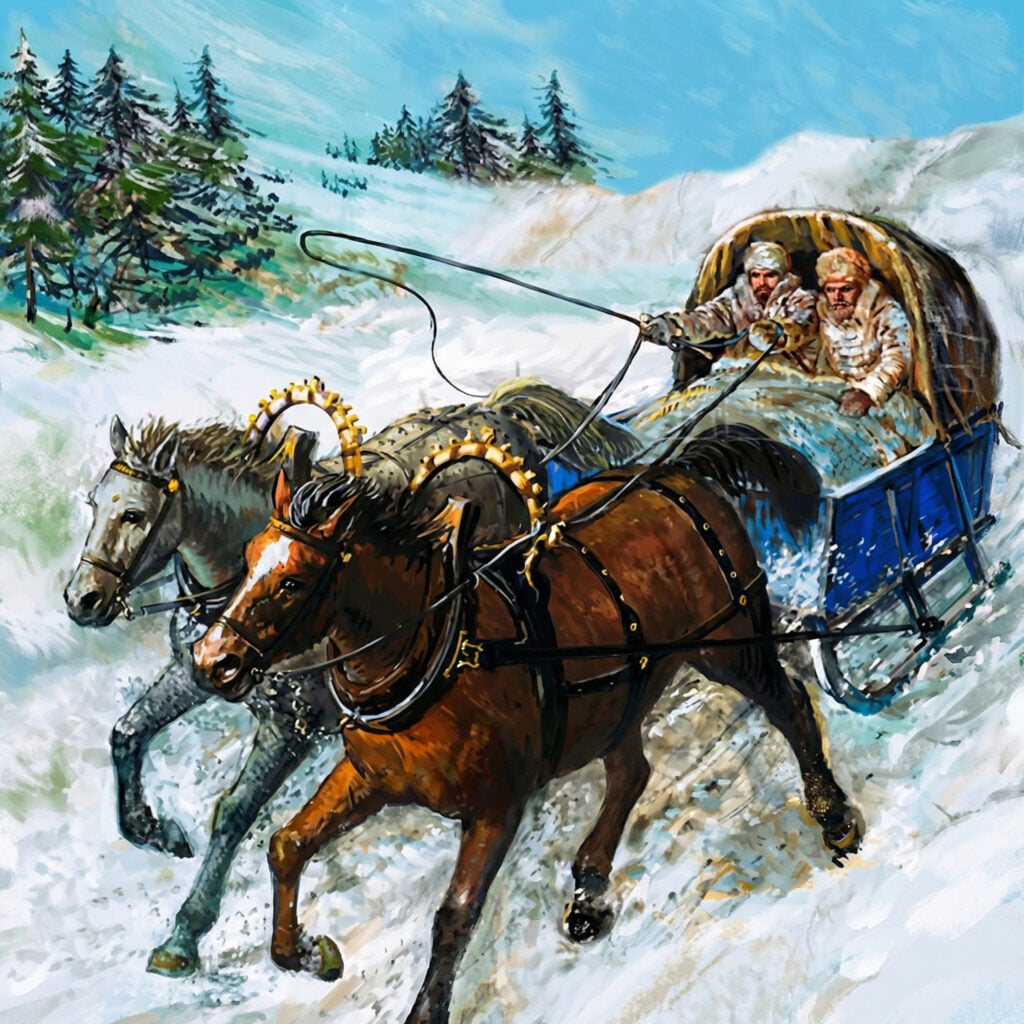
In sixteenth-century northwest Russia, geography functioned as infrastructure. In the absence of roads, rivers did the work of states. The Northern Dvina linked the interior to a network of basins and portages, its most important tributary being the 809-mile Sukhona River. Following the Dvina and then the Sukhona, whether over ice or along frozen banks, Richard Chancellor began a treacherous winter journey by horse-drawn sleigh, escorted by agents of the Tsar. Each mile carried him farther from the sea and deeper into a country that, for most Europeans, existed more in imagination than in fact.
Chancellor would eventually arrive at Vologda, situated at the headwaters of the Sukhona, roughly 300 miles north of Moscow. In 1554, the English trading agent John Gass described Vologda to merchants in England as a city with “an abundance of bread, where goods were twice as cheap as in Moscow… there was no city in Russia that would not trade with Vologda.” Chancellor’s unexpected visit helped establish Vologda not only as a pivotal international commercial hub, but also as a vital diplomatic artery. In 1555, England opened a permanent trading office in the city.
The Muscovite capital that Chancellor entered was not at rest. Ivan IV’s Moscow was a city in transition, expanding, alert, and uneasy. Only two years earlier, the Tsar had shattered the Muslim Khanate of Kazan after a long and brutal campaign. The conquest pushed Muscovite power decisively eastward, opening vast new swaths of territory that resisted Muscovite rule like an immune system. Uprisings still smoldered. Garrisons remained on edge. The borders were wider now, but thinner, and harder to hold.
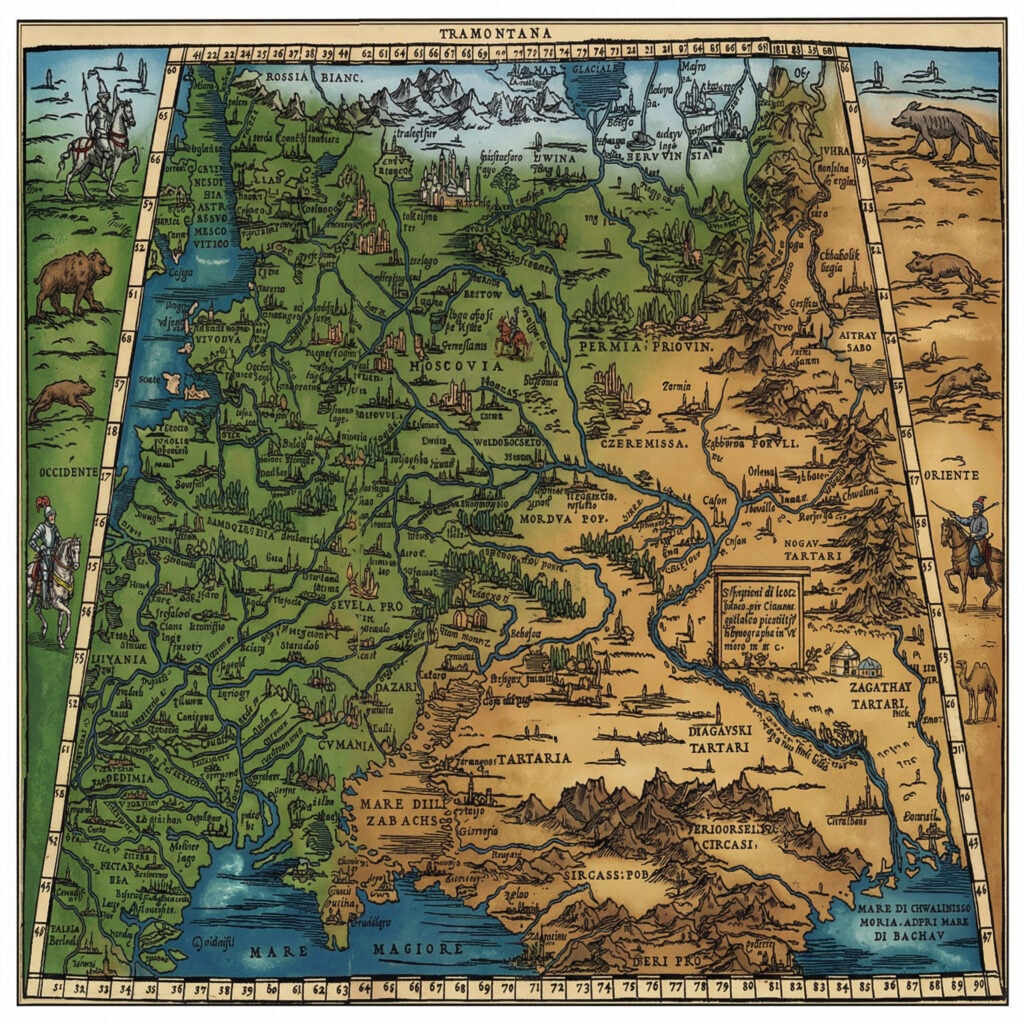
Moscow was vast—larger than London—and almost entirely built of wood. Fires and security concerns were constant. Yet the city also bore the marks of recent triumph: churches rising across the skyline, their onion domes bright against the snow.
Although Ivan’s realm was growing by conquest, it remained hemmed in. To the west, access to the Baltic Sea was contested by Sweden and the Polish–Lithuanian Commonwealth, while the Hanseatic League remained a persistent bulwark against free trade in the region. Russia, like England, needed alternatives.
Sir Chancellor was met with ‘Barbarous’ festivities. The Tsar intended to impress and coax his guest. They spoke of ships and routes, of access through the White Sea, and of merchants who asked only permission to trade freely. Ivan IV grasped the importance of this first encounter, while also understanding that diplomacy across such distances would unfold over years, not months.
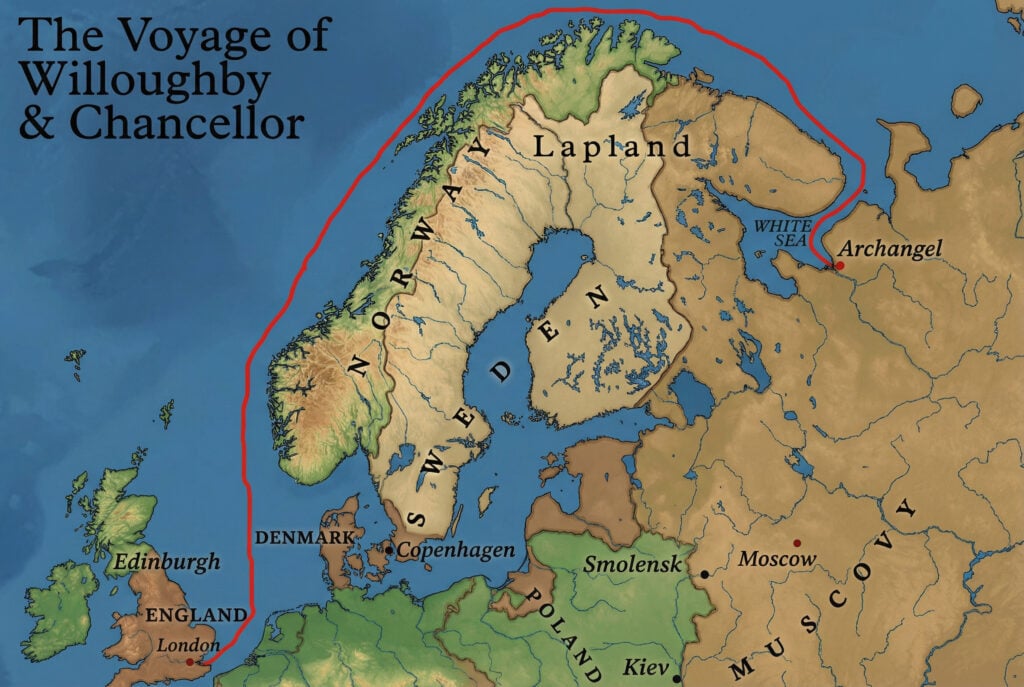
Although the foundations of bilateral trade had now been laid, Chancellor and his crew still faced a harrowing journey home. When the ice receded from the White Sea, the ship set sail in the spring of 1554 and returned safely to England without incident. Still, nothing was yet known of Sir Hugh Willoughby, or of the crews of the two ships that had vanished into the unforgiving Arctic.