
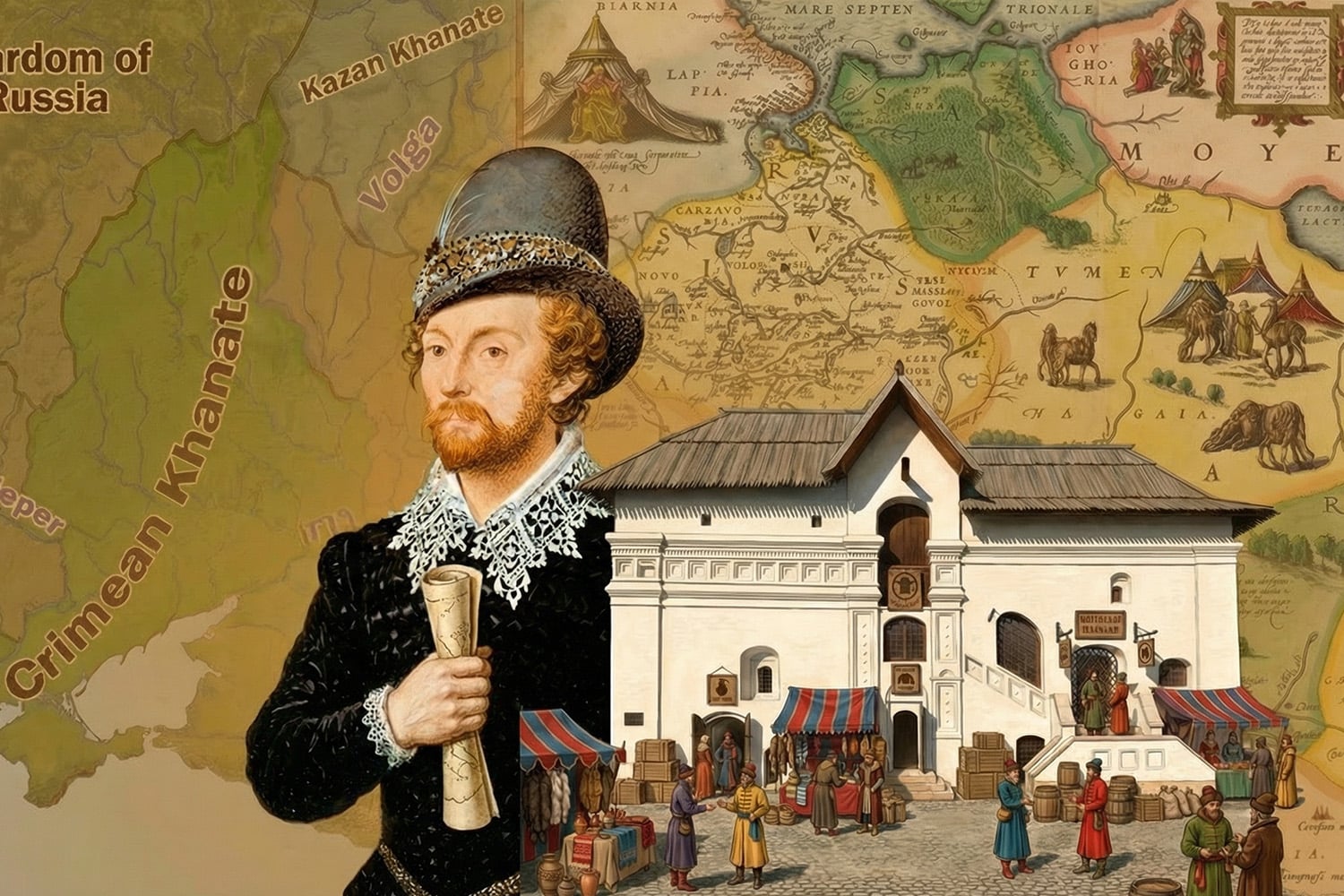
As Ivan aged, his disposition darkened. The early optimism of his reign, once buoyed by the conquest of Kazan, gave way to attrition. Revolts persisted in the east, while in the south the Crimean Tatars, supported by the Ottoman Empire, remained a constant menace. As his strategic environment deteriorated, his demands on his English counterparts became increasingly volatile.
Queen Elizabeth I, who returned the nation to a more moderate form of Protestantism, ascended the throne in 1559. Like her predecessors, she maintained an amicable correspondence with Ivan. During this period, Ivan’s communication with England intensified. The language of his letters–warm, personal, and persistent–reflected more than diplomatic convention. He referred to the English monarch as his “loving sister,” a term that signaled not sentimentality, but political expectation. England, in his view, was no longer simply a source of trade, but a potential guarantor of security.
The partnership, in Ivan’s eyes, rested on uneven expectations.
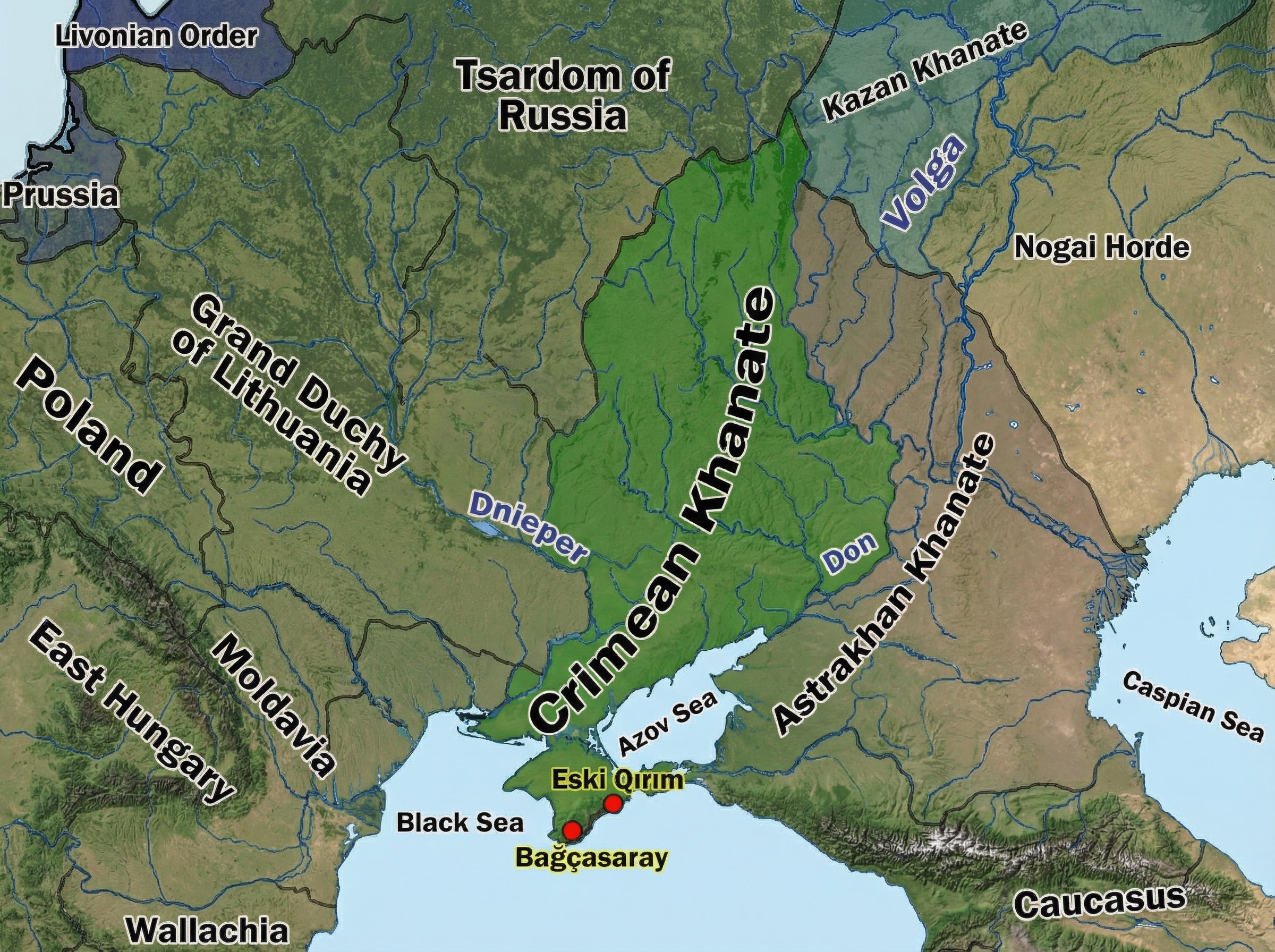
England’s interest in Muscovy was primarily commercial. The Muscovy Company was designed to regularize trade, distribute risk, and insulate the Crown from direct entanglement. English merchants sought access to furs, wax, timber, hemp, and markets beyond the Baltic choke points. A military alliance, by contrast, offered little upside. And with multiple European and Scandinavian ambassadors present at England’s court–some, like Sweden, actively at war with Moscow–discretion became an ironclad rule. Ivan pushed. England resisted.
Over time, the Tsar’s requests grew more explicit. He sought arms, engineers, and military specialists. He proposed marriage. He asked for asylum should his rule be endangered. Each request reflected a ruler growing more isolated and authoritarian, increasingly dependent on external support to stabilize a realm under pressure. His domestic policies hardened accordingly. Central authority tightened. Repression intensified. Insecurity bred despotism. Ivan the Terrible was living up to his name.
Yet England did not disengage.
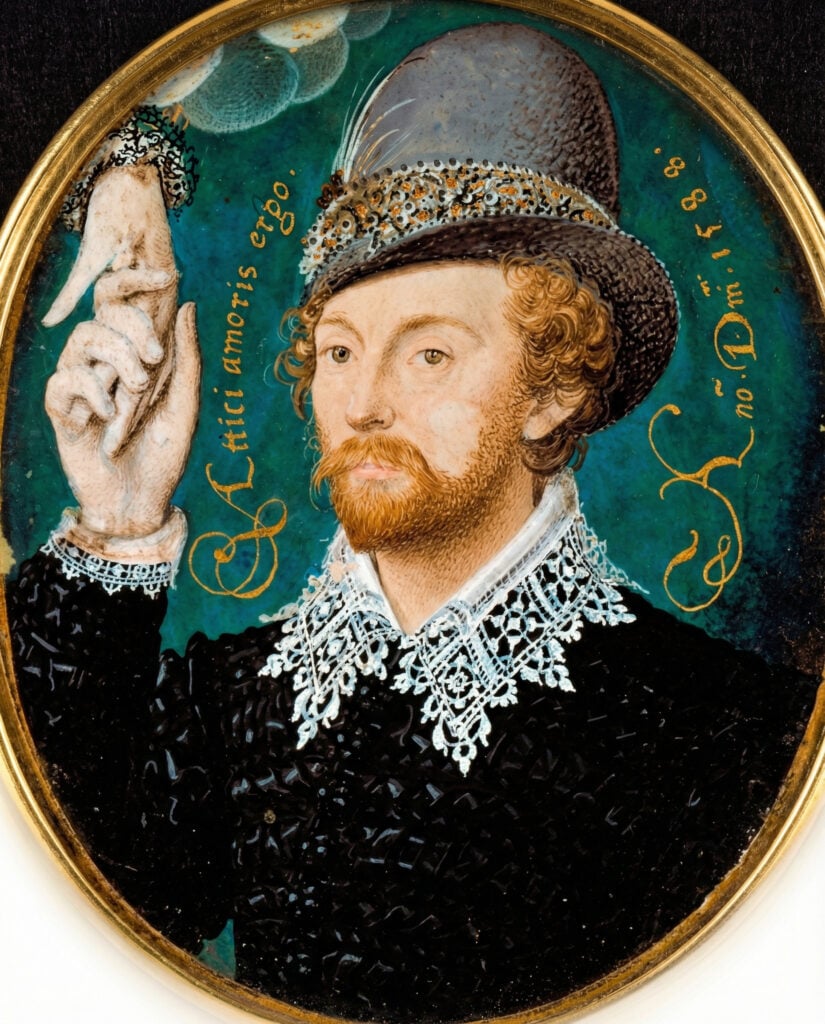
Anthony Jenkinson, after his initial journey in 1556, emerged as the central figure in England’s diplomacy toward Russia. He became Queen Elizabeth I’s most trusted intermediary with Ivan IV, the wider Muscovite world, and beyond. Over four expeditions, Jenkinson renegotiated trade privileges, gathered intelligence, and pushed English commercial reach beyond Russia into Central Asia and Persia.
His final voyage, in 1572, proved decisive but sobering. Jenkinson succeeded in restoring English trading rights with Ivan, which had become an on and off ordeal, yet the relationship had cooled since the inception of the relationship. Trust had thinned, and the British eventually acquiesced in supplying the arms Ivan demanded. In the decades that followed, the Muscovy Company’s influence waned within the Rurik regime.
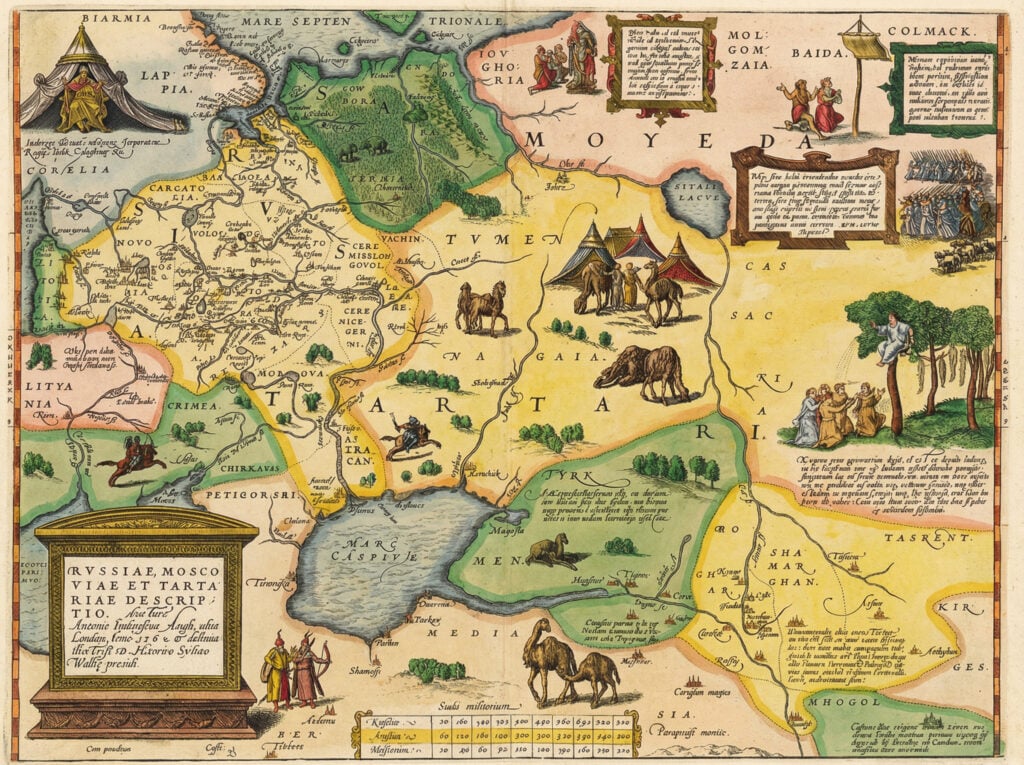
Through persistent communication and mutual accommodation, the White Sea route, though costly and seasonal, remained open. When competing claims arose over control of the Arctic passage, England was forced to adapt. In 1583, it formally recognized the sovereignty of the King of Norway over the northern seas and agreed to pay tolls at Vardøhus (Wardhouse). This was more than capitulation. It was institutional pragmatism.
When Ivan died in 1584, much of what he had conquered had already slipped away. His territorial ambitions had faltered. Yet one element of his foreign policy endured: the relationship with England. Trade would continue, though not without obstacles.
Political rupture, shifting priorities, and more agile competitors eventually displaced the Muscovy Company’s monopoly. Throughout the seventeenth century, Dutch merchants steadily supplanted the English as Russia’s principal western trading partners.
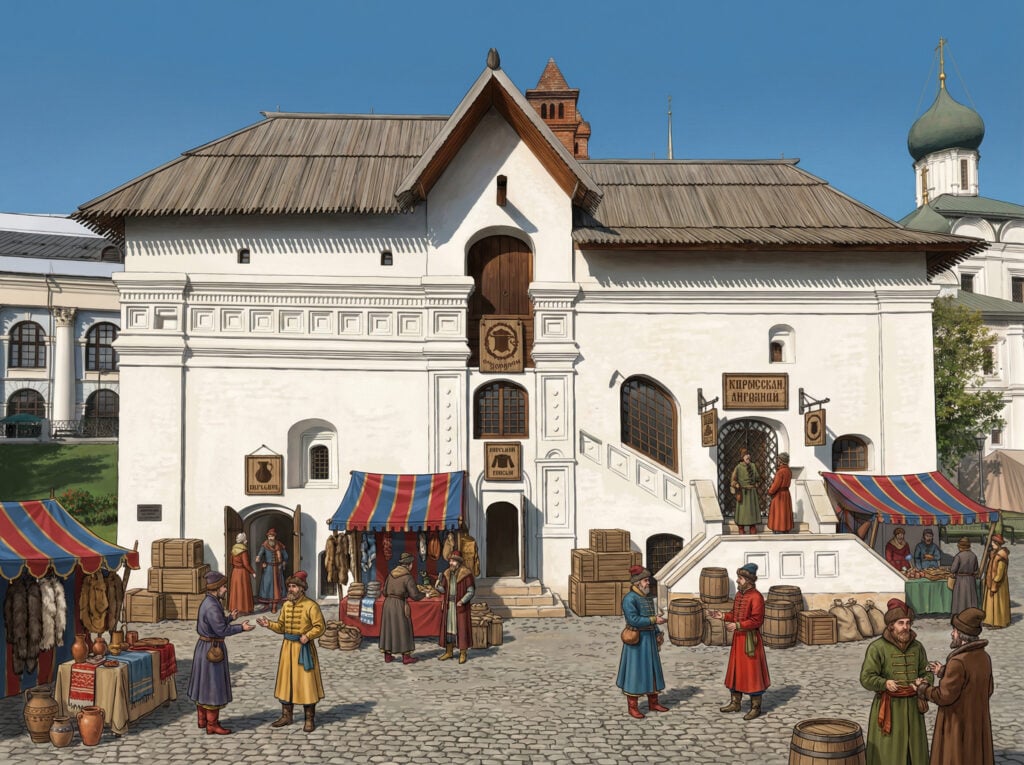
Yet the company’s legacy endured. The Muscovy Company had pioneered long-distance, state-backed corporate trade, normalizing the movement of strategic commodities such as timber, pitch, hemp, furs, and metals, all essential to shipbuilding, warfare, and state formation. These early commercial throughways helped shape the material foundations of modern power, with consequences that would reverberate across Europe for centuries to come.
Since the making of which letters patents, the said fellowship have, to their exceeding great costs, losses and expenses, not only by their trading into the said dominions of the said mighty prince of Russia, & found out convenient way to sail into the said dominions: but also passing through the same, and over the Caspian sea, have discovered very commodious trades into Armenia, Media, Hyracania, Persia, and other dominions in Asia minor, hoping by God’s grace to discover also the country of Cathaia (China), and other regions very convenient to be traded into by merchants of this Realm, for the great benefits and commodities of the same.
| An Act for the Corporation of Merchants adventurers for the discovering of new trades, made in the eight yere of Queene Elizabeth. Anno 1566