
CALL US

804.589.0503

EMAIL US

info@redfernhemp.com

HOURS

Mon.-Sat. • 11am-7pm

CHP 6 | Kingdom of Necessity

There are natural resources in history so ubiquitous that they become nearly invisible. They are so fundamental to the construction of daily life that they vanish into it, like mortar between stones. Salt. Iron. Linen. And hemp. Hemp was not merely a crop so much as a condition of life, so common as to be overlooked, and yet so essential that, without it, the machinery of pre-mechanical society would have seized.

One 17th century poet, John Taylor, understood this with a kind of delirious clarity. In Praise of the Hemp Seed (1630), he elevates this seemingly innocuous grain as the keystone to the economy (as he understood it). His voice is half comic, half prophetic, as though he can hardly believe the magnitude of what he is describing:
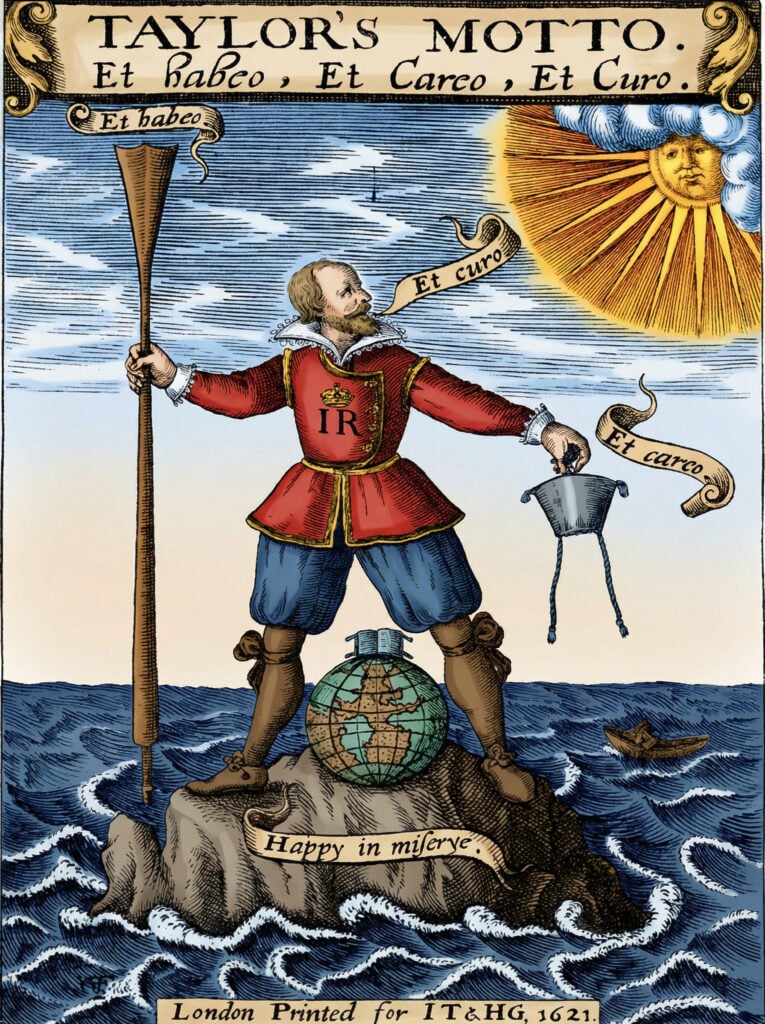


“I have here, from a grain of hempseed, made a mountain greater than the Apennines or Caucasus… Here is labour, profit, clothing, pleasure, food, navigation: divinity, poetry, the liberal arts, arms, virtue’s defence, vice’s offence, a true man’s protection, a thief’s execution.”


Taylor, an oarsman by trade and a satirical poet whose work miraculously survived the centuries, earned the fitting moniker “the Water Poet.” For this obscure figure in literary history, hemp was both liberator and, less hospitably, executioner. This multipurpose plant was the organic ether that bound society together through clothing, nourishment, cordage, and paper.


All this and more is paper, and all this,
From fruitful hempseed still produced is.
Were’t not for rags of this admired lint,
Dead were the admirable art of print.
Nor could the printers, with their forms and proofs,
Work for their own and other men’s behoofs.
Octavo, quarto, folio, or sixteen:
Twelves, nor yet sixty-four had e’er been seen,
Nor could their pages be the means to feed
And clothe them and their families at need.


Hemp’s by-products permeated every nook and cranny of human life. The following passage, again, reiterates the life cycle of a commodity, that in every stop on its trip, retained its prestige as indispensable for some aspects of daily life.
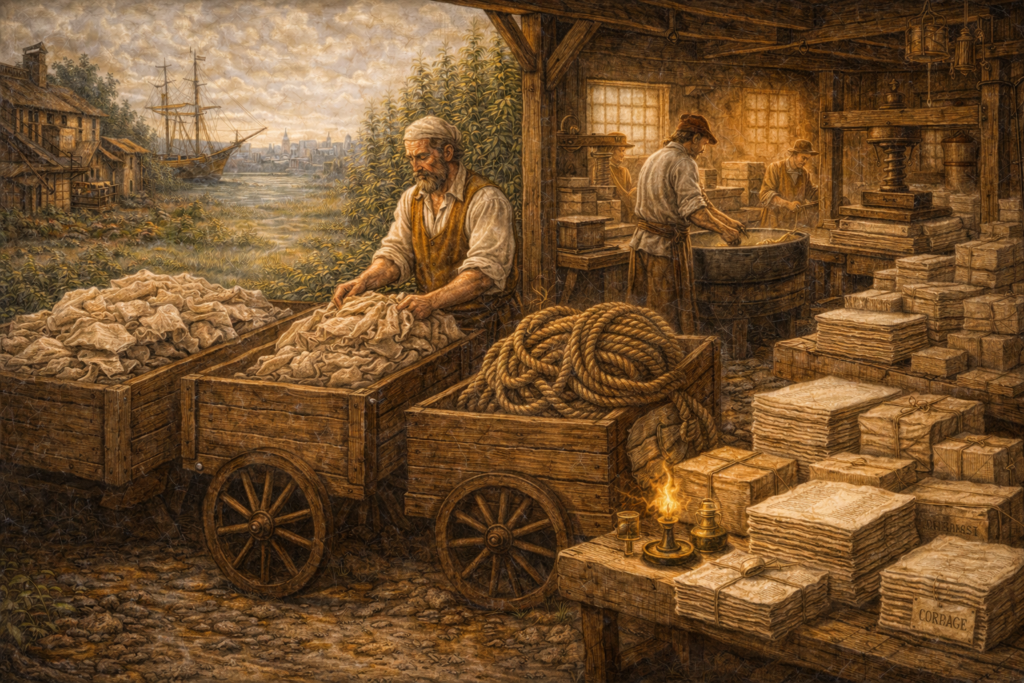
 

 “It is a duty incumbent on society, not to allow hempen rags, or even old ropes, to be destroyed. They are carefully sorted by the paper-maker, the finest being reserved for the purposes of literature and correspondence, while inferior sorts are selected for the various purposes of packages and paperhangings.” (Phillips, 1821, p. 231)


The poet lived in a society acutely aware of the power of the printing press – still a relatively new innovation. From the Gutenberg Bible (1455) to Tyndale’s Protestant translation, which proliferated throughout England in the sixteenth century, the medium that carried transcendence and transformed public life was not to be taken for granted. For Taylor, the seed that sustained thought and commerce should be protected and patronized by the foremost powers of the realm. It was clearly in their best interest.
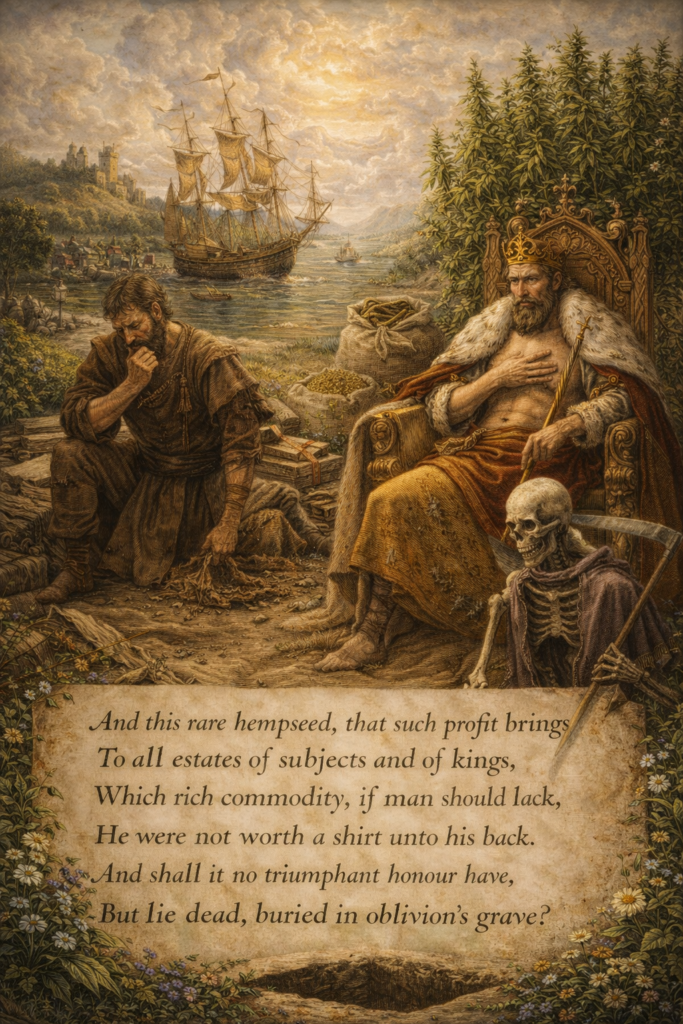


The utilitarian empire of hemp expanded beyond maritime and its latter intellectual uses. It lived in kitchens, medicine cabinets, and even armories. Hemp was threaded through domestic routine and national ambition alike.

One book of oddities, New Curiosities in Art and Nature, or, A Collection of the Most Valuable Secrets in All Arts and Sciences, translated from French in 1720, exclaimed to reveal what had long been “lock’d up in the Closets of the Best Families of Europe.” The ecstatic author assured his readers that here were: “Receipts highly esteemed by the most Learned Physicians, Elaborate Chemists, and Curious Virtuosos.” Lastly, he openly invites the “People of the Best Rank,” as well as, the “Housekeepers, Tradesmen, Artificers” to explore the effectiveness of remedies, oils, essences, and balsams. Among this encyclopedic of coveted concoctions contained novel applications for hempfeed, fabric and its raw feedstock.

In addition to the ‘New Curiosities in Art and Nature,’ two more books of antiquity, also, showcase the pragmatic uses of this universal crop. First is the 18th century book, Adam in Eden or Natural Paradise the History of Plants, Herbs and Fruits (1657).

Since literacy wasn’t a layman’s pastime, but a mark of high birth or priesthood, the author knew whom he was addressing. In a world where the lines of nascent sciences, black arts and homespun remedies all shared a dubious space of credibility—this early evangelist of botany went out of his way to align his findings judiciously with courtly rhetoric:


… to make thee truly sensible of that happiness which Mankind lost by the Fall of Adam, is to render thee an exact Botanick, by the knowledge of so incomparable a Science as the Art of Simpling, to re-inflate thee into another Eden, or, a Garden of Paradise: For if We rightly consider the Addresses of this Divine Contemplation of Herbs and Plants, with that alluring Steps and Paces the Study of them directs Us to an admiration of the Supreme Wisdom, we cannot but even from these inferior things arrive somewhat near unto a heavenly Contentment, a contentment indeed next to that Blessedness of Fruition, which is only in the other World; for all our Pleasures here having but the fading Aids of sense are beholding, or rather subjected to our Humane frailities, so that they must in respect of Expectations in some kind of other ever fall short.

To conclude, I dedicate these my Labours to the Commonwealth of Learning, to the College of Physicians, Surgeons & Apothecaries; to the Court, to the Nobility & Gentry,; In fine to all those that honour this Art, and delight in the peace and Welfare of their Country: entreating them to pass over those failings and aberrations which must needs be incident, to one that has traversed so many Gardens, Woods, Fields, and Hill. With my Prayers for the prosperity of the Nations, together with my best desires for the good success of mine, Endeavors, I take Leave and rest.

PIERCE REDFERN

Sales & Production

I am native to Richmond and attended Collegiate School and The University of Alabama. I am married to my wife, Lauren, and we have two children together, Palmer and Hendley. Graham is my older brother and I have been with the company since the fall of 2022.

I enjoy hunting, fishing and just about anything outdoors. Graham’s strong passion for this industry motivates others to excel, including myself. I love the team we have together now and can’t wait to see what the future holds for Redfern Hemp Co.!

GLORIA RAMIREZ

Kitchen Production

Gloria is from Guatemala. She moved to Virginia in 2023 and began working with the Redfern Team.

Gloria plays a pivotal role in ensuring that our products are precisely packaged using our quality control SOP guidelines.

ROB UJEVIC

Outside Sales

I’m from Reston, VA currently living in Richmond and Engaged with no kids yet… I began working for Redfern after my original venture, Gourmet Hemp Foods, partnered with them. I love Redfern cause they offer freedom and flexibility to grow.

Redfern is family oriented and serves the community and customers with utmost diligence. Graham Redfern is the hardest working leader I’ve ever had the privilege to work for!

WHITNEY MORGAN

Market Manager

I’m from Caroline County, Virginia and I am married to my husband Ryan. I’ve worked with Redfern Hemp Co. a little over two years. Before that I was a nanny and I worked as a pediatric dental assistant.

I handle online sales and a few outside wholesale accounts. Working with Redfern is a dream job I never thought I’d have.

We are a true family. We work like one, and argue like one. As a team we are flexible and have a real love for the plant and what it can do. There is no limit for the plant so there is no limit for us.

For example, my mom suffered from hair loss after Covid. She started to add Redfrn’s Whole Plant Tincture into her shampoo and conditioner and it helped her hair regrow. The plant is magic!

TIFFANY OBLINSKY

HR & Administration

Tiffany is the anchor of our team, ensuring that we stay organized and that the company’s operations are always running smoothly. During her free time, Tiffany enjoys taking her family to Lake Anna while simultaneously keeping Graham in line from her smartphone!

Corey Reed

Social Media Manager

Hi, I’m Corey. Originally from Charlotte, NC, I’ve called Virginia my second home for over 12 years. With a 10-year background in healthcare and nursing, and 5 years in content creation and social media, I’ve developed a diverse skill set. In my free time, I enjoy creating content, writing music, fishing, and being the best father I can be. Working with Graham and the Redfern team has been a dream come true. It has allowed me to pursue my passions for content creation, health and wellness, community morale, and making meaningful connections. At Redfern Hemp Co, I oversee the social media side of the business. You can also catch me at Redfern Market, so feel free to stop by and say hi!

COURTNEY KUSTERER

Production / Sales / Event Manager

Knowledgeable and passionate about the hemp plant, Courtney is an all around asset to our company. Since her early days with Graham in Waynesboro, she has acquired invaluable insights and business knowledge to help the success of our small business. Her ability to tell the Redfern story is unmatched. If you’ve ever seen one of our event setups, you can tell that Courtney had her creative ideas flowing. She has built a strong wholesale portfolio, while strengthening our network of industry connections. Her expertise in directing customers to the right products is undeniable, playing a pivotal role in assisting Graham in building the company from the ground up. In her free time, Courtney enjoys moments on the farm with Graham and their farm family of cat, cows, chickens, ducks, and dogs. She also values family time at Virginia Tech football games and moments on the boat or at the beach.

GRAHAM REDFERN

Owner & Hemp Farmer

Before I became an American hemp farmer and entrepreneur, I first heard of the hemp industry during a period when my construction business thrived, but the housing crash of 2009 changed everything. While visiting Asheville, North Carolina, I encountered a groundbreaking green building – a house made 90% from hemp, from the flooring to the walls, excluding only electrical components and appliances.

Intrigued, I consulted with Andrea Herman, president of the Hemp Industries of America, spending an hour and $150 to understand the challenges of building such houses in the U.S.. When Andrea explained the steep costs preventing widespread use of U.S.-grown hemp, it ignited a passion in me. I questioned, “Why not?” This moment became a catalyst for my deep dive into the hemp industry.

Passage of the Farm Bills

In 2014, the passing of the Farm Bill allowed universities to grow hemp, prompting me to shift from the car industry. Initially unsure of my path, I invested in penny hemp stocks and connected with the Virginia Industrial Hemp Coalition, working with universities such as JMU, UVA, VSU, and Virginia Tech to explore potential markets.

For four years, restricted by regulations to work with universities, I delved into the banking industry. When the 2019 Farm Bill dismantled barriers, allowing American farmers to cultivate cannabis plants with less than 0.3% THC, my dream took a leap. Redfern Hemp Co. was born, marking the legal sale of hemp products in Virginia for the first time in over seventy years. With my girlfriend Courtney, we hustled – attending state fairs, cultivating hemp on our 42-acre Caroline County farm, and navigating the burgeoning industry. Fast-forward to 2023, and despite being one of the few companies remaining, we face challenges.

Unfortunately, Virginia lawmakers have strained our efforts, declaring federally legal cannabinoid-derived hemp products illegal unless sold by a select few medical marijuana operators.

In the face of Virginia’s attempt to monopolize medical marijuana, we persist in expanding cannabis job opportunities for all Virginians.

We champion Virginians’ rights to affordable, high-quality products, battling against restrictive legislation. It’s disheartening to see the government hindering the benefits of this plant, including job creation and increased taxation.

Restoring Virginia’s Hemp Farming Legacy

There was a time when Virginian hemp farmers paid taxes with hemp. Reintroducing low-dosage, safe cannabinoid products in smoke shops, convenience stores, and local markets could restore this tradition on a broader scale than a handful of licensees. We’re committed to reclaiming this birthright, enabling Virginians to pay their taxes with hemp once again.

Are you over 21?

We need to make sure you are the proper age before entering this website